World Cuisines: How to Preserve Family Recipes and Cook Healthier
Preserve family recipes and eat better. Learn to adapt traditional world cuisines to modern healthy cooking without sacrificing authentic taste.

Why Traditional Dishes Are More Than Just Food
Every family recipe carries a story — about ancestors, traditions, and memories created around a shared table. As noted on the Lineages portal, each dish becomes "a delicious piece of genealogical history." And these aren't just pretty words: food truly connects generations.
But here's the catch. Many traditional recipes — grandma's pirozhki, mom's pilaf, auntie's chebureki — were created in an era when nobody counted calories. Oil was used generously, sugar was poured liberally, and portions were enough for three. Does this mean we need to give up our favorite dishes for the sake of staying fit? Not at all. You can preserve the soul of a recipe while making it significantly lighter and healthier.
This article is about how to take the best from the culinary traditions of different peoples, adapt dishes to modern principles of healthy eating, and still not lose that very flavor that brings back warm memories.
Why Preserve Family Recipes at All
Before moving on to adaptations, it's worth mentioning something important. Researchers and educators, as noted on the Evaheld platform, have found that children who know their family stories cope better with stress and setbacks. And family recipes are one of the most tangible forms of such stories.
At the same time, with the passing of grandparents, an entire cuisine can be lost. One unrecorded recipe — and the taste of childhood is gone forever. That's why the first step is to document recipes: temperatures, textures, aromas, the order of steps, the substitutions that work, and those that ruin everything.
The resource OrganizEat recommends digitizing family recipes: grouping them by family member, occasion, or tradition, using tags and notes. This preserves not only the ingredients and steps but also the stories behind each dish.
And once a recipe is written down, you can work with it. Including adapting it for healthy eating.
World Cuisines: What's Worth Trying and Adapting
According to the Raw Spice Bar portal, traditional cooking methods include tandoor ovens in South Asia, wok cooking in East Asia, pit cooking in Polynesia, smoking in North America, and tagine in North Africa. Each of these methods can be adapted for home cooking — modern technologies like slow cookers and sous vide make this easier than ever.
The The Storied Recipe portal has compiled over 117 traditional dishes from around the world — and that's only a small part of the world's culinary heritage. Let's look at the most interesting directions from a healthy eating perspective.
Russian Cuisine: Borscht, Pelmeni, Okroshka
Russian cuisine is a treasure trove of hearty, warming dishes. Many of them, with the right approach, fit into a healthy eating plan.
Borscht is one of the most underrated superfoods. The classic recipe includes: beets (antioxidants, fiber), cabbage (vitamin C, indole-3-carbinol), carrots (beta-carotene), tomatoes (lycopene). The problem is usually the sautéed base made with a large amount of oil and fatty meat.
Healthy borscht adaptation:
- Instead of pork — chicken breast or turkey
- Make the sautéed base with 1 teaspoon of olive oil or simply with water
- Replace sour cream with 2% Greek yogurt
Approximate macros per 350 ml serving (healthy version):
- Calories: 120 kcal
- Protein: 12 g
- Fat: 3 g
- Carbs: 14 g
Pelmeni are an iconic dish familiar to virtually every family. Interestingly, variations of pelmeni exist all over the world: Chinese jiaozi, Italian ravioli, Polish pierogi, and Russian pelmeni — all of them, as Raw Spice Bar notes, represent the same dish archetype across different cultures.
Healthy pelmeni adaptation:
- Dough: whole wheat flour or a blend of regular and rice flour
- Filling: chicken breast + zucchini (1:1) — this makes the pelmeni juicier and lighter
- Cooking method: boiling or steaming, not frying
Approximate macros per 200 g serving (10-12 pieces, healthy version):
- Calories: 220 kcal
- Protein: 18 g
- Fat: 4 g
- Carbs: 28 g
Okroshka is the perfect summer dish that's already quite light even without adaptation. The main variations are: with kvass, with kefir, or with sparkling mineral water and lemon. For healthy eating, the best option is the version with 1% kefir or ayran — more protein, less sugar.
Approximate macros per 400 ml serving (with 1% kefir):
- Calories: 150 kcal
- Protein: 14 g
- Fat: 5 g
- Carbs: 12 g
Caucasian Cuisine: Spices Instead of Oil
Georgian, Armenian, and Azerbaijani cuisines are a celebration of flavor built on spices, herbs, and walnuts. Many dishes fit into a healthy diet even without modification.
Pkhali is a Georgian appetizer made from vegetables (spinach, beets, cabbage) with walnut paste. It's practically an ideal healthy dish: plant-based protein from nuts, fiber from vegetables, healthy fats.
Approximate macros per 150 g serving:
- Calories: 160 kcal
- Protein: 6 g
- Fat: 11 g
- Carbs: 9 g
Lobio is a dish made from red beans with spices. Beans are an excellent source of plant-based protein and slow carbohydrates. The classic recipe is already quite healthy — the main thing is not to overdo the oil.
Tip: Caucasian spices — khmeli-suneli, sumac, utskho-suneli — allow you to make a dish incredibly flavorful without extra calories. A pinch of sumac replaces a fatty sauce, and khmeli-suneli transforms a simple chicken breast into a festive dish.
Asian Cuisine: Wok, Steam, and Balance
Asian cuisine is one of the most healthy-eating-friendly in the world, if you know what to look for. The basic principles: lots of vegetables, protein in small portions, active use of spices and fermented foods.
Stir-fry in a wok — quick frying of vegetables and protein over high heat. Thanks to the high temperature and short cooking time, vegetables retain their vitamins and crunch, and very little oil is needed.
Healthy chicken stir-fry:
- 150 g chicken breast, cut into strips
- 200 g vegetables (broccoli, bell pepper, carrots, green beans)
- 1 tsp sesame oil
- Soy sauce, ginger, garlic
Approximate macros per serving:
- Calories: 210 kcal
- Protein: 28 g
- Fat: 6 g
- Carbs: 12 g
Miso soup — fermented soybean paste with seaweed and tofu. Probiotics, plant-based protein, minimal calories. One serving is about 45 kcal.
Vietnamese egg coffee (Cà Phê Trứng) — as mentioned by Ethnic Spoon, this is one of the trending recipes. Egg yolk is whipped with condensed milk and coffee. In the healthy version, you can replace condensed milk with coconut cream and erythritol — resulting in a protein coffee with approximately 90 kcal per serving.
African Cuisine: Superfoods Before It Was Trendy
West African dishes are hearty stews based on peanuts, okra, and greens. As Raw Spice Bar notes, it was from these stews that the soul food tradition evolved.
Peanut stew (West African stew) — on the Ethnic Spoon portal it's listed as "West African Peanut Stew." The base: peanut butter, tomatoes, sweet potato, spinach. This dish is rich in plant-based protein, fiber, and healthy fats.
Healthy adaptation:
- Use peanut butter without sugar or palm oil
- Sweet potato instead of white potato — lower glycemic index
- Add more spinach and kale
Approximate macros per 300 ml serving:
- Calories: 280 kcal
- Protein: 12 g
- Fat: 14 g
- Carbs: 26 g
Mediterranean Cuisine: The Gold Standard of Healthy Eating
The Mediterranean diet is considered one of the healthiest in the world for good reason. Olive oil, fish, legumes, vegetables, whole grains — all of these form the foundation of traditional recipes from Greece, Italy, and Spain.
North African tagine, according to Raw Spice Bar, demonstrates complex layering of spices: cinnamon, cumin, coriander, and other warming spices. Ras el hanout — a Moroccan spice blend — allows you to turn ordinary chicken with vegetables into a masterpiece without adding a single gram of extra fat.
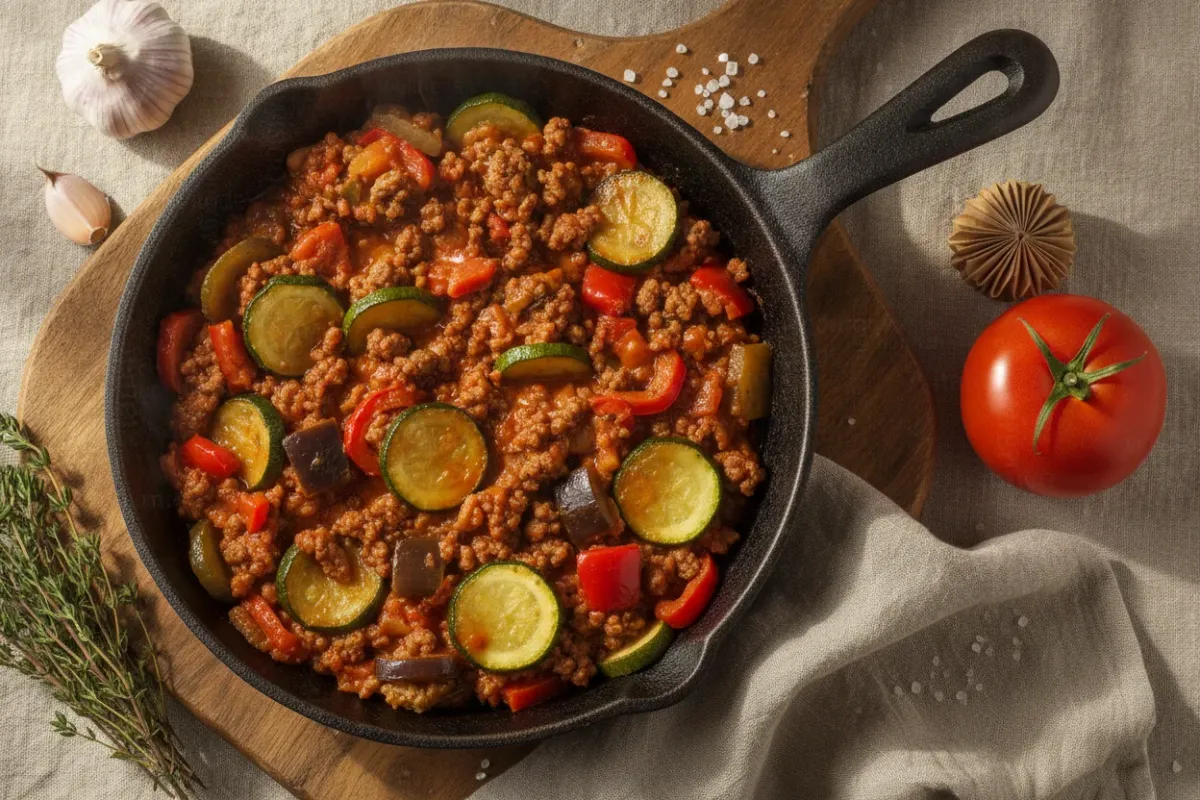
Healthy chicken tagine:
- 200 g skinless chicken thigh
- 150 g chickpeas (canned, rinsed)
- 100 g zucchini, 100 g carrots
- Ras el hanout, turmeric, cinnamon
Approximate macros per serving:
- Calories: 320 kcal
- Protein: 30 g
- Fat: 8 g
- Carbs: 32 g
Five Principles for Adapting Any Traditional Recipe for Healthy Eating
There's no need to reinvent the wheel for every dish. There are universal principles that work with any cuisine in the world.
1. Replace Fatty Meat with Lean Meat
Pork → turkey or chicken breast. Lamb → lean beef or veal. This is the simplest way to cut calories by 30-40% without losing satiety.
2. Reduce Oil, Boost Spices
Where grandma used to pour half a cup of sunflower oil, one teaspoon of olive or coconut oil is enough. The difference in flavor is compensated by spices: paprika, turmeric, cumin, coriander. Spices mean zero calories and a world of flavor.
3. Vegetables as the Foundation, Not a Side Dish
In traditional recipes, vegetables often play a decorative role. In a healthy adaptation, they take up half the plate. Any stew, soup, or hot dish can be enriched with spinach, zucchini, broccoli, or cauliflower.
4. Whole Grains Instead of Refined
White flour → whole wheat, spelt, or oat flour. White rice → brown rice, quinoa, or bulgur. Regular pasta → whole grain or legume-based pasta.
5. Sauces and Dressings — Homemade
Store-bought sauces are hidden sugar, trans fats, and preservatives. A homemade sauce of Greek yogurt with herbs, lemon juice, and garlic replaces mayonnaise and ketchup with enormous calorie savings.
How to Create a Healthy Family Cookbook
The Family Tree Magazine portal recommends learning the historical and cultural context of recipes from relatives. Family recipes remind us that generations of family members sat at the same table eating the same food as we do.
You can go further and create a healthy version of a family cookbook. Here's how to do it:
Step 1: Collect the originals. Write down recipes as told by older relatives. Record everything: "by eye" measurements are valuable information too. As Evaheld advises, record temperatures, textures, aromas, the shape of the finished dish, the order that someone always insisted on.
Step 2: Calculate the macros of the original. Use apps like FatSecret or MyFitnessPal. This will show you where the main "calorie bombs" are.
Step 3: Adapt. Apply the five principles above. Replace one or two ingredients, not everything at once — this way the flavor stays recognizable.
Step 4: Test and compare. Cook both versions, let the family taste them. If the healthy version is indistinguishable from the original — that's a win.
Step 5: Present it. As Lineages suggests, you can prepare a cookbook as a holiday gift — with photos, stories, and recipes that reflect the family's unique history. Add macros and a label of "original / healthy version" to each recipe.
Meal Prep with Ethnic Dishes: A Practical Guide
Traditional dishes are perfect for weekly meal prep. Many of them only get better after sitting for a while.
Monday–Wednesday:
- Healthy borscht (3 servings) — takes 40 minutes to cook, keeps in the fridge for up to 5 days
- Container: 350 ml borscht + 50 g Greek yogurt on the side
Thursday–Friday:
- Chicken stir-fry + brown rice (2 servings)
- Container: 200 g stir-fry + 150 g rice
Weekends:
- Making pelmeni for 2-3 weeks ahead: freeze on a board, then transfer into bags of 15 pieces each
- Chickpea tagine (2 servings for Saturday–Sunday)
Snacks for the week:
- Spinach pkhali (3 servings of 100 g each)
- Homemade hummus (300 g for the week)
The entire meal prep takes 2-3 hours on Sunday and provides diverse, delicious, and balanced nutrition with clear macros.
World Desserts in a Healthy Version
What's a conversation about traditional cuisine without desserts? The Ethnic Spoon portal mentions the Provençal tradition of the "Thirteen Christmas Desserts" (Les Treize Desserts de Noël) — 13 desserts served after midnight Mass on Christmas Eve. Among them are nuts, dried fruits, and nougat — many of these sweets are suitable for healthy eating even without adaptation.
Healthy versions of ethnic desserts:
Marzipan (German cuisine) — almonds + honey. Healthy version: almond flour + erythritol + rose water. Macros per 30 g: 95 kcal / 3 g P / 7 g F / 4 g C.
Turkish delight (lokum) — Healthy version: cornstarch + erythritol + natural juices + agar-agar. Macros per 30 g: 35 kcal / 0 g P / 0 g F / 8 g C.
Japanese mochi — Healthy version: rice flour + coconut milk + protein filling made from cottage cheese. Macros per piece: 70 kcal / 5 g P / 2 g F / 9 g C.
Indian laddu from chickpea flour — Healthy version: chickpea flour + coconut oil + dates + cardamom. Macros per piece: 85 kcal / 3 g P / 4 g F / 10 g C.
Try It Yourself
Healthy eating is not about giving up delicious food or breaking with traditions. It's a way to preserve what you love while adapting it to a modern understanding of balance. You can start with just one recipe: take a favorite dish from childhood, calculate the macros, replace one or two ingredients, and cook it. Most likely, it will turn out no worse — and maybe even better.
As stated on The Storied Recipe, food has the power to tell stories, preserve cultural heritage, and remember those who loved us through their cooking. Let's add to that: food can also take care of your health — if you approach it mindfully.
Frequently Asked Questions
How do I make real borscht like grandma's, but in a healthy version?
The secret of grandma's borscht lies in slowly stewing the beets and making a proper sautéed base. In the healthy version, it's better to roast the beets in the oven (this preserves more betaine), make the sautéed base with minimal oil, and replace pork with turkey. The flavor will be as close to the original as possible, while the calorie count per serving drops to 120 kcal.
What basic products are needed for traditional Russian cuisine?
The foundation of a Russian pantry: beets, cabbage, carrots, potatoes, onions, garlic, dill, parsley, sour cream (Greek yogurt for the healthy version), buckwheat, pearl barley, sauerkraut. For healthy adaptations, it's worth adding: whole wheat flour, chicken breast, turkey, and unrefined oils.
How do you properly shape and freeze pelmeni in large batches?
Place the shaped pelmeni on a board dusted with flour so they don't touch each other. Freeze for 2-3 hours, then transfer into portioned bags of 15 pieces each (that's approximately 200 g — one serving). They can be stored for up to 3 months. Cook without thawing in boiling salted water for 7-8 minutes.
What varieties of okroshka exist and how is it prepared?
There are three main varieties: with bread kvass (classic), with kefir (creamier and higher in protein), and with sparkling mineral water and lemon (the lightest). For healthy eating, the kefir version with 1% kefir or ayran works best — it provides more protein with minimal calories. The base consists of boiled eggs, cucumbers, radishes, fresh herbs, and boiled chicken breast instead of sausage.
This article is for informational purposes only and is not medical advice. Consult a doctor or dietitian before making dietary changes.