Beef Ratatouille: 380 kcal and 30 g of protein
Beef ratatouille: 30g protein, 380 kcal. Forget bland meals—discover this Provençal stew that's as satisfying as it is nutritious. French comfort food.
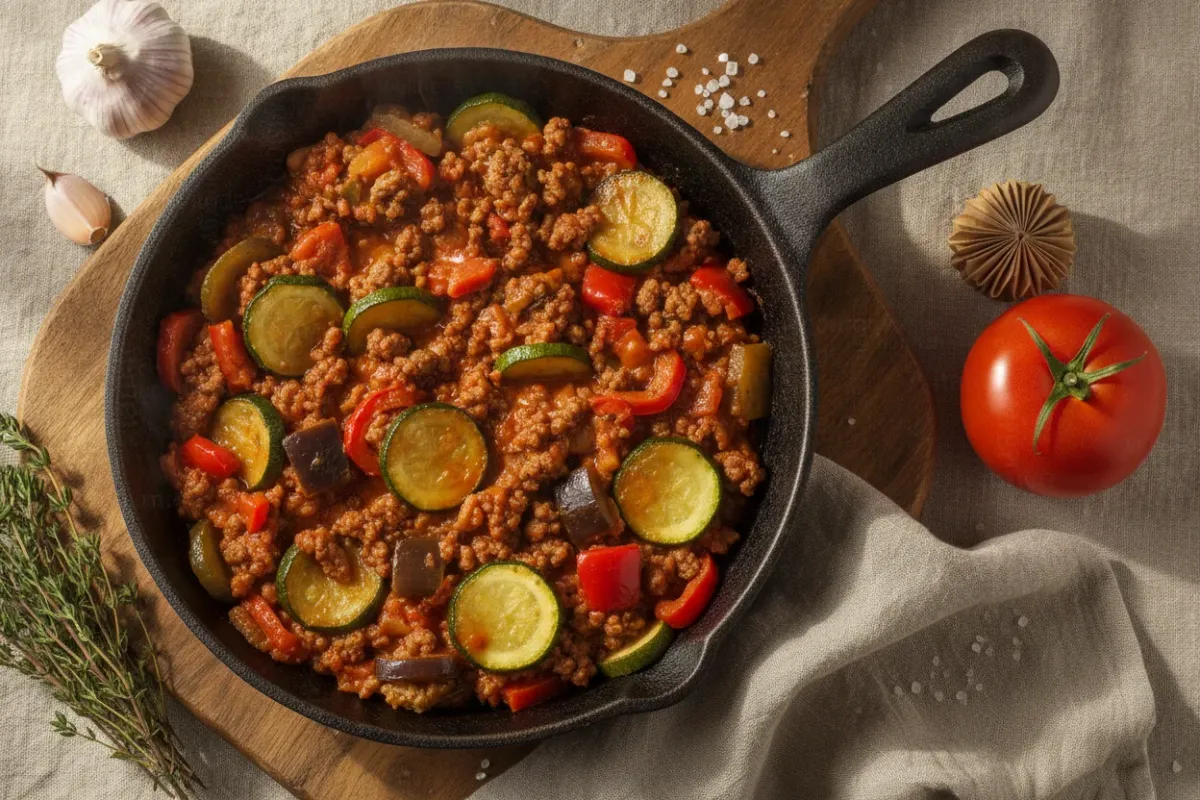
Ratatouille is that quintessential dish from Provence — the kind that makes you want to light a candle, pour a glass of water with lemon, and pretend dinner is happening somewhere in the south of France. The classic version is braised vegetables: eggplant, zucchini, bell pepper, tomatoes, and fragrant herbs. Beautiful and vibrant, but for anyone counting their macros it has one drawback: the vegetables only satisfy for a short while, there's almost no protein, and an hour later you're peeking into the fridge again.
This version solves the problem elegantly. To that same Provençal vegetable palette we add lean ground beef — and an ordinary vegetable stew turns into a complete, balanced dinner of 380 kcal and 30 g of protein. The flavor stays "French," while the nutritional profile is that of a thoughtfully designed fitness meal.
Why this ratatouille-stew is a smart choice
Vegetables give color, fiber, and fullness almost for free
The dish contains seven kinds of vegetables at once: eggplant, tomatoes, zucchini, yellow squash, red and yellow bell pepper, onion, plus crushed tomatoes. This isn't just a pretty palette on the plate — it's fiber and water that fill your stomach with minimal calories. That's exactly why a large portion of stew looks impressive yet "weighs" little in calories.
A variety of color also means a variety of beneficial nutrients. Red and yellow peppers are rich in vitamin C, tomatoes provide lycopene, and eggplant and zucchini offer gentle fiber that works kindly with digestion. The World Health Organization recommends eating at least 400 g of vegetables and fruit per day — one serving of this stew covers a noticeable share of that quota with no effort at all.
Lean beef — 30 g of protein without heaviness
The main secret is extra-lean ground beef (about 5% fat). It adds the dish those very 30 g of protein, turning a light side into a filling dinner. The protein here serves two purposes: it helps you stay full longer and supports your muscles, which is especially important during a calorie deficit and weight loss.
Protein is the most "filling" of all the macronutrients: the body spends more energy digesting it than it does on fats and carbohydrates. The Harvard School of Public Health emphasizes that the quality of the protein source matters, and lean meat in moderate amounts fits perfectly into a balanced diet. 113 g of lean ground beef delivers a lot of protein with a modest amount of fat — the ideal trade-off for anyone watching the numbers.
Minimal added fat — maximum flavor
In this recipe, fat works precisely rather than "by eye." Just 1 teaspoon of extra-virgin olive oil and cooking spray (a blend of avocado oil and ghee is handy) — that's enough to caramelize the vegetables and bring out their flavor. Extra-virgin olive oil is one of the most studied healthy fats: it forms the foundation of the Mediterranean diet and is prized for its antioxidants and benefits for the heart.
The final touch is just 1 tablespoon of grated Parmesan. That's enough to give the dish a salty, creamy "restaurant" depth while adding less than 20 kcal. A little trick that makes a diet dinner genuinely delicious.
Macros of one serving
| Metric | Value |
|---|---|
| Calories | ~380 kcal |
| Protein | ~30 g |
| Fat | ~12 g (approximate) |
| Carbohydrates | ~28 g (approximate) |
The calorie and protein figures are calculated for the listed ingredients; fat and carbohydrates are estimated approximately from the composition — the final result depends on the specific brand of ground beef and tomatoes. If you want to push the protein even higher or lower the fat, you can swap the beef for turkey or chicken breast — the flavor will stay rich thanks to the tomatoes and herbs.
What you'll need for one serving
The American ounces have been converted to grams — that way it's easier to weigh on a kitchen scale:
- Extra-lean ground beef (~5% fat) — 113 g (4 oz)
- Eggplant — 57 g (2 oz)
- Fresh tomatoes — 85 g (3 oz)
- Zucchini — 57 g (2 oz)
- Yellow squash — 57 g (2 oz)
- Red bell pepper — 28 g (1 oz)
- Yellow bell pepper — 28 g (1 oz)
- Yellow onion — 28 g (1 oz)
- Crushed tomatoes — 1 cup, ~240 g
- Fresh basil — a few leaves
- Grated Parmesan — 1 tbsp (~5 g)
- Extra-virgin olive oil — 1 tsp
- Cooking spray — a blend of avocado oil and ghee
- Garlic, salt, and pepper — to taste
A tip from the kitchen: a kitchen scale matters more here than it seems. When the macros rest on a precise 113 g of beef and 5 g of cheese, the numbers in the recipe's header stay true rather than an approximate fantasy. That's the very difference between "sort of healthy" and a genuinely calculated dinner.
How to make the ratatouille-stew step by step
Step 1. Cut the vegetables into neat cubes
Cut the eggplant, zucchini, yellow squash, both peppers, and onion into small, roughly equal cubes. Uniform size isn't about aesthetics — it's about even cooking: that way all the vegetables reach doneness at the same time, and none stay raw or, conversely, turn to mush. Cut the tomatoes a bit larger — they'll release juice and become part of the sauce.
Step 2. Brown the beef
Heat the pan and mist it with cooking spray. Add the lean ground beef, break it into small pieces with a spatula, and fry until golden and crusty. Lean beef releases almost no extra fat, so the crust here is the main source of flavor. At this same stage add the minced garlic: it will open up in the hot pan in a few seconds. Set the cooked beef aside.
Step 3. Sauté the vegetables in layers
To the same pan add the teaspoon of olive oil and start with the onion and pepper — they need a little more time to become soft and sweet. After a couple of minutes, add the eggplant, zucchini, and yellow squash. Sauté over medium heat, stirring, until the vegetables are golden at the edges. It's that light caramelization that gives the very depth of flavor ratatouille exists for.
Step 4. Assemble the stew
Return the beef to the pan, add the fresh tomatoes and a cup of crushed tomatoes. Stir, bring to a gentle simmer, lower the heat, and let it braise for 10–15 minutes. In that time the sauce will thicken, the vegetables will reach a velvety softness, and the flavors will have a chance to make friends. Season with salt and pepper to taste.
Step 5. Finishing touches
Remove from the heat, stir in hand-torn fresh basil, and sprinkle with grated Parmesan. Adding the basil at the very end is essential: that way it releases a bright aroma rather than wilting in the pot. Serve right away, while the cheese is melting.
Secrets of the perfect ratatouille
- Don't rush the vegetables. Too high a heat will give you onion burnt on the outside and raw eggplant inside. Medium heat and a little patience are the best recipe for texture.
- Salt at the end. If you salt the vegetables at the very start, they'll quickly release water and stew rather than brown. First the crust — then the salt.
- Basil and cheese — off the heat. Add fresh herbs and Parmesan to the finished dish to preserve the aroma and avoid scorching the cheese.
- Want it thicker — reduce it. If the sauce seems a bit thin, keep the stew on the heat a couple more minutes without a lid.
How to fit the dish into your day
This ratatouille-stew is great because it's flexible. At 380 kcal and 30 g of protein, it's easy to build into any meal plan:
- As a standalone light dinner — the portion is enough to fill you up, thanks to the volume of vegetables and the protein.
- With a side added — a spoonful of quinoa, a slice of whole-grain bread, or 100 g of baked potato will add complex carbohydrates if your day was active.
- For meal prep — the stew keeps beautifully in the fridge for 3–4 days in an airtight container, and by the next day it only gets tastier as the flavors settle. Double or triple the portion, divide it among containers — and lunch for the week is ready.
For those on keto or a low-carb diet, the dish is also nearly ideal: the bulk is vegetables and protein, while the carbohydrates come mainly from the tomatoes. To lower them a little more, you can reduce the amount of crushed tomatoes and add a few more fresh ones.
Try it yourself
Ratatouille long ago outgrew its reputation as a "characterless side." With lean beef it turns into a complete, beautiful, and genuinely filling dinner that doesn't break your macros and still looks as if it were served in a little café in the south of France. 380 kcal, 30 g of protein, a mountain of vegetables, and the aroma of fresh basil — an excellent reason to dig out that candle and romanticize an ordinary Tuesday evening.
Grab the scale, cut the vegetables into neat cubes, and let the stew braise calmly — it will do the rest itself. And once you've tried it, be sure to come back and tell us in the comments how it turned out: recipes like this live precisely in the exchange of little kitchen secrets.
This article is for informational purposes only and is not medical advice. Consult a doctor or dietitian before making dietary changes.