The Surprise Product of the Year: Just 10 Calories per 100 Grams
Discover the surprise low-calorie product: konjac noodles with 10 calories per 100g. Plus 8 foods that keep you full without breaking your daily calorie goals.
A familiar situation: your daily calorie limit seems generous, yet by eight in the evening your stomach feels empty and your hand reaches for the cupboard on its own. The root of the problem isn't willpower. The problem is that some foods keep you full for a couple of hours on minimal calories, while others vanish without a trace, leaving only numbers in your food diary. The most pleasant discoveries in food are precisely those products that look "heavy" and high-calorie but turn out to be almost weightless for your budget. Below is the main find and a whole crew of decoy foods, each with a breakdown of calories, protein, fat, and carbs.
The main find: noodles with almost no calories
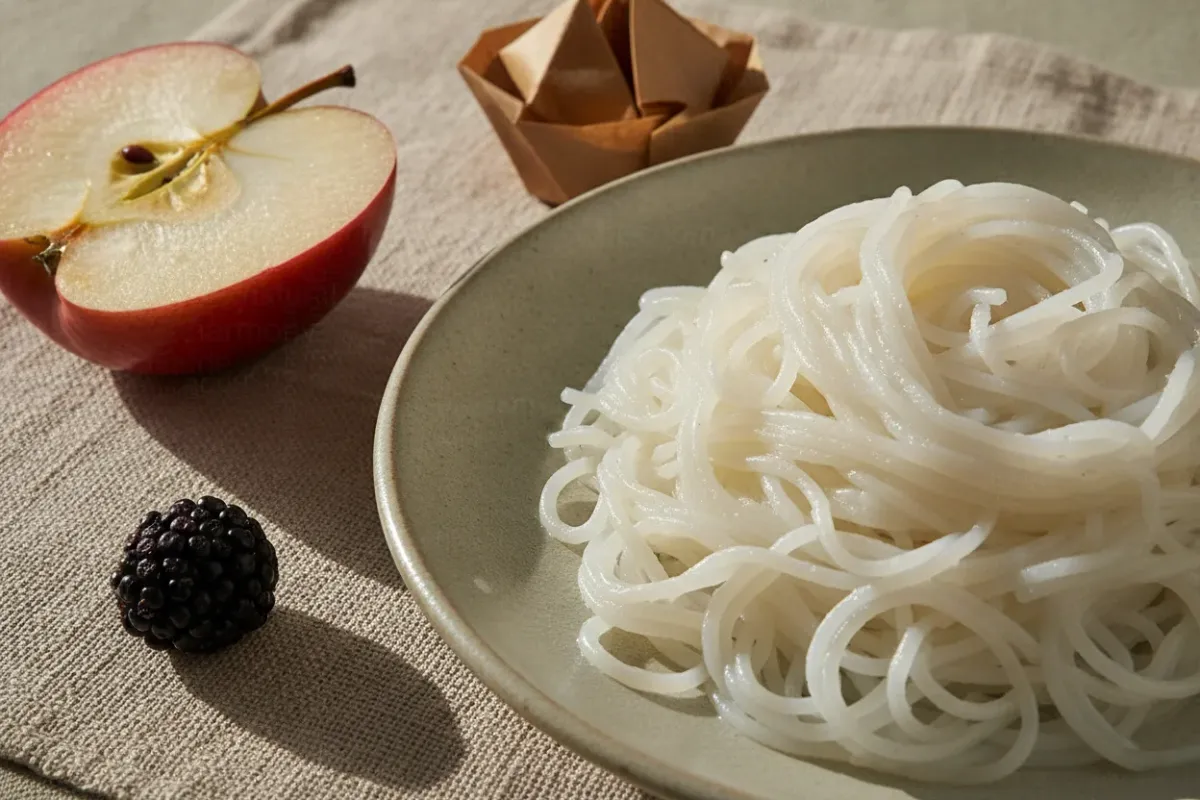
If there's one product that makes you reread the label in disbelief, it's konjac noodles, also known as shirataki. In our minds, any noodle is firmly tied to a "carb bomb": a plate of pasta is easily 400–500 calories. But konjac breaks the mold completely.
Nutrition facts (per 100 g of cooked noodles)
- Calories: ~10 kcal
- Protein: 0 g
- Fat: 0 g
- Carbohydrates: ~3 g (almost all of it fiber)
Ten. Not a hundred, not forty — ten kilocalories per hundred grams. A whole large 200-gram portion gives about 20 calories — less than half an apple.
Why it works
The secret is in the composition. Konjac noodles are made from the root of the amorphophallus plant (konnyaku) and are 97% water. The rest is soluble glucomannan fiber. This fiber isn't digested and provides no calories, but in the stomach it absorbs liquid and swells, physically creating volume and a feeling of fullness. In other words, the body gets a "full" signal while the calorie counter barely moves. Detailed data on the composition of similar products is convenient to check in the USDA FoodData Central database — there you can see how few digestible nutrients konjac contains.
How to handle it
Shirataki has a distinctive "fishy" smell when it comes out of the package — this is normal and easily fixed. Rinse the noodles under cold water for 1–2 minutes, then heat them for 2–3 minutes in a dry skillet without oil to get rid of excess moisture. After that, they soak up any sauce and flavor — like a sponge.
Konjac carries no flavor of its own, so its strength is in combinations:
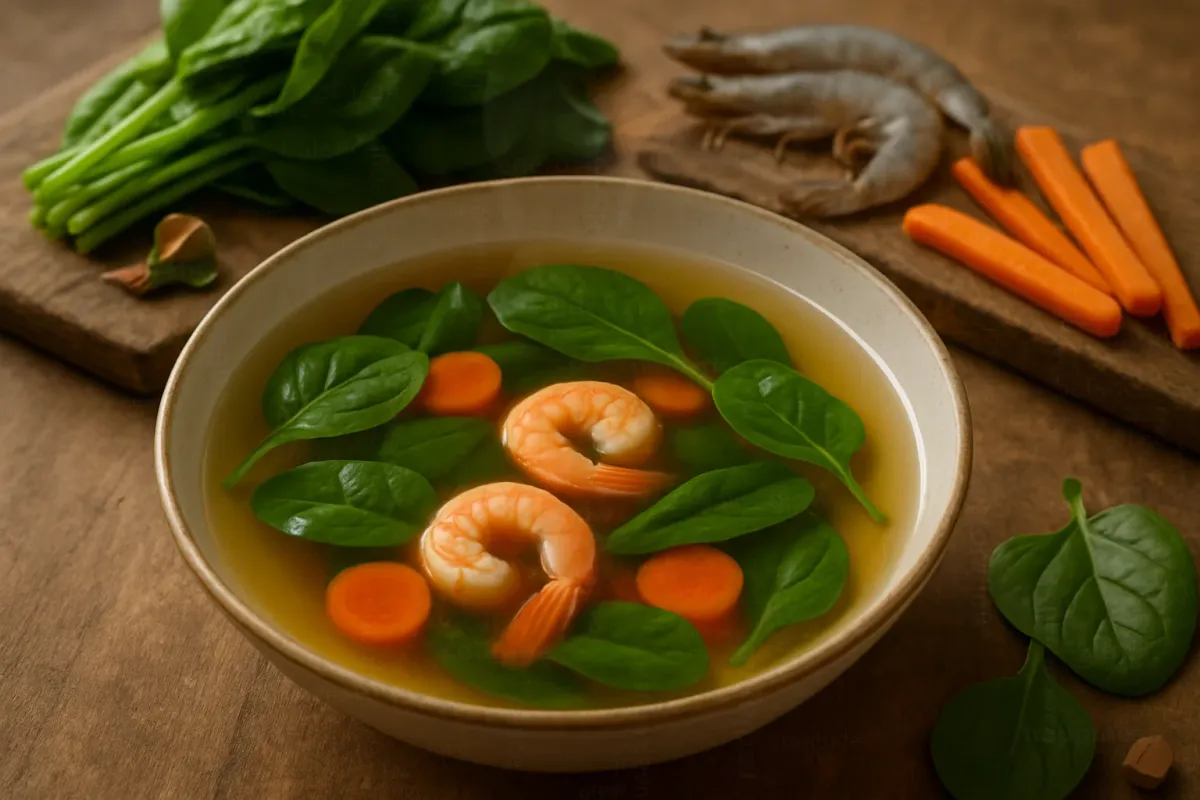
- with shrimp, soy sauce, and ginger — an Asian bowl at ~150 calories;
- with tomato sauce and herbs — "pasta" instead of the regular kind;
- in chicken broth with vegetables — a hearty soup with almost no calories.
One important point: glucomannan takes up a lot of water, so wash the noodles down with enough liquid and don't eat them alone in huge portions on an empty stomach. As a sensible replacement for part of a side dish — it's a find, but not as the only food of the day.
Why calories are so often misjudged
The surprise of konjac is a special case of a larger pattern. People regularly confuse two different things: the calorie content of a food and its ability to satiate. And the two are weakly linked.
A classic study by Australian researchers led by Susanna Holt measured the so-called satiety index — how well equal-calorie portions of different foods satisfy hunger. The results surprised many: the leader turned out to be ordinary boiled potatoes, while a croissant satiated several times worse at the same calorie count. You can review the details of the methodology in the original publication of the study.
What makes a food filling at a low calorie count:
- Water and volume. The more water and air in a food, the more of it on your plate at the same calories. The stomach responds to volume.
- Fiber. It slows the emptying of the stomach and stretches out the feeling of fullness. The role of fiber in satiety is well explained by the Harvard School of Public Health.
- Protein. The most "filling" macronutrient: more energy is spent digesting it, and it holds the feeling of fullness longer.
Foods that seem high-calorie but keep you full for a long time almost always win on one or more of these points. And "light-looking" snacks like crackers or dried fruit, on the contrary, are concentrated in calories and slip out of the stomach unnoticed.
Six more decoy foods
Konjac is the most striking example, but alongside it stands a whole crew of foods that look more serious than they are for your calorie budget.
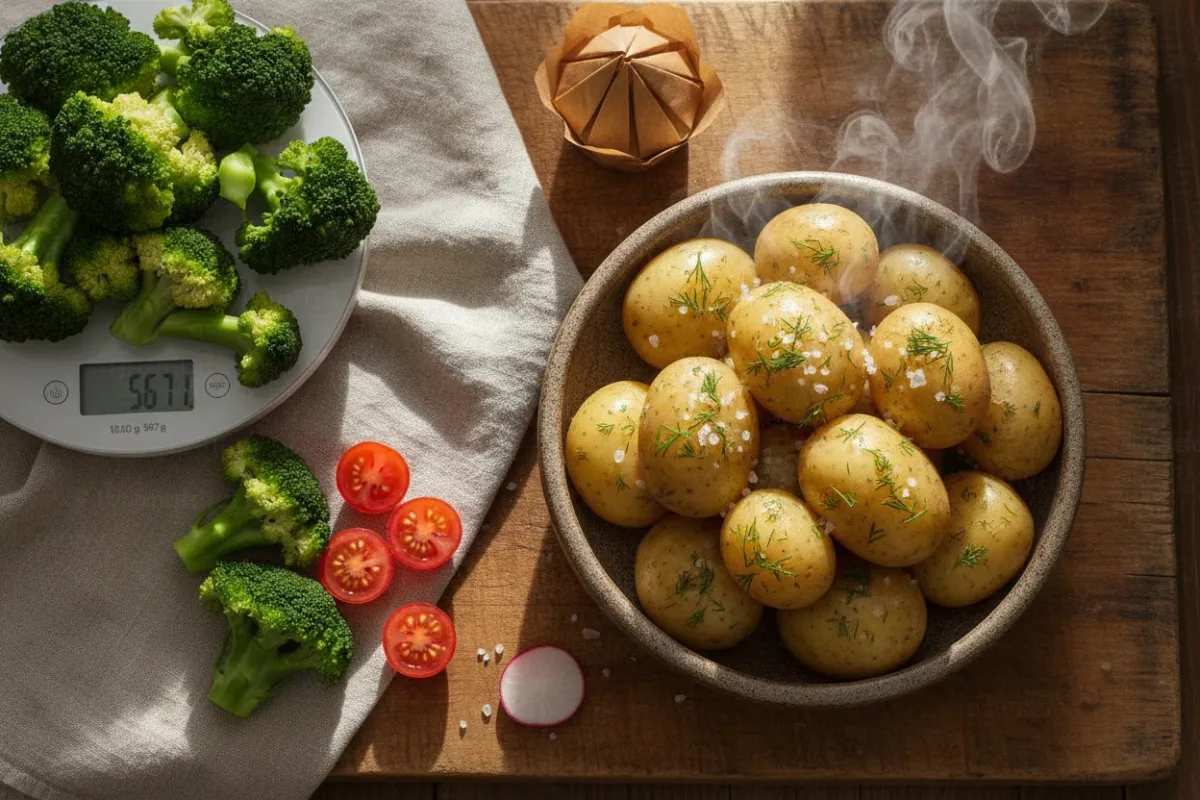
Boiled potatoes
That very champion of the satiety index, which many avoided for years out of fear of "getting fat from starch." In reality, the problem is almost always not the potato but the butter, sour cream, and breading around it.
- Calories: ~80 kcal per 100 g (boiled)
- Protein: ~2 g
- Fat: 0.1 g
- Carbohydrates: ~17 g
Boiled or jacket-baked potatoes are filling, cheap, and satiate better than most side dishes. Cooled potatoes work especially well: during cooling, part of the starch turns into resistant starch, which behaves more like fiber.
Shrimp
In people's minds, seafood often registers as "expensive and filling, so it must be high-calorie." With shrimp it's the opposite — it's almost pure protein.
- Calories: ~99 kcal per 100 g
- Protein: ~24 g
- Fat: ~0.3 g
- Carbohydrates: 0 g
Twenty-four grams of protein at a hundred calories is a rare combination. A handful of boiled shrimp turns a salad from "greens that leave you hungry again" into a full meal.
Air-popped popcorn
Popcorn has earned a reputation as a high-calorie movie snack — but the culprits are butter, sugar, and caramel, not the kernel itself. Air-popped popcorn without oil is an almost weightless volume.
- Calories: ~31 kcal per 1 cup (≈8 g popped)
- Protein: ~1 g
- Fat: ~0.4 g
- Carbohydrates: ~6 g
A whole large bowl of air-popped corn is about 90–100 calories and a decent serving of fiber. The perfect "crunchy" snack for a TV show instead of chips.
Pumpkin
Orange, dense, slightly sweet — it looks like a filling autumn carb. But by calories, pumpkin is closer to green vegetables.
- Calories: ~26 kcal per 100 g
- Protein: ~1 g
- Fat: 0.1 g
- Carbohydrates: ~6 g
Baked pumpkin works great both in a savory form with spices and as a base for healthy desserts: pumpkin purée adds texture and natural sweetness to cream at almost no calorie cost.
Greek yogurt
Thick, dense, creamy — it looks far "fattier" than regular yogurt. But in the fat-free version it's a protein concentrate.
- Calories: ~59 kcal per 100 g (fat-free)
- Protein: ~10 g
- Fat: ~0.4 g
- Carbohydrates: ~3.6 g
Ten grams of protein at fifty calories make Greek yogurt a base for breakfasts, sauces instead of mayonnaise, and dessert creams. With berries and a pinch of cinnamon, you get a full sweet snack in the 100–120 calorie range.
Mussels
Another seafood that seems like a restaurant delicacy but behaves modestly by its nutrition profile.
- Calories: ~86 kcal per 100 g (boiled)
- Protein: ~12 g
- Fat: ~2 g
- Carbohydrates: ~4 g
Besides protein, mussels provide iron and vitamin B12 — meaning these aren't "empty" calories but nutritionally dense food.
How to build a filling day without overdoing it
On their own, these foods aren't magic. The magic begins when they replace more calorie-heavy habits and come together into a system. A few working principles:
- Swap, don't add. Replace half of your usual pasta with konjac, white rice under meat with half a portion of potatoes, chips during a movie with air-popped popcorn. The budget frees up, and your plate doesn't go empty.
- An anchor of protein with every meal. Shrimp, Greek yogurt, mussels, cottage cheese. Protein is what holds satiety the longest, so it's exactly what protects against evening breakdowns.
- Build volume from water and fiber. Vegetables, pumpkin, greens, and konjac create mass on your plate that physically satiates at a pennies-worth of calories.
- Cook ahead. Boiled potatoes, baked pumpkin, and boiled shrimp keep beautifully for 2–3 days in the fridge. When filling food is already ready in a container, your hand doesn't reach for high-calorie fast food "on the go."
An example of a simple day built on these foods: breakfast — Greek yogurt with berries and pumpkin purée; lunch — konjac noodles with shrimp and vegetables; snack — a large bowl of air-popped popcorn; dinner — baked potatoes with herbs and mussels. Filling, varied — and without the feeling that your budget is destroyed by midday.
Try it yourself
The most valuable thing about these discoveries is that they remove the sense of guilt and struggle with yourself. Healthy eating stops being about "eating less" and becomes about "eating smarter": choosing what satiates, not just what weighs little in calorie grams.
It's worth starting with one experiment this week. Replace one familiar high-calorie side dish or snack with any of the heroes of this list — konjac instead of pasta, or popcorn instead of chips. Observe how much longer the fullness lasts and how many calories free up for something enjoyable. Most likely, after the very first time you'll have your own personal "no way it's really that little" — and that's the best motivation to keep going.
This article is for informational purposes only and is not medical advice. Consult a doctor or dietitian before making dietary changes.