Potatoes — The Satiety Cheat Code: 567 g of Food for 700 kcal
Potatoes' satiety cheat code: 567g for 700 calories that truly satisfy. Explore why potatoes beat hunger better than popular diet trends.
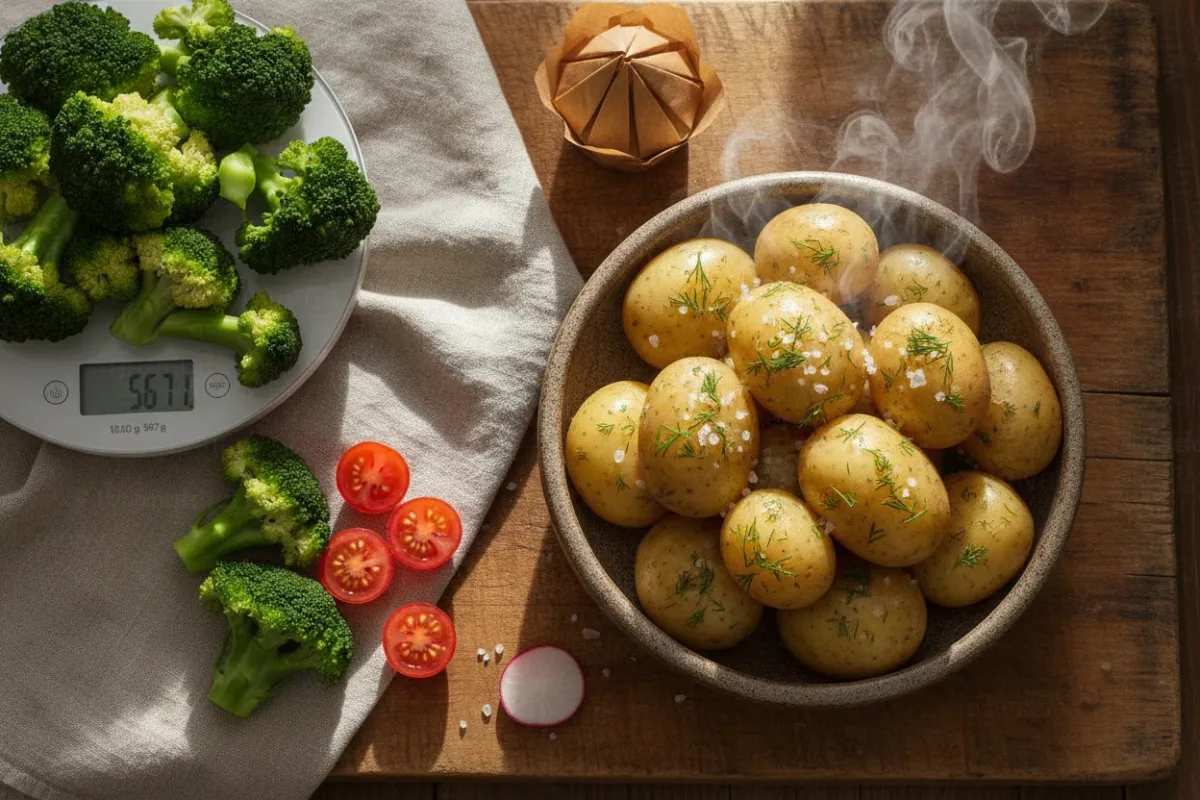
There are foods that seem made to outsmart hunger honestly. Not to suppress it with a pill or flush it away with water for half an hour, but to genuinely satisfy you — for a long time, deliciously, and with almost no calories. The potato is exactly that kind of food. One user shared an observation that captures the essence perfectly: 567 grams of food for just 700 calories — you'll hardly beat that ratio with anything. And this isn't a culinary trick, but quite measurable physiology.
Let's figure out why the ordinary potato is an underrated hero of mindful eating, how to count its calories and macros without illusions, and what to do to make it work for satiety rather than against your figure.
Why potatoes satisfy so well
Satiety isn't about the size of your stomach or about willpower. It's about the signals food sends to the brain: "that's enough, you can stop." And here the potato holds several honest trump cards.
It topped the scientific satiety ranking. In a classic 1995 Australian study led by Susanna Holt, researchers fed volunteers 240-calorie portions of different foods and measured how full they felt over the next two hours. Boiled potatoes took first place — their satiety index was 323%, against the baseline of 100% set by white bread. In other words, potatoes satisfied more than three times as strongly as the same amount of calories from bread, and outpaced oatmeal, pasta, rice, and even meat. You can review the details of the methodology and the table in the original publication of the study.
Enormous weight for tiny calorie content. There are about 80 calories in 100 grams of boiled potatoes. This means that those very 567 grams from the example really do fit into roughly 450–470 calories of pure potato, and with a light dressing and herbs they comfortably reach 700 "on the plate." Compare: 567 grams of cookies is about 2,700 calories, almost an adult's daily allowance. The same weight of food, the same filling of the stomach — yet the difference in energy is four to five times over.
Water and fiber work as a pair. Potatoes are about 77% water. Water provides volume without calories, while fiber (especially in the skin) slows gastric emptying and smooths out spikes in blood sugar. It's precisely the sharp spikes and crashes of sugar that most often bring back the feeling of hunger an hour after eating — the potato softens this effect, as long as you don't turn it into mash with butter.
Potato calories and macros: the honest numbers
The main rule of healthy eating is to count what actually goes into your mouth, not an idealized picture. The potato changes its calorie content dramatically depending on the cooking method.
Boiled or baked potatoes (per 100 g):
- Calories: ~80 kcal
- Protein: ~2 g
- Fat: ~0.1 g
- Carbohydrates: ~17 g
Mashed potatoes with butter and milk (per 100 g):
- Calories: ~120–140 kcal
- Fat: ~5–7 g
French fries (per 100 g):
- Calories: ~300–320 kcal
- Fat: ~15 g
The difference between a boiled potato and a serving of fries of the same weight is almost fourfold, and all of it hides in the oil. The potato itself contains almost no fat; the frying pan adds it. That's why the phrase "potatoes make you fat" is technically wrong — what makes you fat is what it's fried in and what it's drizzled with.
One more nuance for those counting carbs: the potato is a complex carbohydrate with a decent dose of potassium (more than in a banana of equal weight) and vitamin C. These aren't "empty" calories like sugar's, but food with real nutritional value.
The secret few people know: resistant starch
Here's where it gets most interesting for fans of digging into the science of food. If you boil potatoes and let them cool down, part of their starch turns into what's called resistant starch. It isn't digested in the small intestine as quickly as the regular kind, behaves more like fiber, and serves as food for beneficial gut bacteria.
What this gives you in practice:
- a steadier blood sugar level after eating;
- an even longer feeling of fullness;
- slightly fewer available calories than the table for hot potatoes shows.
In other words, a cold potato salad (without mayonnaise, on a light dressing) or potatoes left over from yesterday's dinner are in this sense even more advantageous than freshly boiled ones. An overview of how resistant starch affects metabolism can be read in an article on its properties.
A little trick: if a potato has cooled and is then gently reheated, part of the resistant starch is preserved. So reheated yesterday's potato isn't a culinary crime, but quite a sensible move.
How to make the potato an ally rather than an enemy of your figure
The potato satisfies on its own, but it's easy to "spoil" it with add-ons. A few simple principles will help preserve that very advantageous balance of weight and calories.
Cook without frying
Boiling, baking in the oven, steaming, or cooking in a multicooker keeps the calorie content low. A potato baked in its skin is a pleasure in itself: the skin adds fiber and holds satiety longer. It's enough to drizzle it with a teaspoon of olive oil, sprinkle it with paprika, garlic powder, and rosemary — and you get a dish worth giving up fries for.
Add protein
The potato is strong in carbohydrates and satiety, but poor in protein (only ~2 g per 100 g). If you combine it with a source of protein — cottage cheese, an egg, chicken breast, fish, or Greek yogurt as a dressing — satiety becomes even more lasting, and the dish turns into a complete, balanced meal. A baked potato with cottage cheese and herbs is a classic example of a simple "healthy lunch" at 250–300 calories that really keeps you full for several hours.
Watch the dressings, not the potato itself
The main trap isn't the potato, but what's on it. Butter, cheese, bacon, and mayonnaise-based sauces can double or triple the calories of the plate. Replace them with:
- Greek yogurt instead of sour cream;
- herbs, onion, and spices instead of cheese;
- lemon juice and mustard instead of mayonnaise dressing in a salad.
Use the "high-volume" meal mindfully
The principle of a large volume of food at low calorie content is called volume eating. The idea is simple: fill your plate and stomach with foods of low energy density so you can truly eat your fill while staying within your calories. The potato is one of the best tools for this, alongside vegetables, legumes, and lean protein. Those very 567 grams for 700 calories are volume eating in action.
The potato "reset": what practice shows
There's even a separate semi-amateur experiment — eating almost exclusively plain boiled potatoes for several days. People who have tried it often note that they don't experience tormenting hunger, even though they take in noticeably fewer calories than usual. The explanation is exactly what's described above: the highest satiety index plus enormous volume at low calorie content.
This is not a call to sit on a potato mono-diet — monotonous eating deprives the body of many nutrients and quickly gets boring. But the fact itself is telling: a product that has been blamed for "extra pounds" for decades is in reality one of the most filling and low-calorie items in an ordinary diet. The problem almost always lay not in the potato, but in the frying pan, the oil, and a serving of sauce the size of the potato itself.
A simple recipe to get started
So as not to put it off, here's a basic idea for a filling lunch with almost no calories:
Baked potatoes with a cottage cheese dressing
- 300 g of potatoes, cut into wedges in their skins;
- 1 tsp of olive oil, paprika, garlic powder, salt;
- bake for 25–30 minutes at 200 °C;
- dressing: 100 g of soft 5% cottage cheese + herbs + a pinch of salt.
Approximate calories and macros for the whole portion: about 350 calories, 16 g of protein, 6 g of fat, 55 g of carbohydrates. A big, warm, fragrant plate, after which you won't be drawn to the fridge half an hour later.
Try it yourself
The potato is a rare case where "cheap, simple, and tasty" coincides with "healthy and filling." You need neither exotic superfoods nor expensive supplements — it's enough to bring back to your plate a product that has been undeservedly written onto the list of forbidden ones.
Boil or bake potatoes today, let them cool for the bonus of resistant starch, add protein and herbs — and observe how much longer the fullness lasts compared with your usual snack. Sometimes the best cheat code for healthy eating lies not in novelties, but in the most ordinary potato.
Source of the observation: a discussion on Reddit, by /u/ls1goat04.
This article is for informational purposes only and is not medical advice. Consult a doctor or dietitian before making dietary changes.