Soup with 150 kcal and 28 g of protein: the satiety cheat code
Light soup with 150 kcal and 28g protein keeps you satisfied longer. Discover the satiety cheat code that makes weight loss easier than expected.
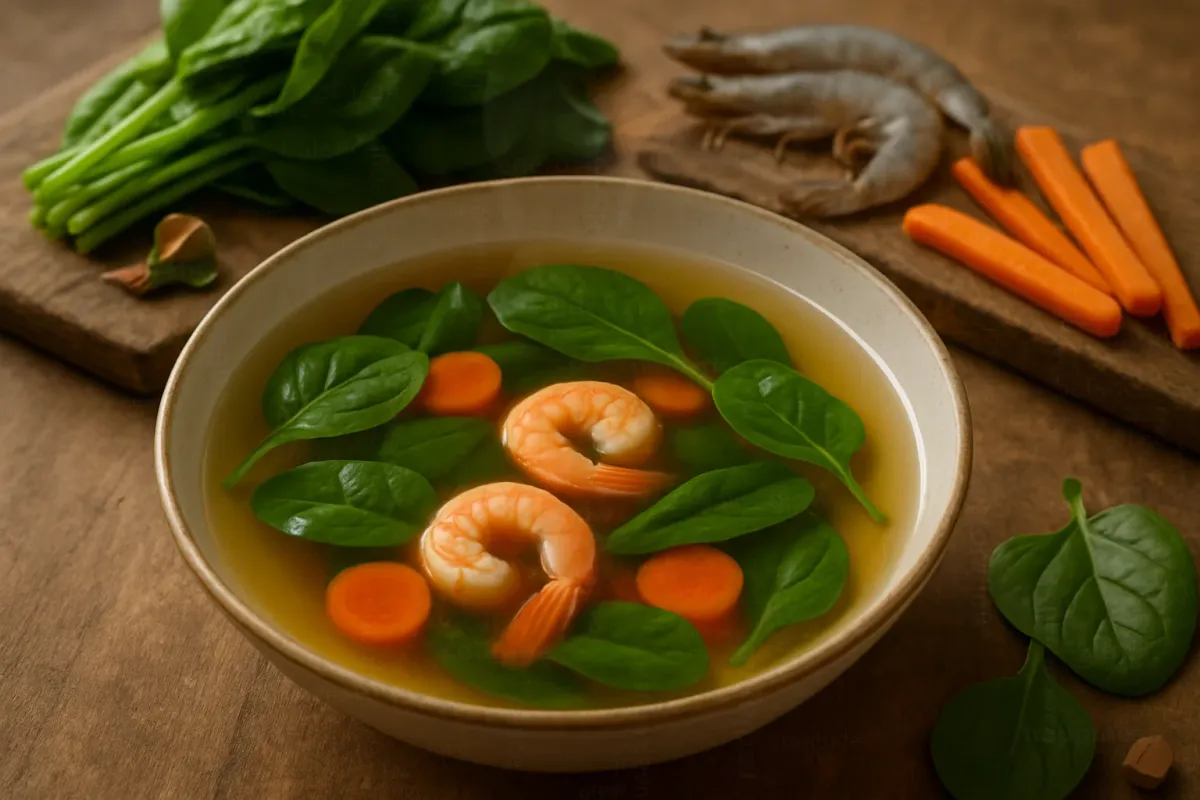
There's a dish that works almost like a cheat code in a game: it bypasses the rules of hunger, requires no willpower, and at the same time fits into laughably low calorie numbers. It's soup. Not a rich borscht with a fried base, nor a cream-based purée soup, but an honest light broth-based soup — with protein, vegetables and greens.
The reason for this conversation was one very short recipe that a user shared online: 113 grams of shrimp, wild spinach (which he foraged himself), carrot and broth. That's it. Four ingredients, not a gram of flour, oil or cream. And it's precisely in this simplicity that all the power is hidden.
Why soup is a cheat code, not just "liquid food"
When people talk about weight loss, they usually picture a lettuce leaf and a sad feeling of being underfed. Soup breaks this logic. Here are three reasons why a bowl of light soup keeps you fuller than a salad of the same calorie content.
Volume that fools the stomach
The main secret of soup is water. Broth takes up space in the stomach, stretches its walls and sends the brain a signal that "there's already something in here." At the same time, water carries almost no calories. The result is a large, warm, filling portion at a tiny energy cost.
This isn't culinary mythology but the concept of energy density — the number of calories per gram of a product. The more water and fiber a dish contains and the less fat, the lower the density and the larger the portion you can eat without exceeding your calorie budget. The healthy-eating recommendations from the World Health Organization are built around exactly this principle: more vegetables, less hidden fat and sugar.
Protein that keeps you full for hours
In the recipe described — shrimp. And that's no accident. Seafood provides a lot of protein with almost zero fat, and protein is the most "long-lasting" macronutrient. It digests more slowly than carbohydrates and has the strongest effect on the feeling of fullness.
Let's count it out. According to data from the USDA FoodData Central database, 100 grams of boiled shrimp provide approximately 99 kcal and about 24 grams of protein with minimal fat. That means the 113 grams from the recipe is:
- about 112 kcal
- approximately 27 g of protein
- less than 0.5 g of fat
- about 1 g of carbohydrates
Add a handful of spinach (per 100 g — only ~23 kcal, plus iron, folic acid and vitamin K), a small carrot (~50 g, about 20 kcal and 5 g of carbohydrates, plus beta-carotene) and low-fat broth (10–20 kcal). The total for the whole bowl:
| Metric | Per serving |
|---|---|
| Calories | ~150–170 kcal |
| Protein | ~28 g |
| Fat | ~1 g |
| Carbohydrates | ~7–8 g |
Twenty-eight grams of protein for 150 calories — that's the very math that makes it worth getting out the pot. For comparison: the same amount of protein from syrniki or a protein bar would cost two to three times more in calories.
Warmth soothes and slows down the rush
There's a third, less obvious point too. It's physically impossible to gulp down hot soup in thirty seconds — you eat it with a spoon, slowly, with pauses. And it's precisely the speed of eating that is directly linked to overeating: the feeling of fullness reaches the brain in about 15–20 minutes, and someone who eats slowly manages to feel full before eating too much. Soup forces you to slow down by its very form.
How it's made: breaking the recipe down to the bone
The beauty of the original recipe is that there's nothing superfluous in it. Let's break down what each ingredient does and how to recreate it in your own kitchen.
Shrimp — the protein base
Shrimp cook in a matter of minutes, and that's their huge advantage: overcooked, they turn rubbery. You need to drop them into the pot at the very end, 2–3 minutes before turning off the heat. Any kind will do — fresh, frozen, peeled. If you don't have them on hand, the same logic works with white fish fillet, pieces of chicken breast or turkey. The main thing is lean protein that won't weigh down the broth.
Spinach (and any greens) — volume with almost no calories
The recipe's author used wild spinach that he foraged himself. Most people will have to make do with store-bought — and that's absolutely fine. Spinach is great because it provides a huge volume of leaves that, when simmered, shrink down to a couple of spoonfuls but still manage to release their vitamins into the broth. You add it at the very end, for 1 minute: long cooking kills both the color and the nutritional value. Instead of spinach, chard, young nettle, beet leaves, arugula or a brick of frozen spinach all work wonderfully.
Wild greens are a separate topic. You should forage them only when you're one hundred percent certain of the plant species and far from roads and treated fields. If there's even the slightest doubt — a store-bought bunch is no worse for the essence of the dish.
Carrot — sweetness, color and fiber
Carrot adds natural sweetness, an orange color and fiber, which additionally prolongs the feeling of fullness. Unlike the greens, it goes in earlier — it needs time to become soft. Thinly sliced or grated carrot will cook through in 7–10 minutes. It's the only noticeable source of carbohydrates in the bowl, and there's little of it — which is why such a soup fits comfortably even into a low-carb and keto approach.
Broth — the foundation of the flavor
The broth here does everything: it's precisely what turns a set of ingredients into soup. It's better to use low-fat — vegetable, chicken or seafood. If you're using a bouillon cube or ready-made store broth, it's worth checking the ingredients: they often generously add salt. Excess salt retains water and gives you that very morning "puffiness," so it makes sense to choose options labeled "reduced salt" or to make the base yourself from bones, vegetable scraps and spices.
The basic assembly algorithm
- Bring the broth to a gentle simmer.
- Add the carrot, cook for 7–10 minutes until soft.
- Add the shrimp (or other protein), cook for 2–3 minutes.
- In the last minute, toss in the spinach and immediately turn off the heat.
- Salt minimally, add pepper, and optionally a wedge of lemon or a clove of garlic.
The whole process is about 15 minutes. That's faster than delivery.
How to turn one soup into an eating system
One recipe is tasty. But the real "cheat code" kicks in when soup becomes a habit and a tool. A few ideas for how to build on this base.
The "broth + protein + greens + one vegetable" formula
Once you've memorized this foursome, you can assemble a new soup every single day without opening any recipes:
- Protein: shrimp, fish, chicken, turkey, tofu, poached egg, white beans.
- Greens: spinach, chard, arugula, parsley, green onion, kale.
- Vegetable: carrot, zucchini, cauliflower, celery, tomatoes, pumpkin.
- Broth: vegetable, chicken, mushroom, fish.
By swapping one element at a time, it's easy to get dozens of variations within the same calorie range. This saves you from the main enemy of healthy eating — boredom.
Soup as meal prep
Light broth-based soups keep well for 2–3 days in the fridge, so they're convenient to make ahead in a big pot. One caveat: delicate protein and greens suffer from reheating. So you cook the broth with vegetables in advance and store it separately, then add the shrimp or fish with greens only when reheating a specific portion — that way each bowl will be like freshly cooked.
Soup as a "rescue" before a binge
Such a soup also has a tactical role. A bowl of warm broth with protein 20–30 minutes before a hearty meal or a visit to friends noticeably reduces appetite — and at the main table your hand no longer reaches for seconds. This works gently and without forcing yourself: not "you can't eat," but "soup first."
When you should know your limits
Honestly about the boundaries. Soup is a powerful tool, but not a reason to live on broth alone. A diet of nothing but low-calorie soups doesn't provide enough energy and fats, without which the body also suffers. No one has canceled healthy fats (olive oil, avocado, nuts), complex carbohydrates and a variety of foods. Soup is an ally in the overall picture, not a replacement for it. The idea is in mindfulness, not fanaticism: a bowl of light soup simply helps you feel full while staying within a comfortable calorie budget.
Try it yourself
The best part of this story is that you can start today and without any special investment. You don't need exotic products, expensive supplements or culinary talent. You need broth, a piece of protein, a handful of greens and any vegetable from the fridge.
It's worth assembling your own version of that very soup — with shrimp or with chicken, with spinach or with whatever you found in the vegetable drawer — and paying attention to how you feel afterward. Most likely it will surprise you: the fullness comes calm and lasting, while the numbers in your food diary are suspiciously small. That's the very cheat code. And now you have it too.
The idea and original recipe come from a post by user /u/Independent-Chef-233.
This article is for informational purposes only and is not medical advice. Consult a doctor or dietitian before making dietary changes.