A 327-Calorie Lunch: A Build-Your-Own Plate from 10 Ingredients
Build your perfect 327-calorie plate with 10 ingredients—zero cooking required. Say goodbye to fast-food temptation and unhealthy snacking.
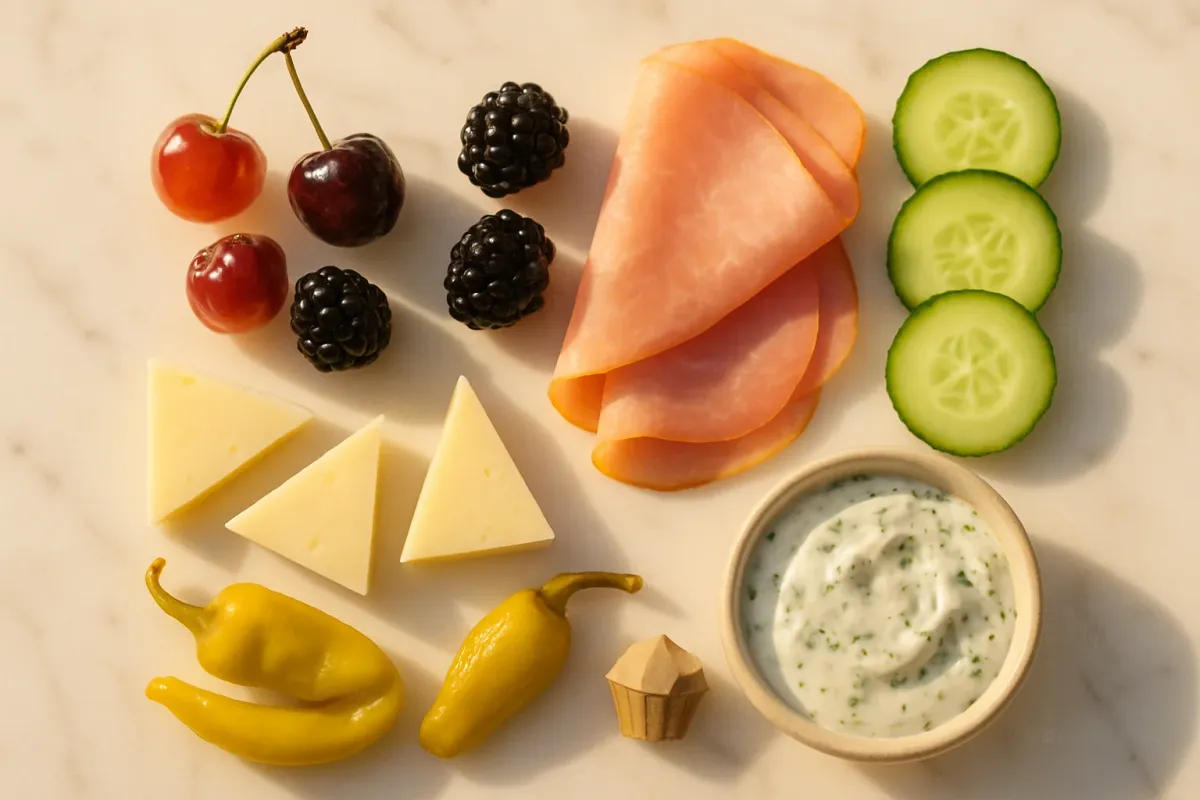
There are days when you have neither the energy nor the time to cook a proper lunch — and it's precisely on those days that fast-food slip-ups and uncontrolled snacking happen most often. The build-your-own plate (in English-language nutrition communities it's called a snack plate) solves this problem elegantly: ten ingredients, zero cooking, 327 calories — and yet the feeling of a real, varied lunch, not a "snack on the go."
This format is a find from the mindful eating community, where people share real lunches with precise calorie counts. Let's break down a specific plate gram by gram, calculate its macros, and show you how to assemble your own version from whatever is in your fridge.
What's on the Plate: The Full Lineup with Calories
The main beauty of this lunch is its absolute transparency. Every ingredient is weighed, every calorie counted. Here's the exact composition:
| Ingredient | Amount | Calories |
|---|---|---|
| Honey ham | 74 g | 67 |
| Light processed cheese (wedge) | 1 pc. | 25 |
| Cucumber | 76 g | 12 |
| Blackberries | 57 g | 24 |
| Sweet cherries | 110 g | 55 |
| Pickled pepperoncini peppers | 33 g | 11 |
| Crispy fried onions | 3 g | ~17 |
| Thick tzatziki sauce | 1 tbsp | 18 |
| Light cream cheese | 1 tbsp | 35 |
| Honey-maple glazed chicken | 55 g | 60 |
| Total | 327 kcal |
Approximate Macros for the Plate
The exact values for protein, fat, and carbohydrates depend on the specific product brands, but based on typical values for these categories, the picture looks roughly like this:
- Calories: 327 kcal
- Protein: ~25–27 g (the main contributors — ham, chicken, and two kinds of cheese)
- Fat: ~10–12 g (cheeses, tzatziki sauce, fried onions)
- Carbohydrates: ~20–24 g (almost all from the berries and cherries)
For a lunch within a daily allowance of 1,500–1,800 kcal, this is a very favorable proportion: one-fifth of the day's calories, yet a solid serving of protein. If you want to check the macros of your own ingredients precisely, it's convenient to use the USDA FoodData Central database, which contains verified data on thousands of foods.
Why This Format Works: Three Reasons
1. Protein in Every Other Component
Look closely: of the ten ingredients, four are protein sources (ham, chicken, processed cheese, and cream cheese), plus the yogurt-based tzatziki. Protein is the most satiating macronutrient: it digests more slowly and maintains the feeling of fullness longer than carbohydrates. That's exactly why a 327-kcal plate satisfies better than a pastry with coffee at the same calorie count.
And the protein here is "light": ham and chicken are lean meats, and the cheeses come in reduced-fat versions. One wedge of light processed cheese is just 25 kcal, yet it delivers a full sense of creaminess.
2. Food Volume vs. Calorie Density
The cucumber, berries, cherries, and pickled peppers add up to nearly 280 grams of food at just 102 calories. Low-calorie vegetables and fruits with high water content provide physical volume: the plate looks generous, you spend a long time chewing, your stomach fills up — and yet the calories stay minimal.
This is the very principle behind the Harvard Healthy Eating Plate: half the volume of your food should be vegetables and fruits. In this build-your-own plate, the principle is followed almost literally — except instead of one side dish, there are four small, vibrant components.
3. Flavor Variety — Protection Against Slip-Ups
This is where the real magic hides. On a single plate, you get:
- sweet — cherries, blackberries, the honey glaze on the chicken;
- salty — ham, cheese;
- sour and spicy — pepperoncini;
- creamy — tzatziki, cream cheese;
- crunchy — fried onions, cucumber.
When lunch satisfies all your flavor cravings at once, your brain doesn't have to demand "something sweet" or "something salty" an hour later. Three grams of fried onions is only 17 calories, but it's exactly these little touches that turn diet food into food you actually want to eat. Mindful eating isn't built on willpower — it's built on food being enjoyable, without fanaticism or bans.
How to Assemble Your Own Plate: A Universal Formula
The specific composition isn't dogma — it's a construction kit. The formula looks like this:
Step 1. Two Protein Sources (120–150 kcal)
Take two different protein foods, 50–75 grams each. Different ones — because that makes eating more interesting. Options:
- lean ham or turkey;
- baked or ready-cooked chicken (in this plate — honey-maple glazed, 55 g = 60 kcal);
- boiled eggs;
- lightly salted fish;
- cottage cheese balls or cheese wedges.
Step 2. A Crunchy Vegetable (10–30 kcal)
Cucumber is the classic: 76 grams at just 12 calories. Bell pepper, celery, radishes, or carrot sticks also work. The vegetable's job is volume and crunch.
Step 3. Berries or Fruit (50–80 kcal)
In the original — blackberries and cherries, 79 kcal together. This is the "dessert" part of the plate: it satisfies the craving for sweetness in a natural way. In summer — cherries and berries; in winter — a mandarin, half an apple, grapes. For a fitness dessert blog, this is home territory: berries are the best friend of anyone watching their sugar but unwilling to give up sweets.
Step 4. Something Pickled or Tangy (10–20 kcal)
Pepperoncini, cornichons, capers, pickled onions. Acidity and heat "wake up" your taste buds and give the plate a restaurant-quality feel. Calories — nearly zero: 33 grams of peppers = 11 kcal.
Step 5. One or Two Dipping Sauces (30–60 kcal)
Measurement discipline matters here: sauces are the main source of hidden calories. In the original plate, both sauces are measured out with a tablespoon: tzatziki — 18 kcal, light cream cheese — 35 kcal. A spoon, not "eyeballing it" — that's the whole secret of accurate counting.
Step 6. A Crunchy Accent (15–20 kcal)
Fried onions, seeds, crushed nuts, a crouton. Literally a pinch — 3 grams of onions gives ~17 kcal — but it's the accent that makes the plate feel complete.
Final range: 300–400 kcal — a full-fledged light lunch that comes together in five minutes.
The Build-Your-Own Plate and Meal Prep: A Perfect Pair
The snack plate format pairs wonderfully with Sunday meal prepping for the week:
- Proteins are sliced and portioned into containers 3–4 days ahead. Baked honey-glazed chicken breast keeps in the fridge without losing flavor.
- Vegetables are washed and cut in advance — cucumbers and peppers keep beautifully for a couple of days in a container with a paper towel.
- Sauces are portioned into small jars of 1–2 tablespoons — that way there's no temptation to take more.
- Berries are washed right before eating so they don't get soggy.
In the morning, assembling the plate takes less time than brewing tea. And most importantly — the lunch is already counted: no need to open an app and frantically recall what was eaten and how much.
Frequently Asked Questions
Isn't 327 calories too little for lunch?
It depends on your overall diet. With a daily allowance of 1,500–1,800 kcal, such a lunch leaves a comfortable margin for a hearty breakfast, dinner, and a couple of snacks. If your activity level is high or your allowance is larger, the plate scales easily: double the protein portion, add whole-grain crispbreads or a handful of nuts, and you get 450–500 kcal. The general principles of a balanced diet are well described in the WHO healthy diet recommendations.
Is this suitable for keto or low-carb eating?
Almost. The base of the plate — protein and vegetables — fits fully into a low-carb approach. For strict keto, you should remove the cherries (110 g is a noticeable portion of fruit carbs) and the honey glaze, replacing them with avocado, olives, and nuts. The construction-kit structure stays intact.
Can you eat like this every day?
The format — yes; the composition — worth rotating. The strength of the construction kit is that by swapping 2–3 components, you get a completely different lunch: today a Mediterranean version with tzatziki and pepperoncini, tomorrow a Scandinavian one with fish and cucumber, the day after — a sweet-and-salty one with turkey and grapes. Monotony is the main enemy of sustainable eating habits.
Try It Yourself
Assemble your first build-your-own plate tomorrow: two proteins, a crunchy vegetable, a handful of berries, something pickled, a spoonful of sauce, and a pinch of crunch. Weigh it, write it down, photograph it — and notice how full and satisfied your body feels after 327 "transparent" calories compared to the "invisible" five hundred from snacks on the go.
Healthy eating isn't about bans or perfection. It's about small smart decisions that are easy to repeat day after day. And a beautiful plate assembled in five minutes is one of the tastiest decisions of all.
This article is for informational purposes only and is not medical advice. Consult a doctor or dietitian before making dietary changes.