Fiber and Protein: 7 Simple Everyday Meals
Stop snacking between meals: 7 fiber and protein combinations using everyday ingredients. No powders, no exotic foods, no complicated recipes.
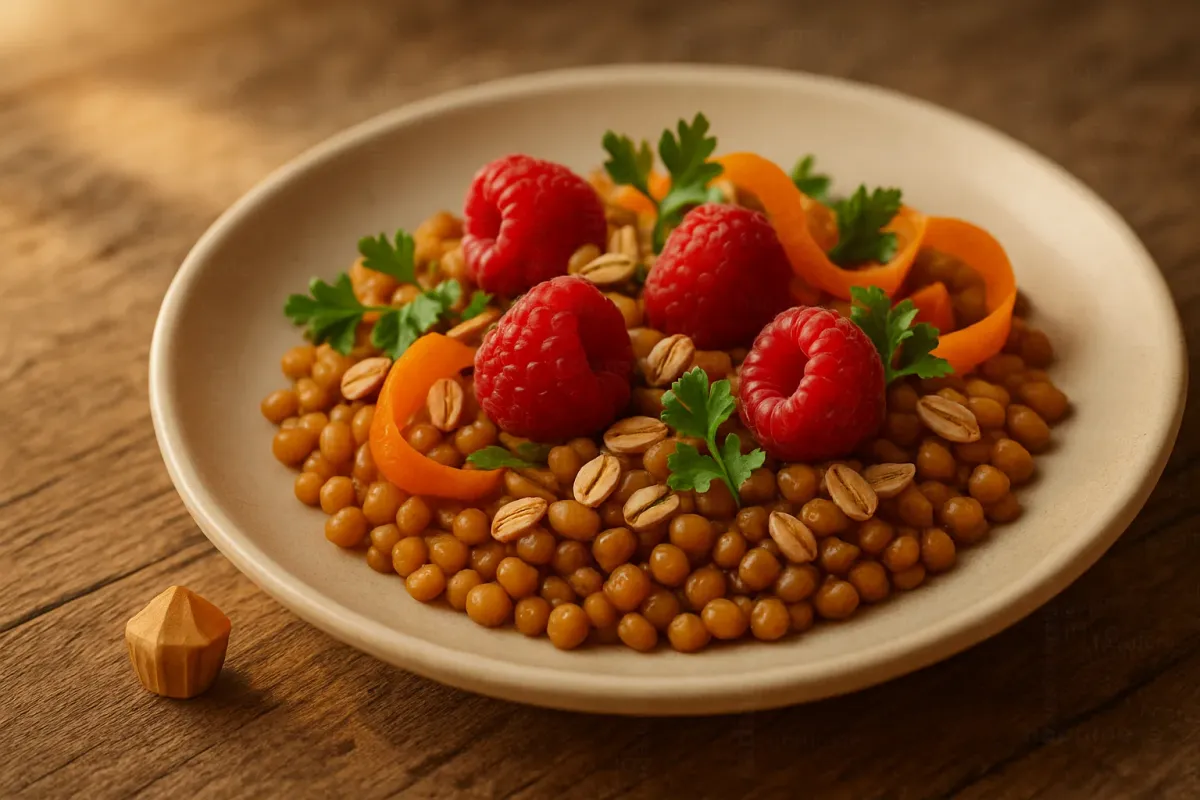
Protein satisfies, fiber keeps you full for a long time and feeds the beneficial bacteria in your gut. Together they work as a team: a plate that has both leaves no room for the evening urge to "nibble on something." And you can put such a plate together from the most ordinary foods — lentils, cottage cheese, eggs, oatmeal, beans — without protein powders, exotic ingredients, or an hour at the stove.
Below is why this pair works so well, how much of each you actually need, and seven meals you can realistically cook on a weeknight.
Why fiber and protein are the best pair on a plate
Three facts that explain why it's worth keeping them together.
Protein keeps you full longer. Of all the macronutrients, it's the one that most strongly affects the feeling of satiety and requires the most energy to digest. Simply put, after a meal with a good portion of protein your hand doesn't reach for a snack an hour later.
Fiber feeds the microbiota and stabilizes blood sugar. Soluble fiber from oats, legumes, and apples slows the absorption of carbohydrates — there's no sharp spike after eating and no subsequent "crash" with a craving for sweets. Insoluble fiber from vegetables and whole grains helps digestion run like clockwork. According to the Harvard School of Public Health, a fiber-rich diet is linked to a lower risk of heart disease and type 2 diabetes.
Together they provide volume at modest calories. Legumes, vegetables, and whole grains take up a lot of space on the plate but carry few calories. That's the secret behind meals that leave you full while your macros stay in check.
How much fiber and protein you actually need
The benchmarks are simple and easy to keep in mind.
Fiber: 25–30 g a day. Most international recommendations converge on roughly 25 g for women and 30–38 g for men — or about 14 g per 1,000 kcal of the diet. The reality is that the typical diet often doesn't even reach half of that target. The good news: one serving of lentils or a cup of raspberries covers nearly a third of the daily requirement.
Protein: roughly 1.2–1.6 g per kg of body weight for an active lifestyle. The baseline physiological norm is around 0.8 g per kg, but those who train or want to preserve muscle while losing weight are usually advised to eat more. For a person weighing 65 kg that's approximately 80–105 g of protein a day — that is, about 25–35 g at each of three meals. Detailed protein benchmarks are provided by the UK's NHS.
The main practical takeaway: you don't need to count everything down to the gram. It's enough to make sure that each main meal has a noticeable source of protein and at least one source of fiber.
The plate principle that works without counting
To avoid opening macro tables every time, it's convenient to build a meal using a simple formula:
- Half the plate — vegetables or greens (fiber, volume, vitamins).
- A quarter — a source of protein (cottage cheese, eggs, chicken, fish, tofu).
- A quarter — complex carbohydrates with fiber (legumes, quinoa, whole grains, whole-grain bread).
- On top — a "smart" fat: a spoonful of tahini, half an avocado, a handful of seeds.
A separate trick is legumes. Lentils, chickpeas, and beans provide both protein and fiber at once, so a single food covers two tasks simultaneously. You can always check the exact values for any food in the open USDA FoodData Central database.
7 simple meals high in fiber and protein
The macros are approximate, per single serving. The numbers may vary slightly depending on the fat content of the products and the portion size — it's a guideline, not a law.
1. Warm salad with lentils and egg
Boiled lentils (they cook in 15–20 minutes without soaking), a handful of arugula or spinach, cherry tomatoes, a spoonful of olive oil, and a soft-boiled egg on top. Dressing — lemon juice, salt, a little mustard.
Here the lentils provide both protein and about 8 g of fiber per 100 g, while the egg adds complete protein. Hearty, warm, and it comes together while the lentils finish cooking.
Macros per serving (~350 g): ≈ 320 kcal · P 22 g · F 12 g · C 32 g · fiber ≈ 11 g
2. Protein oatmeal with cottage cheese and berries
Pour hot water or milk over rolled oats (40 g), let it sit for a couple of minutes, stir in 100 g of soft cottage cheese and a handful of raspberries or blueberries. Berries are fiber's best friend: raspberries have about 6.5 g per 100 g.
Cottage cheese turns ordinary porridge into a full-fledged high-protein breakfast, while the berries add fiber and natural sweetness without sugar.
Macros per serving (~300 g): ≈ 290 kcal · P 24 g · F 6 g · C 35 g · fiber ≈ 8 g
3. Scramble with chickpeas and spinach
Beat two eggs, pour them into the pan with heated boiled (or canned) chickpeas and a large handful of spinach. It cooks in 5 minutes. The chickpeas add a pleasant texture, about 7–8 g of fiber per 100 g, and plant protein, while the spinach cooks down to a weightless amount of greens.
This dish is a great help for dinner when you have no energy to cook but really want to fill up.
Macros per serving (~280 g): ≈ 330 kcal · P 22 g · F 16 g · C 24 g · fiber ≈ 8 g
4. Bowl with quinoa, chicken, and broccoli
The base is boiled quinoa (a pseudo-grain with protein and fiber), topped with pieces of baked or boiled chicken breast and steamed broccoli. Dressing — a spoonful of tahini thinned with lemon and water.
A classic "meal-prep" bowl: the components are cooked separately and easily assembled in different combinations all week. The broccoli and quinoa cover the fiber, the chicken the protein.
Macros per serving (~400 g): ≈ 420 kcal · P 38 g · F 12 g · C 38 g · fiber ≈ 9 g
5. Black bean bowl with vegetables
Black (or regular red) beans are one of the fiber champions: about 8–9 g per 100 g plus almost as much protein. Heat the beans with spices, add corn, tomatoes, bell pepper, herbs, and a spoonful of Greek yogurt instead of sour cream. Optionally — wrap it in a whole-grain tortilla.
Macros per serving (~350 g): ≈ 350 kcal · P 19 g · F 7 g · C 52 g · fiber ≈ 14 g
6. Cottage cheese bowl instead of dessert
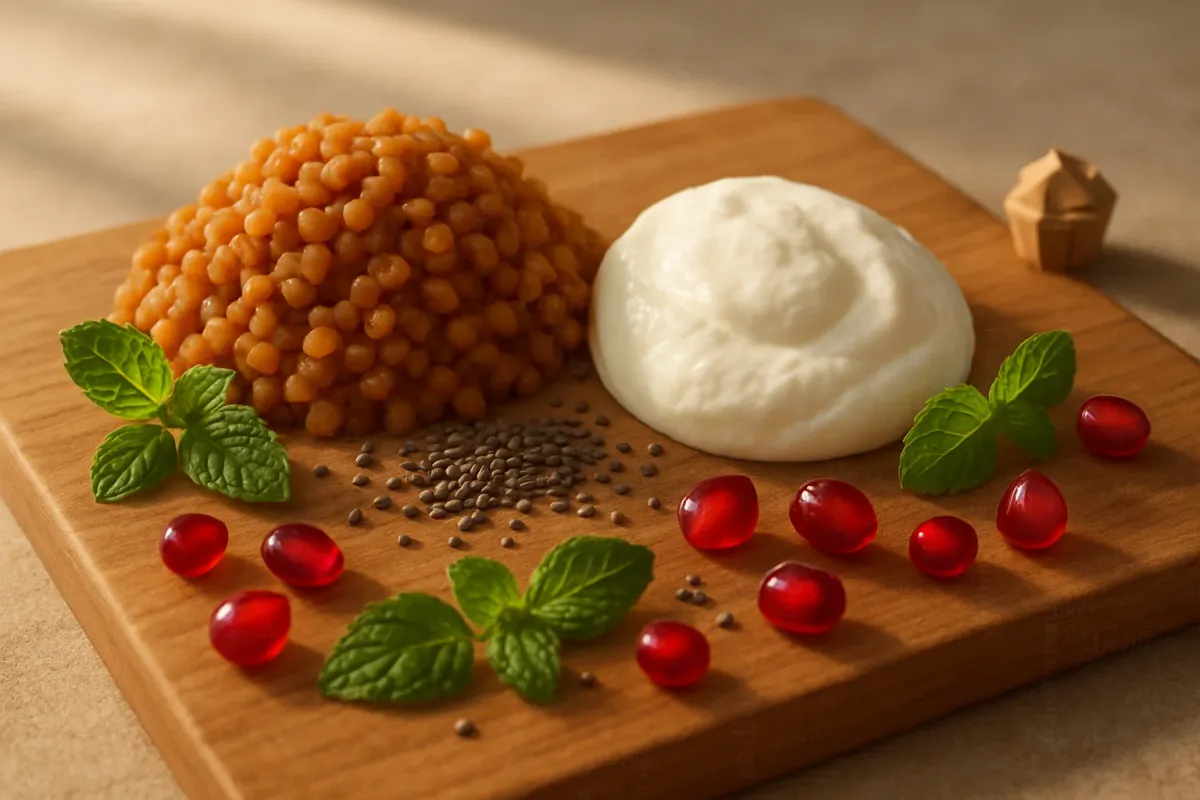
This is the case where something healthy really does resemble something sweet. Blend 150 g of soft cottage cheese until creamy, add berries, a spoonful of chia seeds, and a pinch of cinnamon. Chia seeds provide 4–5 g of fiber per tablespoon and also slightly thicken the mixture into a mousse-like consistency.
This is a snack, a dessert, and an evening meal all in one, satisfying the craving for sweets without the sugar swings.
Macros per serving (~250 g): ≈ 250 kcal · P 26 g · F 8 g · C 18 g · fiber ≈ 9 g
7. Chia pudding with yogurt for the morning
Pour 150 ml of milk or a plant-based drink over 3 tablespoons of chia seeds, add 100 g of Greek yogurt, leave it in the fridge overnight. In the morning — berries or apple pieces on top. Overnight the chia swells and turns the liquid into a tender pudding.
A breakfast you don't need to cook in the morning: it all comes together the evening before in two minutes.
Macros per serving (~300 g): ≈ 300 kcal · P 16 g · F 13 g · C 26 g · fiber ≈ 12 g
Snacks and protein desserts on the go
Often the daily fiber and protein target "falls through" precisely at snacks — where cookies usually end up. A few simple swaps:
- Roasted chickpeas. Pat boiled chickpeas dry, drizzle with oil and spices, and roast until crisp. The result is a protein-and-fiber alternative to chips. A 50 g serving: ≈ 120 kcal · P 6 g · fiber ≈ 4 g.
- Apple with peanut butter. Fiber from the apple plus protein and fat from the butter — a great pair that keeps hunger away for a long time. Benchmark: ≈ 200 kcal · P 7 g · fiber ≈ 5 g.
- Chocolate cottage cheese mousse. Blend cottage cheese with a spoonful of cocoa and a drop of sweetener — a quick no-bake protein dessert. A 150 g serving: ≈ 160 kcal · P 24 g · fiber ≈ 2 g.
- Greek yogurt with seeds. 150 g of yogurt, a spoonful of chia or flax seeds, and a handful of berries: ≈ 180 kcal · P 16 g · fiber ≈ 7 g.
The principle is the same: add a source of protein (cottage cheese, yogurt, nut butter) to a source of fiber (fruit, berries, seeds) — and a snack goes from "empty" to working for you.
Meal prep: a week's supply in one hour
The main reason for caving to "quick" food is the absence of a ready option at hand. Prepping solves this in one go on the weekend:
- Boil a large batch of a base. Lentils, quinoa, and beans keep well in the fridge for 3–4 days. Half an hour of cooking — and the base for half the meals on the list is ready.
- Roast protein and vegetables on a sheet pan. Chicken breasts, broccoli, peppers, and cauliflower roast at the same time in 25–30 minutes. After that, all that's left is to portion them into bowls.
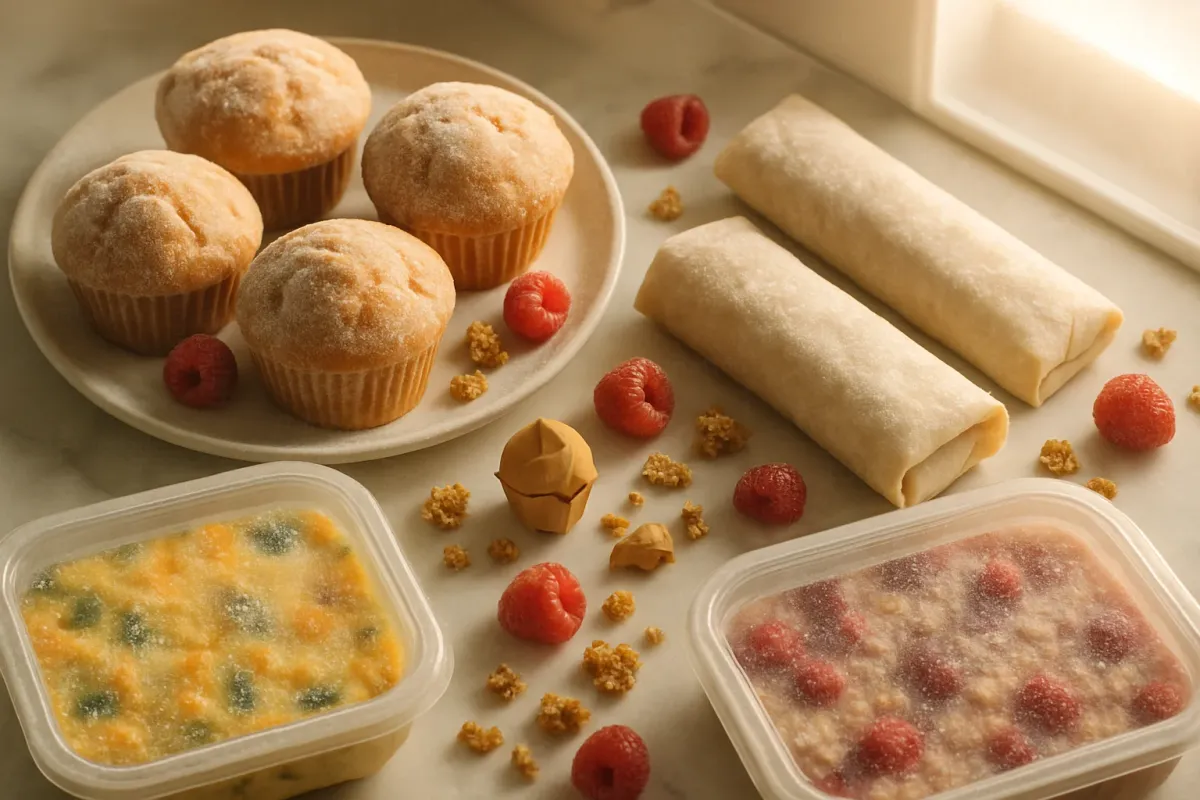
- Assemble "overnight" breakfasts. Oatmeal with cottage cheese and chia pudding are made the evening before in jars and wait for morning.
- Portion into containers. When ready components are sitting in the fridge, putting together a balanced plate is a matter of two minutes, not half an hour.
Such a supply saves both time and nerves: the choice of "what to eat" has already been made in advance.
Common mistakes that leave you short on fiber and protein
- A sharp jump in fiber. If you add a lot of legumes and bran all at once, the gut can respond with bloating. It's better to build up the amount gradually, over a couple of weeks.
- Too little water. Fiber works in tandem with liquid. Without enough water the effect can turn out to be the opposite, so drinking throughout the day matters.
- All the protein at dinner. It's easier for the body to absorb protein evenly, so it's sensible to spread it across all meals rather than "catching up" on the target in the evening.
- Relying on supplements alone. Protein powders are convenient, but whole foods provide fiber, vitamins, and satiety along with the protein. It makes more sense for the foundation of the diet to be ordinary food, with supplements merely complementing it when needed.
Give it a try yourself
You don't need to overhaul your entire diet in a single day. It's enough to start with one meal: for example, swap your usual breakfast for protein oatmeal with cottage cheese and berries, or put together a black bean bowl for dinner. Just one such dish adds a noticeable portion of both protein and fiber to your day — and the body quickly responds with steady fullness, without evening raids on the fridge.
Pick two or three meals from the list that appeal to your taste, put the needed products on your shopping list — and let something healthy truly become something delicious.
This article is for informational purposes only and is not medical advice. Consult a doctor or dietitian before making dietary changes.