Which Snacks Keep You Full Longer Without Ruining Your Figure
Find snacks that keep you satisfied longer without ruining your figure. Expert tips on protein, fiber, and healthy fats for lasting fullness.
Why Some Snacks Keep You Full While Others Only Fuel Your Appetite
We've all been there: you eat a chocolate bar, and half an hour later you're hungry again. Or the opposite — a handful of nuts with some cottage cheese, and you don't even think about food until lunch. The difference isn't about willpower — it's about what's in the snack.
Three key building blocks of a filling snack:
- Protein — slows digestion and keeps blood sugar levels stable. As Verywell Health experts note, high-protein snacks help fuel muscles, curb hunger between meals, and meet your daily protein needs.
- Fiber — expands in the stomach, creating a feeling of fullness. Plus, it feeds beneficial gut bacteria.
- Healthy fats — in moderate amounts, they act as an "anchor," keeping you feeling satisfied.
On the other hand, snacks high in added sugar and low in nutrients that slow digestion can actually increase hunger and cravings — it's a vicious cycle worth breaking out of.
The ideal snack is a combination of at least two of these three components. Calorie-wise, aim for 100–250 kcal. That's enough to keep you going for 2–3 hours until your next meal.
Protein Snacks: The Foundation of Satiety
Protein is the satiety champion per calorie consumed. Here are some options that are easy to take on the go.
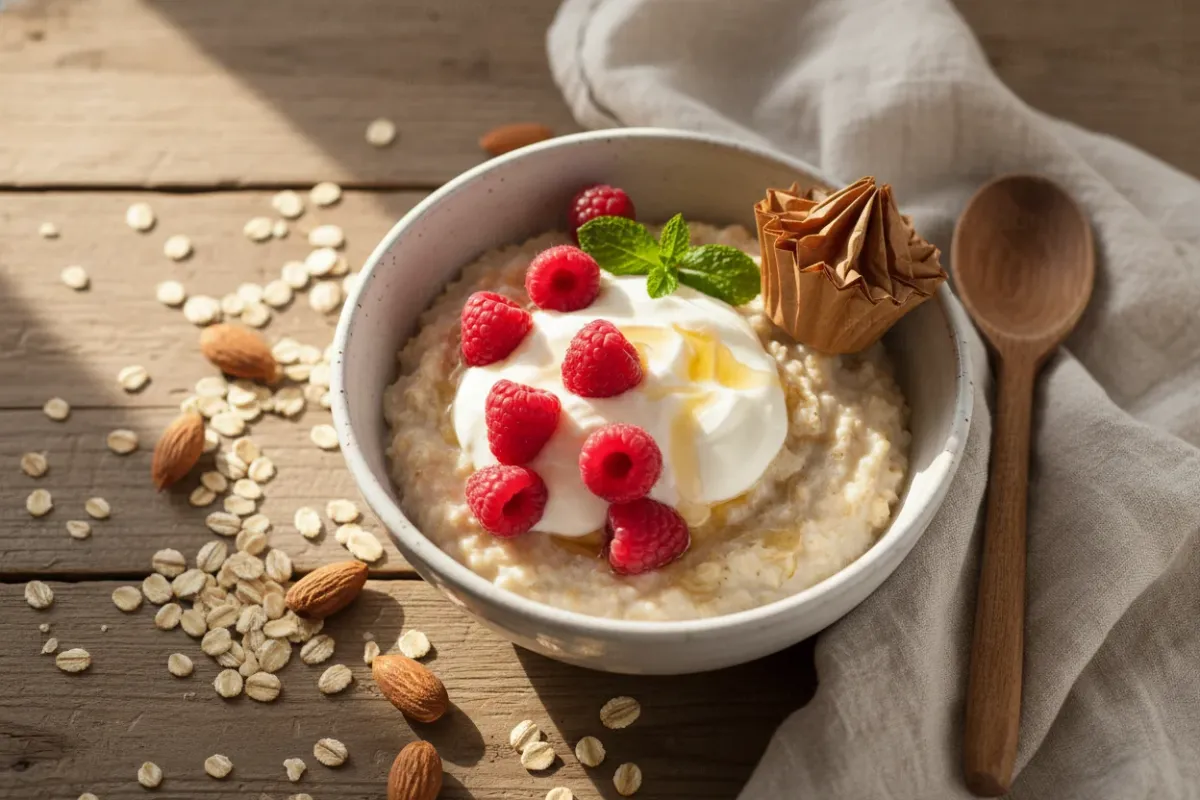
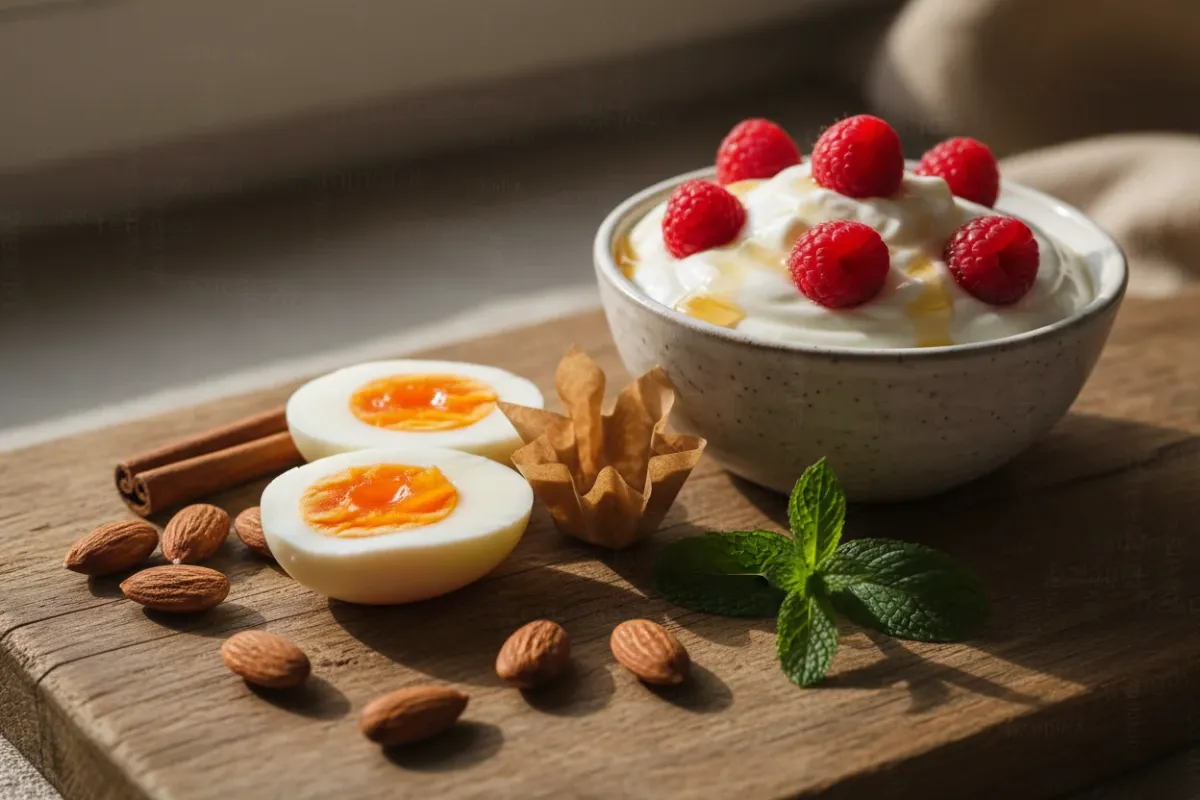
Greek Yogurt with Berries
A classic healthy snack. Thick Greek yogurt contains twice as much protein as regular yogurt.
Macros per serving (150 g yogurt + 50 g berries):
- Calories: ~110 kcal
- Protein: 15 g
- Fat: 0.5 g
- Carbs: 12 g
Pro tip: choose yogurt with no added sugar or flavorings. Berries provide natural sweetness and fiber.
Hard-Boiled Eggs
The most portable protein snack in existence. You can boil them in the evening and have them ready for several days.
Macros (2 eggs):
- Calories: ~140 kcal
- Protein: 12 g
- Fat: 10 g
- Carbs: 1 g
Yes, the fat content is higher here, but these are healthy fats and fat-soluble vitamins. Two eggs will keep you fuller than a 300-kcal pastry.
Cottage Cheese with Cucumber and Herbs
Low-fat cottage cheese (2–5% fat) is the perfect snack base. Cucumber adds volume and freshness with virtually no calories.
Macros per serving (150 g cottage cheese 2% + 100 g cucumber):
- Calories: ~120 kcal
- Protein: 18 g
- Fat: 3 g
- Carbs: 6 g
Homemade Protein Balls
For those craving something sweet yet nutritious. Mix oats, protein powder, peanut butter, and a little honey, roll into balls, and refrigerate.
Macros (2 balls, ~40 g):
- Calories: ~140 kcal
- Protein: 10 g
- Fat: 6 g
- Carbs: 14 g
Fiber-Rich Snacks: Volume Without Extra Calories
Fiber is the ingredient that tricks your body into thinking you've eaten more than you actually have.
Apple with Nut Butter
According to Cleveland Clinic experts, pairing an apple with nut butter is one of the best snacks for weight management. Apple fiber + protein and fat from nut butter = long-lasting fullness.
Macros (1 medium apple + 1 tbsp peanut butter):
- Calories: ~190 kcal
- Protein: 4 g
- Fat: 8 g
- Carbs: 27 g
Carrot Sticks with Hummus
Crunchy carrots make you chew longer (which means your brain receives more satiety signals), while chickpea hummus adds protein and healthy fats.
Macros (150 g carrots + 50 g hummus):
- Calories: ~135 kcal
- Protein: 5 g
- Fat: 6 g
- Carbs: 16 g
Whole Grain Crispbread with Avocado
Toast isn't the enemy. If the crispbread is whole grain and topped with a quarter of an avocado, you get a snack packed with fiber, healthy fats, and complex carbs.
Macros (2 crispbreads + 50 g avocado):
- Calories: ~160 kcal
- Protein: 4 g
- Fat: 8 g
- Carbs: 18 g
Snack Imposters: They Look Healthy but Don't Satisfy
Not all "healthy" foods are equally useful as snacks. Here's what often disappoints:
- Fruit juices and smoothies without protein — the sugar from fruit is absorbed instantly, and the fiber is destroyed by the blender. Result: sugar spike → quick crash → hunger.
- Plain rice cakes without toppings — virtually zero nutritional value. On their own, they don't provide satiety — they need a "topping."
- Fat-free flavored yogurts — manufacturers remove fat and compensate for taste with sugar. The result is a snack that actually stimulates appetite.
- Store-bought granola bars — often contain as much sugar as a chocolate candy, with very little protein.
The rule is simple: if the label has a long ingredient list and lots of added sugar, that snack won't keep you full.
How to Build the Perfect Snack: The "Protein + Fiber" Formula
You don't need to memorize dozens of recipes. Just know the formula and mix and match based on your mood.
| Protein base | + | Fiber/volume | = | Calories (approx.) |
|---|---|---|---|---|
| Cottage cheese 150 g | + | Berries 100 g | = | 140 kcal |
| 2 hard-boiled eggs | + | Cucumber + tomato | = | 170 kcal |
| Greek yogurt 150 g | + | Apple | = | 160 kcal |
| Canned tuna in water 80 g | + | Whole grain crispbread | = | 130 kcal |
| Edamame 100 g | + | — (already contains fiber) | = | 120 kcal |
As Healthline experts suggest, high-protein snacks that are easy to take on the go are the best way to curb hunger between meals.
Meal Prep: Preparing Snacks for the Week
The most reliable way to avoid falling back on fast food is to have ready-made snacks on hand.
Sunday Meal Prep in 40 Minutes
- Boil 10 eggs — they keep in the fridge for up to 5 days
- Cut vegetable sticks (carrots, celery, bell peppers) — portion into containers for 5 days
- Make hummus or buy it pre-made — portion into 50 g servings
- Roll protein balls — 10–12 pieces for the week
- Pre-portion nuts — 20–25 g per bag (portioning is key to avoid eating half the package)
This kind of preparation eliminates the daily dilemma of what to snack on. Grab a container, toss it in your bag — done. As GoodRx experts point out, planning snacks ahead is one of the key factors in healthy eating.
How Many Times a Day Should You Snack
There's no universal number. It all depends on your main meal schedule and individual needs. But here are some guidelines:
- 1–2 snacks per day — optimal for most people
- Between breakfast and lunch — if the gap is longer than 4 hours
- Between lunch and dinner — the most "dangerous" time for slip-ups, making a snack here especially important
- Before a workout (30–60 minutes prior) — a light snack with carbs and protein
Total snack calories should be no more than 10–15% of your daily intake. With a 1,800 kcal daily target, that's 180–270 kcal for all snacks combined.
Frequently Asked Questions
Do proper snacks help with weight management?
Yes, if the snacks are balanced in protein and fiber. They help maintain stable blood sugar levels and prevent overeating at main meals. The key is to factor their calories into your total daily intake.
Which low-calorie snacks actually keep you full?
The best options are combinations: cottage cheese with berries, vegetables with hummus, apple with nut butter. The general principle is pairing protein or healthy fats with fiber. These snacks provide 100–200 kcal and keep you satisfied for 2–3 hours.
What's the difference between foods that fill you up and those that don't?
Satiating foods contain protein, fiber, and have a low glycemic index — they are digested slowly, gradually releasing energy. Non-satiating foods are typically fast carbs with added sugar: they cause a sharp rise and fall in blood sugar, triggering another wave of hunger.
How does planning snacks help prevent impulsive overeating?
When you have a prepared healthy snack within reach, you eliminate the need to make a decision in the moment of hunger — and that's precisely when your brain reaches for the most calorie-dense, readily available option. Weekly meal prep minimizes impulsive choices.
This article is for informational purposes only and is not medical advice. Consult a doctor or dietitian before making dietary changes.