Vegetables for Healthy Eating: A Complete Guide with Nutrition Facts and Tips
Unlock optimal health with nutrient-dense vegetables. Discover the top picks for lowering blood pressure, reducing disease risk & boosting nutrition today.
When it comes to healthy eating, vegetables aren't just a boring side dish you eat "because you have to." They're the true foundation of any diet, without which no fitness dessert or protein baked good can make your nutrition truly balanced. Vegetables provide fiber, vitamins, minerals — all while barely making a dent in your daily calorie budget.
According to the Harvard T.H. Chan School of Public Health, a diet rich in vegetables and fruits can lower blood pressure, reduce the risk of cardiovascular disease and stroke, and positively affect blood sugar levels. Sounds like a good reason to figure out which vegetables to include in your menu and how to handle them.
The Healthiest Vegetables: Top Picks for a Balanced Diet
Not all vegetables are equally nutritious. Some are true vitamin powerhouses, while others are just a pleasant addition. Here are the vegetables worth keeping in your fridge at all times.
Broccoli — The Queen of Cruciferous Vegetables
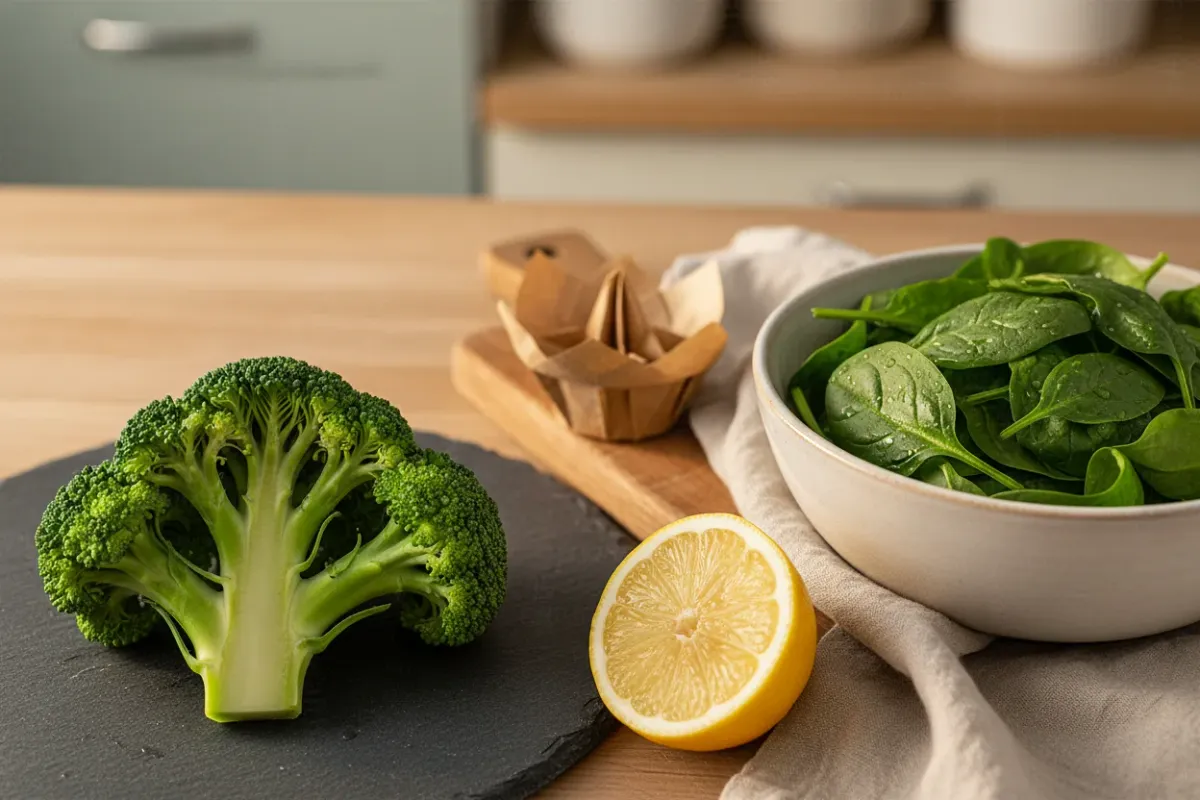
Broccoli is rightfully considered one of the healthiest vegetables. As noted by San-J, one cup (about 90 g) of raw broccoli provides 91% of the daily value of vitamin C, 77% of vitamin K, and 15% of folate, along with 2.2 g of fiber.
Nutrition facts per 100 g (raw): 34 kcal | P: 2.8 g | F: 0.4 g | C: 6.6 g
Broccoli is the perfect vegetable for those watching their calorie intake. With minimal calories, it provides a feeling of fullness thanks to its fiber and protein content (yes, vegetables have protein too!). You can add it to omelets, roast it, steam it, or use it as the base for a healthy cream soup.
Spinach — Green Superpower
Spinach packs calcium, iron, vitamins, and antioxidants all into one little leaf. According to Medical News Today, spinach is an excellent source of calcium, vitamins, iron, and antioxidants.
Nutrition facts per 100 g (raw): 23 kcal | P: 2.9 g | F: 0.4 g | C: 3.6 g
Just 23 calories per 100 grams — and so many benefits! Spinach works great in smoothies (adds color but is practically undetectable in taste), in salads, as a filling for healthy pies, and in casseroles.
Important note: if you're taking blood-thinning medications, you should be cautious with dark leafy greens — they're rich in vitamin K, which affects blood clotting.
Sweet Potato — Slow Carbs with Great Taste
Sweet potato isn't just a trendy vegetable from Instagram. As noted by Sanitarium, a 100 g serving of sweet potato provides more than three times the daily value of vitamin A. It's a powerful antioxidant that's important for skin and vision health.
Nutrition facts per 100 g (baked): 86 kcal | P: 1.6 g | F: 0.1 g | C: 20 g
Yes, sweet potato is higher in calories than most vegetables. But its carbohydrates are complex, with a low glycemic index. This means energy is released gradually, without sharp blood sugar spikes. Perfect for breakfasts and as a pre-workout side dish.
The Harvard T.H. Chan School of Public Health also recommends choosing sweet potatoes over regular potatoes — they contain more nutrients and slower-releasing carbohydrates.
Cauliflower — The Universal Soldier of Healthy Cooking
Cauliflower is a true chameleon in the world of healthy eating. It can be turned into "rice," a pizza crust, mashed as a potato substitute — and that's just the beginning. According to Sanitarium, cauliflower is an excellent source of vitamin C, B vitamins, and vitamin K, and also contains phytochemicals with antibacterial and antiviral properties.
Nutrition facts per 100 g (raw): 25 kcal | P: 1.9 g | F: 0.3 g | C: 5 g
Zucchini — Light and Fresh
Zucchini is one of the lowest-calorie vegetables out there. According to Sanitarium, zucchini contains vitamin C and carotenoids, and is rich in water and fiber — both soluble and insoluble.
Nutrition facts per 100 g (raw): 17 kcal | P: 1.2 g | F: 0.3 g | C: 3.1 g
17 calories! You can eat zucchini practically without limits. It makes excellent "spaghetti" (zoodles), fritters, casseroles, and when grated, it invisibly adds moisture and tenderness to healthy baked goods.
Bell Pepper — Vitamin C in Every Bite
Bright, juicy, and crunchy — bell pepper doesn't just make a dish look good, it seriously boosts its nutritional value. It contains carotenoids — important antioxidants for eye and skin health.
Nutrition facts per 100 g (raw): 27 kcal | P: 1.3 g | F: 0.1 g | C: 5.3 g
Kale — Trendy and Nutritious
Kale contains a significant amount of protein for a leafy vegetable and is also rich in vitamins A, C, and K.
Nutrition facts per 100 g (raw): 49 kcal | P: 4.3 g | F: 0.9 g | C: 8.8 g
Carrot — Simple and Essential
Carrot is one of the most accessible yet beneficial vegetables. According to a review published in 2018 and cited by Medical News Today, regular carrot consumption is associated with a reduced risk of breast cancer.
Nutrition facts per 100 g (raw): 41 kcal | P: 0.9 g | F: 0.2 g | C: 9.6 g
Green Beans — Fiber and Lightness
Nutrition facts per 100 g (cooked): 31 kcal | P: 1.8 g | F: 0.1 g | C: 7 g
Green beans are a perfect option for a dinner side dish: light, filling thanks to fiber, and quick to cook.
Legumes: Plant Protein for Those Who Count Macros
Legumes deserve a special mention — they hold a unique place in a healthy diet. As noted by San-J, legumes are especially beneficial for those looking to increase their protein or fiber intake.
Black beans are an excellent source of fiber and protein, and also contain significant amounts of folate, thiamine, iron, magnesium, and manganese. Soybeans are rich in riboflavin, folate, vitamin K, manganese, and iron — they're what tofu, tempeh, and other plant-based products are made from.
For those following a healthy diet who want to boost their protein intake without meat, legumes are a real find. A serving of black beans (about 170 g cooked) contains approximately 15 g of protein and 15 g of fiber.
How to Cook Vegetables Properly: Preserving Maximum Nutrition
It seems simple enough — wash, chop, boil. But the cooking method can significantly affect the nutritional value of vegetables. Some vegetables become more nutritious after heat treatment, while others are better eaten raw.
Vegetables That Are Healthier When Cooked
According to research described by the Heart Research Institute, a number of vegetables benefit from proper heat treatment:
Cruciferous vegetables (broccoli, cauliflower, Brussels sprouts). Steaming preserves both vitamin C and myrosinase — an enzyme that activates cancer-fighting compounds. This is the best cooking method for this group.
Broccoli tip: if you chop it and leave it for 40 minutes before cooking, the myrosinase has time to activate. So chop it — go do other things — then cook it.
Bell pepper. Heat breaks down cell walls, making it easier to absorb carotenoids. But there's a catch: vitamin C is lost during boiling and stewing. The optimal approach is a quick stir-fry or roasting to get both the carotenoids and at least some of the vitamin C.
Green beans. Their antioxidant levels increase when baked, microwaved, or grilled — compared to boiling or pressure cooking.
Kale. Light steaming deactivates enzymes that prevent the body from absorbing iodine, which is essential for the thyroid. If your diet is low in iodine, it's better not to eat kale raw.
Basic Cooking Guidelines
To maximize nutritional benefits, follow these principles:
- Steaming — the best all-around method. Preserves most vitamins and minerals.
- Quick stir-fry — great for peppers, green beans, and zucchini. Minimal oil, maximum crunch.
- Roasting — excellent for sweet potatoes, cauliflower, and carrots. Caramelization brings out natural sweetness.
- Boiling — the least preferred method for most vegetables, as water-soluble vitamins leach into the water. The exception is when the broth is also used (in soups, for example).
How to Store Vegetables Properly: So You Don't Throw Money Away
Buying good vegetables is only half the battle. It's important to store them properly so they don't turn into a wilted mess in a couple of days.
Refrigerator: What to Store and for How Long
According to recommendations from Purdue Extension, for maximum freshness and flavor, refrigerated vegetables should ideally be used within 1–3 days. This applies to artichokes, asparagus, green beans, broccoli, and carrots.
An important rule: vegetables and fruits should be stored in separate refrigerator drawers. Fruits release ethylene — a gas that accelerates the ripening and spoilage of vegetables.
Root Vegetables: Long-Term Storage
As noted by What Chefs Want, root vegetables — carrots, turnips, beets — prefer temperatures of 0–4°C (32–39°F) and high humidity. In sealed bags in the refrigerator, they stay fresh for several weeks.
Special Cases
Tomatoes — store at room temperature, away from direct sunlight, until fully ripe. Once ripe, they can be placed in the refrigerator, but be sure to take them out before serving and let them warm up — this brings out the flavor.
Potatoes and sweet potatoes — in a cool, dark, well-ventilated place. A pantry or cupboard works well. Under these conditions, they keep for several weeks. The key is not to store them next to onions (they speed up each other's spoilage).
Eggplants — at room temperature if you plan to use them within two days. For longer storage — in the vegetable crisper drawer in the refrigerator.
Garlic and onions — in a well-ventilated spot in the pantry, away from direct sunlight. Not in the refrigerator!
Meal Prep: Vegetables for the Whole Week
Preparing vegetables in advance is one of the best ways to eat healthy without the daily kitchen stress. When your fridge is stocked with containers of pre-cut vegetables, putting together a healthy lunch in five minutes is no problem.
Which Vegetables Handle Prepping Well
According to a guide by Nomadette:
Cruciferous vegetables (broccoli, cauliflower) — when properly prepared, they keep in the refrigerator for up to a week. Break into florets, rinse, dry thoroughly, and store in containers.
Root vegetables (carrots, radishes) — wash, peel, and cut. They also keep for up to a week. Carrot sticks stored in a container with water stay crunchy even longer.
Leafy greens — these are trickier. Leaves are easily damaged, so they need to be handled gently. After washing — 2–3 cycles in a salad spinner, drying thoroughly between each one. Store with a paper towel to absorb excess moisture.
A Practical Weekly Prep Plan
Here's what a Sunday vegetable meal prep might look like:
- Root vegetables: peel carrots and beets, cut into convenient pieces. Some for snacking (sticks), some for roasting (cubes).
- Cruciferous vegetables: break broccoli and cauliflower into florets. Soak for 30 minutes in cold salted water (one tablespoon of salt per liter) — this removes dirt and tiny insects. Dry thoroughly.
- Zucchini and peppers: cut for stir-fry or roasting. Store in containers with a paper towel on the bottom.
- Greens: wash, dry in a salad spinner, portion out.
- Sweet potato: peel, dice, you can even roast right away and store it cooked.
Variety Is the Key to Balance
The Harvard T.H. Chan School of Public Health recommends trying to include vegetables from each of the main groups in your daily diet:
- Dark leafy greens: spinach, kale, Swiss chard
- Yellow and orange: carrots, sweet potatoes, squash
- Red: tomatoes, red bell peppers, beets
- Legumes: black beans, chickpeas, lentils
This approach provides the widest possible range of vitamins, minerals, and phytochemicals. Each vegetable color represents a specific set of antioxidants, and the more colors on your plate, the more complete the nutritional support for your body.
Fermented Vegetables: A Digestive Bonus
Fermented vegetables deserve a special mention — sauerkraut, kimchi, fermented pickles. As noted by Medical News Today, fermented vegetables provide all the nutrients of their fresh counterparts, plus beneficial probiotics.
Probiotics support a healthy gut microbiome, which is important for digestion, immunity, and even mood. A couple of spoonfuls of sauerkraut with lunch is a simple habit with major health benefits.
Vegetables and Nutrition Facts: A Quick Reference for Counting Macros
For convenience — a summary table of nutrition facts for the most popular vegetables per 100 g raw:
| Vegetable | Kcal | Protein | Fat | Carbs | Fiber |
|---|---|---|---|---|---|
| Zucchini | 17 | 1.2 g | 0.3 g | 3.1 g | 1.0 g |
| Spinach | 23 | 2.9 g | 0.4 g | 3.6 g | 2.2 g |
| Cauliflower | 25 | 1.9 g | 0.3 g | 5.0 g | 2.0 g |
| Bell pepper | 27 | 1.3 g | 0.1 g | 5.3 g | 1.7 g |
| Green beans | 31 | 1.8 g | 0.1 g | 7.0 g | 3.4 g |
| Broccoli | 34 | 2.8 g | 0.4 g | 6.6 g | 2.6 g |
| Carrot | 41 | 0.9 g | 0.2 g | 9.6 g | 2.8 g |
| Kale | 49 | 4.3 g | 0.9 g | 8.8 g | 3.6 g |
| Sweet potato | 86 | 1.6 g | 0.1 g | 20.0 g | 3.0 g |
As the table shows, most vegetables fall within the 25–50 kcal range per 100 g. This means a vegetable side dish of 200–300 g "costs" just 50–150 kcal — while taking up a substantial amount of space on your plate and keeping you full.
Give It a Try
Healthy eating isn't about restrictions — it's about variety. You don't need to eat every vegetable on the list in a single day. Start small: add one new vegetable to your usual menu this week. Roast a sweet potato instead of regular potatoes. Toss a handful of spinach into your morning smoothie. Replace some of your pasta with zucchini "spaghetti."
Vegetables are the foundation on which an entire healthy diet is built. And when the foundation is solid, you can enjoy fitness desserts with a clear conscience — knowing your body has already gotten everything it needs.
Frequently Asked Questions
How can you tell if plants are lacking nitrogen?
Nitrogen deficiency typically shows up as yellowing of the lower (older) leaves, stunted growth, and a pale green color in the plants. If vegetables in your garden look limp and pale despite adequate watering, consider applying a nitrogen fertilizer or compost.
How can you tell if plants are getting enough phosphorus and potassium?
Phosphorus deficiency often shows as a purple or reddish tint on the undersides of leaves and slowed growth. Potassium deficiency appears as browning and drying of leaf edges. An accurate picture comes from a soil analysis, which can be ordered from an agricultural laboratory.
My seedlings sprout but then turn brown and fall over. What should I do?
This is a classic sign of "damping off" — a fungal disease that affects seedlings. The causes are excessive moisture, poor ventilation, and overcrowding. Use sterile soil, ensure adequate airflow, and avoid overwatering your seedlings.
This article is for informational purposes only and is not medical advice. Consult a doctor or dietitian before making dietary changes.