Sugar-Free Teriyaki Chicken: A Low-Carb Recipe in 20 Minutes
Master sugar-free teriyaki chicken in 20 minutes. Get restaurant-quality flavor, keep it low-carb, and skip the guilt. Perfect for any weeknight dinner.
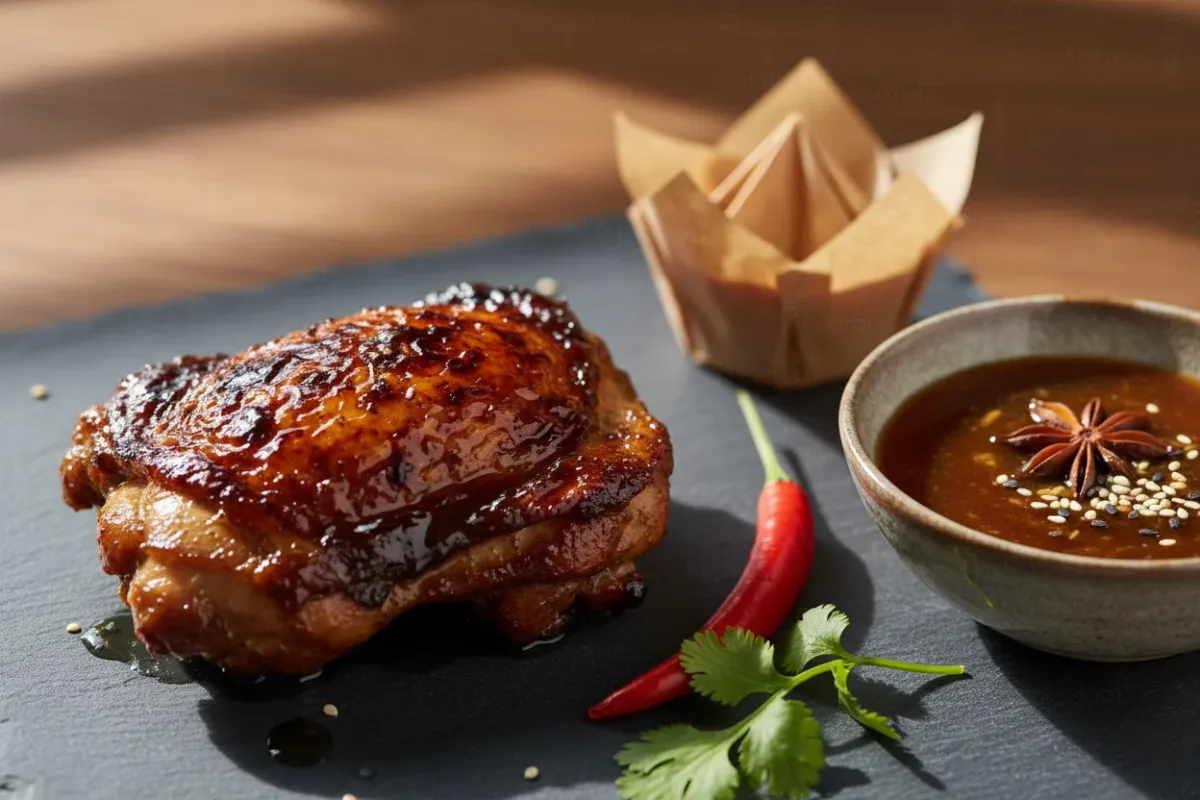
Teriyaki is one of those sauces that transforms an ordinary chicken breast into a restaurant-quality dish. A glossy caramel glaze, a sweet-salty balance, the aroma of ginger and sesame… But classic teriyaki is a sugar bomb. Store-bought versions often contain high-fructose corn syrup and starch, making them completely unsuitable for a low-carb diet. The good news: homemade sugar-free teriyaki sauce takes just five minutes to make and contains only 2 g of net carbs per serving, and when using reduced-sodium soy sauce, it drops to around 1 g, as noted on I Heart Umami.
Let's break down how to make the perfect low-carb teriyaki chicken from sauce to plating, which sweeteners and thickeners to use, how to substitute classic ingredients, and how to serve the dish so it becomes a complete healthy dinner.
Why Classic Teriyaki Doesn't Fit a Healthy Diet
Traditional teriyaki sauce is built on three pillars: soy sauce, mirin (sweet rice wine), and sugar. Two tablespoons of store-bought sauce can hide 10–15 g of sugar — that's like putting three teaspoons of granulated sugar on your plate. For those following keto, a low-carb diet, or simply watching their added sugar intake, such a sauce undoes all efforts.
Beyond sugar, commercial sauces often include corn or potato starch as a thickener, as noted by Cooking with Curls. Starch means extra carbs that can easily be replaced with keto-friendly alternatives without sacrificing texture.
A homemade version solves all these problems: control over every ingredient, minimal carbs, and that same rich flavor that made teriyaki beloved by millions.
Homemade Sugar-Free Teriyaki Sauce: A Step-by-Step Breakdown
The secret to low-carb teriyaki is properly replacing three problematic components: sugar, mirin, and starch. Let's examine each substitution in detail.
What to Use Instead of Sugar
This is the key question, and there are several options.
Erythritol or monk fruit — the classic choice for keto. According to I Heart Umami, erythritol or a monk fruit-based sweetener works excellently as a brown sugar replacement. They provide sweetness without affecting blood glucose levels and have a zero glycemic index.
Allulose — a rising star. As stated on Sugar Free Londoner, allulose doesn't recrystallize, which is especially important for sauces — the texture stays smooth and uniform even after cooling.
Stevia — another viable option. The recipe from Splenda uses a stevia-based sweetener and produces a sauce with 0 g sugar and just 3 g carbs per two-tablespoon serving.
An important note: when using a brown sugar substitute, choose ones with a 1:1 ratio to regular sugar. As advised on Seeking Good Eats, any brown sugar substitute with a 1:1 ratio will work for this recipe.
What to Use Instead of Mirin
Mirin — sweet rice wine — adds both sweetness and a hint of acidity. When you remove the sugar, you need to compensate for the acidic note. An excellent substitute is apple cider vinegar, which Sugar Free Londoner describes as a mild vinegar that is ideal for this role. One to two teaspoons are enough to add depth of flavor without extra carbs.
Another option is Japanese rice wine (not to be confused with mirin). The recipe from Splenda includes 1 cup of Japanese rice wine, but this is more suited for a moderately low-carb approach rather than strict keto.
What to Use Instead of Starch
Cornstarch is the classic thickener for teriyaki, but it adds carbs. The best alternatives:
Xanthan gum — works in minimal quantities. According to Seeking Good Eats, for a lightly thickened sauce, 1/4 teaspoon is enough, and for a thicker consistency — up to 1/2 teaspoon. Critically important: xanthan gum must first be dissolved in sesame oil and only then added to the sauce, otherwise it will clump.
It's worth noting that, as Cooking with Curls points out, when using xanthan gum the sauce takes on a gel-like consistency when cooled, so it needs to be reheated before use.
Ground chia seeds or gelatin — for those who avoid xanthan gum. Sugar Free Londoner recommends 1 teaspoon of ground chia seeds or a pinch of grass-fed gelatin as an alternative.
Soy Sauce or Coconut Aminos
The base ingredient of teriyaki — soy sauce — is perfectly acceptable on keto in moderation. As I Heart Umami states, soy sauce is allowed on keto in moderate amounts, and low-sodium versions contain even fewer carbs.
For those avoiding soy or gluten, there are two excellent options:
- Tamari — a gluten-free alternative to soy sauce, mentioned in several sources including Sugar Free Londoner.
- Coconut aminos — a soy-free and gluten-free option. According to Sugar Free Londoner, coconut aminos contain approximately 1 g of sugar per teaspoon, are low in sodium, and contain no soy. I Heart Umami also calls them a popular keto-friendly substitute. However, keep in mind: coconut aminos are slightly sweeter than tamari, so when using tamari instead, you may need an extra tablespoon of sweetener, as noted on Seeking Good Eats.
Basic Sauce Recipe
Here is an approximate set of ingredients for homemade keto teriyaki (makes 8–10 servings):
- 1/2 cup soy sauce (low-sodium) or tamari
- 2–3 tablespoons keto sweetener (erythritol, monk fruit, or allulose)
- 1–2 teaspoons apple cider vinegar
- 1 teaspoon freshly grated ginger
- 1–2 cloves garlic (minced)
- 1 tablespoon sesame oil
- 1/4 teaspoon xanthan gum (dissolved in sesame oil)
Mix all ingredients except the oil and xanthan, and heat over medium heat. Separately, dissolve the xanthan gum in the sesame oil and pour it into the sauce while stirring. Heat for 2–3 minutes until thickened. Done — about 1 cup of sauce with minimal carbs.
Cooking Teriyaki Chicken: Technique and Timing
Now to the main event — the chicken. There are several approaches here, and each has its own advantages.
Option 1: Stir-Fry in a Skillet (20 Minutes)
This is the fastest method. According to the recipe from Explorer Momma, the total cooking time is just 20 minutes, of which active cooking takes 10 minutes.
Ingredients:
- 500–600 g (about 1.1–1.3 lbs) boneless, skinless chicken thighs (or chicken breast)
- 4–5 tablespoons homemade keto teriyaki sauce
- 1 tablespoon cooking oil (coconut, olive, or avocado)
Process:
- Cut the chicken into cubes or strips.
- Heat the oil over medium-high heat.
- Sauté the chicken for 3–4 minutes until lightly golden, as recommended by Explorer Momma.
- Pour in the teriyaki sauce and simmer for another 5 minutes until the chicken is fully cooked and the sauce has thickened.
A tip from the same source: make the sauce while the chicken is frying — this saves time and allows you to stay within those 20 minutes.
According to Wholesome Yum, when frying over medium-high heat, the chicken should be laid out in a single layer and cooked for 6–8 minutes, stirring occasionally, until it's browned and nearly done. After that, the sauce is added.
Option 2: With Marinating (From 30 Minutes)
For deeper flavor, the chicken can be marinated. According to Sugar Free Londoner, 2 tablespoons of teriyaki sauce are enough for marinating, and the optimal time is at least 15 minutes, though it can be left overnight for maximum flavor penetration.
After marinating, the chicken is pan-fried over medium heat for about 5 minutes until fully cooked. This method works especially well for chicken breast, which can sometimes turn out dry — the marinade helps retain juiciness.
Option 3: Sheet Pan in the Oven (30–40 Minutes)
For those who prefer the "everything on one pan" format, the method from Southern Plate works well: arrange the chicken and vegetables on a sheet pan and bake at 190°C (375°F) for about 30 minutes, stirring halfway through. This method is convenient for meal prep — minimal effort, and the result is ready for several days.
Nutrition Facts: What's on the Plate
Nutritional values depend on the specific recipe and chosen ingredients, but here are approximate figures for the stir-fry version with chicken thighs:
Per serving (about 200 g / 7 oz of cooked dish):
- Calories: approximately 238 kcal
- Carbs: 5 g (of which net carbs — 2 g)
- Protein: 28–32 g
- Fat: 10–12 g
The calorie data — 238 kcal with 5 g carbs and 2 g net carbs — is provided by Explorer Momma for a recipe yielding 4 servings from 500–600 g of chicken thighs.
If using chicken breast instead of thighs, the fat content drops to 3–5 g, and protein increases to 35–38 g per serving. Calories in that case fall to approximately 180–200 kcal.
As for the sauce itself, the recipe from Splenda yields 50 kcal, 0 g fat, 3 g carbs, and 2 g protein per two-tablespoon serving — and that's with 0 g sugar.
What to Serve It With: Low-Carb Side Dishes
Classic rice is not an option for a low-carb approach. But there are plenty of alternatives, and some of them are even tastier.
Cauliflower Rice
The most popular substitute. Wholesome Yum builds their entire keto teriyaki recipe around cauliflower rice. It cooks in 5 minutes in a skillet: the cauliflower is sautéed until tender and seasoned with salt and pepper. In 100 g of cauliflower rice, there are just 3 g of carbs and 25 kcal.
Konjac Noodles (Shirataki)
For noodle lovers — a perfect solution with virtually zero calories. Sugar Free Londoner recommends thoroughly rinsing konjac noodles in water before use to remove the characteristic fishy smell. After rinsing, the noodles take on a neutral flavor and absorb teriyaki sauce beautifully.
Steamed or Sautéed Vegetables
Broccoli and cauliflower are classic accompaniments for teriyaki. Southern Plate suggests using 2–3 cups of broccoli florets and the same amount of cauliflower, roasting them together with the chicken. As the source puts it: "We're replacing rice with roasted vegetables" — and it works.
Wholesome Yum also includes sautéed broccoli in their recipe — it's cooked separately before the chicken and covered to keep warm.
What Protein to Use If Not Chicken
Teriyaki is a versatile sauce, and it works beautifully with more than just chicken. As Sugar Free Londoner notes, the recipe adapts wonderfully to other proteins: pulled pork, pork belly, sirloin steak, duck, as well as white fish (cod), salmon, or shrimp.
This is convenient for those who practice protein rotation throughout the week — the sauce stays the same, only the main ingredient changes. By the way, fish and shrimp cook even faster than chicken, so total dinner time shrinks to 15 minutes.
Meal Prep: How to Store and Freeze
Teriyaki chicken is an excellent candidate for weekly meal prep. Here are practical recommendations:
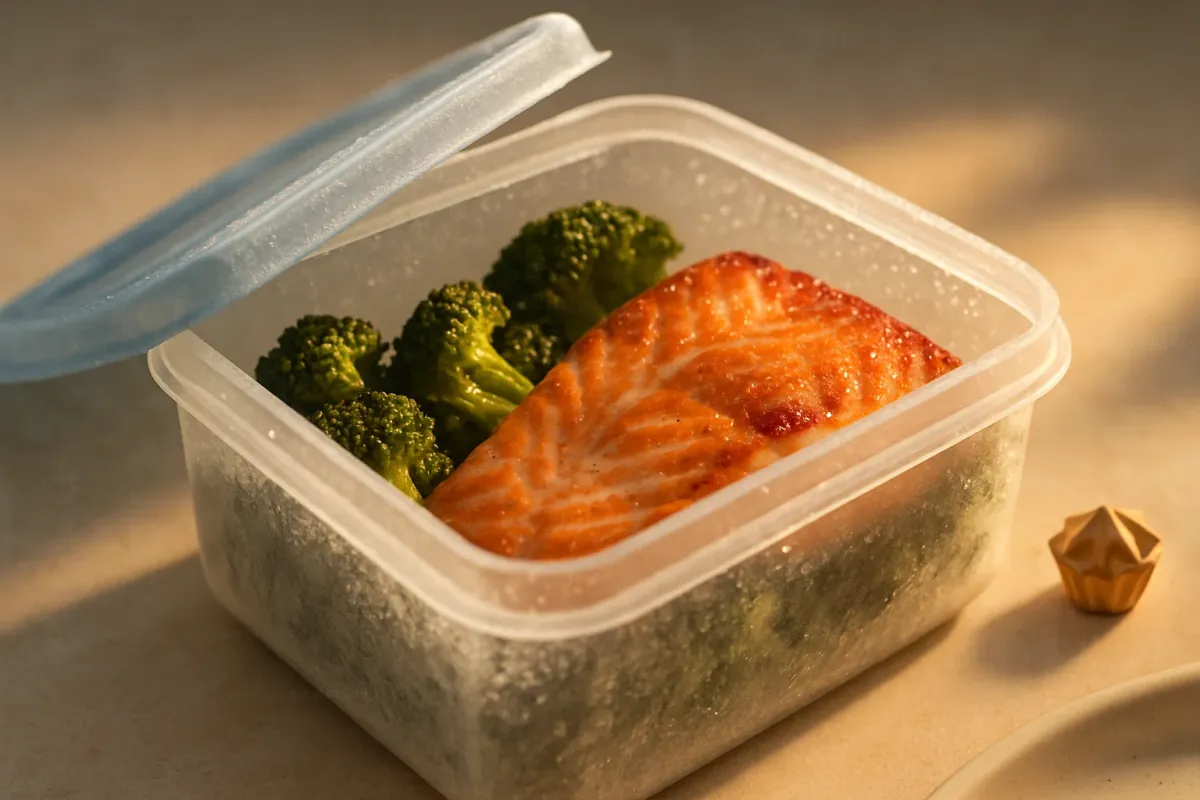
In the refrigerator: the finished dish keeps for 3–4 days in an airtight container. The sauce is best stored separately so the chicken doesn't get soggy.
In the freezer: teriyaki chicken freezes for up to 3 months. The optimal approach is to freeze the chicken with the sauce, and cook the vegetables fresh after thawing. Broccoli loses its texture when frozen and thawed, becoming too mushy, so it's better to add it when reheating.
Sauce separately: homemade keto teriyaki sauce keeps in the refrigerator for up to 2 weeks. As mentioned above, when xanthan gum is used, it will thicken when chilled — just warm it up before use.
For meal prep, it's convenient to make a double batch of sauce at the beginning of the week, and fry the chicken every 2–3 days — this way it stays as juicy and fresh as possible.
Common Mistakes and How to Avoid Them
Too high heat when frying. Keto sweeteners behave differently under heat than sugar. If the sauce is burning — lower the heat. Medium heat is the optimal setting.
Dry chicken breast. If you prefer breast over thighs, marinating in teriyaki sauce for at least 15 minutes is a mandatory step. It also helps not to overcook: 6–8 minutes over medium-high heat, as recommended by Wholesome Yum — the chicken should be browned but barely cooked through, with final cooking happening in the sauce.
Xanthan gum lumps. The golden rule — never sprinkle xanthan directly into liquid. According to Seeking Good Eats, xanthan gum must first be dissolved in sesame oil and only then incorporated into the sauce.
Overly salty result. Soy sauce + tamari + marinating = risk of over-salting. It's better to start with low-sodium soy sauce and adjust to taste.
Frequently Asked Questions
Can I use store-bought rotisserie chicken?
Yes, this is an excellent shortcut for a quick dinner. Simply shred the rotisserie chicken, reheat it in a skillet, and pour over the homemade keto teriyaki sauce. Total preparation time drops to 10 minutes. The only thing to watch for — check the ingredient list of the store-bought chicken's marinade for sugar.
Which sweetener is best to keep the sauce keto?
For strict keto, the best choice is erythritol or monk fruit, as recommended by I Heart Umami. If smooth texture without crystallization matters — allulose, which Sugar Free Londoner highlights specifically for its non-recrystallizing property. All three options contribute 0 g net carbs from the sweetener.
How long does teriyaki chicken last in the refrigerator and freezer?
In the refrigerator — 3–4 days in a sealed container. In the freezer — up to 3 months. It's recommended to freeze the chicken with the sauce but without vegetables — broccoli and cauliflower lose their crisp texture after thawing.
Should I freeze the chicken with vegetables or cook the vegetables separately after thawing?
Vegetables are best cooked separately after thawing the chicken. Broccoli and cauliflower become too soft when frozen. Cauliflower rice is also better made fresh — it takes just 5 minutes in a skillet.
Can I substitute the chicken with another protein?
Absolutely. As Sugar Free Londoner states, teriyaki sauce pairs beautifully with pork belly, steak, duck, cod, salmon, and shrimp. Cooking time for seafood will be shorter — shrimp cook in just 3–4 minutes.
This article is for informational purposes only and is not medical advice. Consult a doctor or dietitian before making dietary changes.