Sugar-Free Teriyaki Chicken: 2 g of Carbs per Serving
Stop wasting carbs on restaurant teriyaki. This sugar-free version has just 2g carbs per serving—compared to 15g+ in restaurants. Keto game-changer.
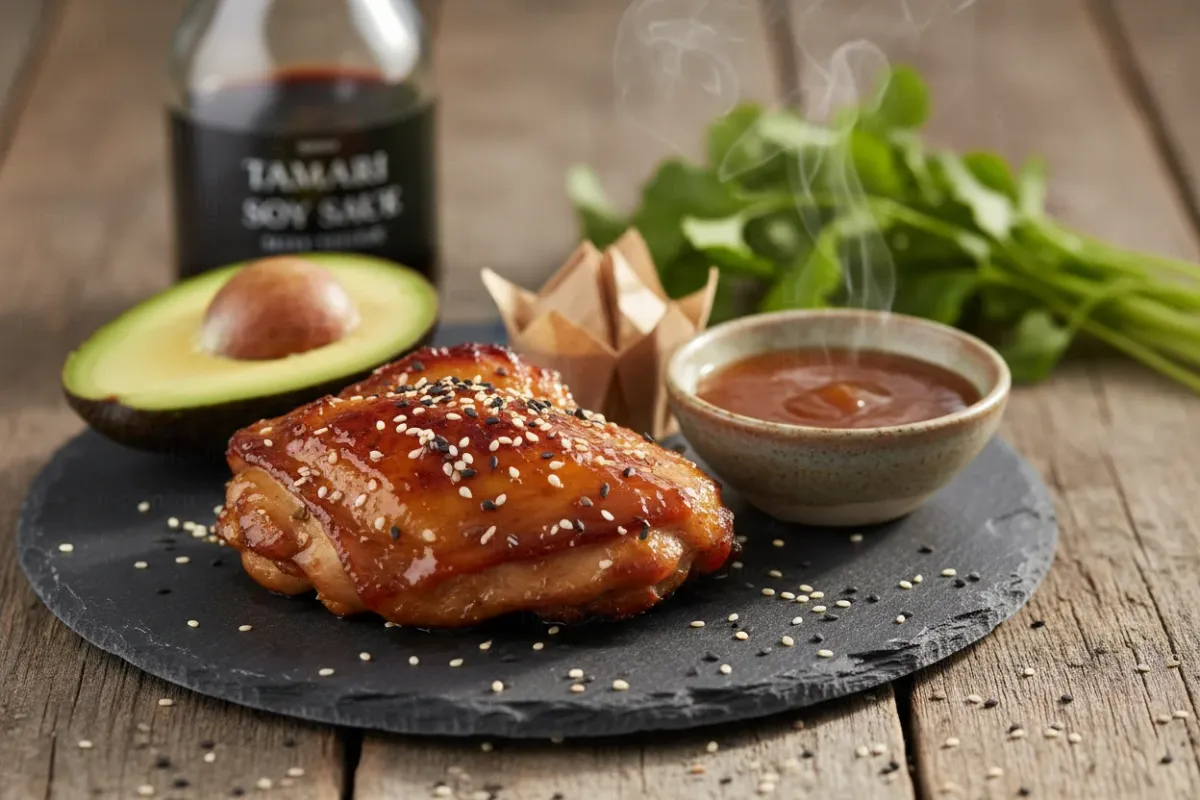
Why Regular Teriyaki Is a Carb Trap
Teriyaki is one of the most deceptive sauces for anyone watching their diet. At first glance, chicken in sauce seems like pure protein and nothing to worry about. But one look at the ingredients of classic teriyaki, and the picture changes. Sugar, honey, corn syrup — all of these turn a seemingly harmless dish into a real carb bomb.
As the experts at KetoConnect point out, a single serving of restaurant teriyaki chicken can "use up your entire daily carb allowance" in one meal. And according to Keto Focus, restaurant teriyaki sauce contains 10 to 15 g of carbs per serving — and that's just the sauce, not counting the side dish.
According to Virta Health, a standard serving of teriyaki chicken contains about 15 g of carbs. With a daily limit of 30 g for ketosis, that's already half your allowance. One dish. One meal.
But you don't have to give up teriyaki entirely. It's enough to swap out a few ingredients to get that same rich sweet-and-salty flavor with minimal carbs. A homemade version with a sugar substitute and the right proportions delivers just 1.8–2 g of net carbs per serving instead of 15 g. That's almost an 8-fold difference.
What's Wrong with Store-Bought Teriyaki Sauce
Before moving on to the recipe, it's worth understanding why store-bought teriyaki doesn't work for low-carb eating. This matters — many people grab a bottle from the store without looking at the label and are genuinely surprised when the weight doesn't come off.
Classic teriyaki contains three main sources of carbs:
- Sugar or brown sugar — the foundation of the sauce's sweetness. Some recipes call for up to 1/4 cup for a small portion.
- Honey — often used in "natural" versions. It sounds healthy, but honey's glycemic index isn't much different from regular sugar.
- High-fructose corn syrup — found in commercial sauces. A cheap sweetener that adds empty calories and carbs.
As aptly noted on Explorer Momma: "Traditional teriyaki chicken is not a keto food. It contains sugar and other ingredients that raise the carb count."
Beyond sugar, commercial sauces often contain starch as a thickener, which further increases the carb count. Plus — high sodium content: according to Carb Manager, a single serving of teriyaki chicken can have over 1,124 mg of sodium. This is important for anyone monitoring their salt intake.
Homemade Keto Teriyaki Sauce: Ingredients and the Logic Behind the Swaps
The secret to low-carb teriyaki lies in smartly replacing each "problem" ingredient. The flavor stays, but the carbs disappear. Here's how it works.
The Base: Soy Sauce or Coconut Aminos
Soy sauce is the foundation of teriyaki. It has minimal carbs and maximum umami. The recipe from KetoConnect uses 1/2 cup of soy sauce as the base.
But if you have a gluten or soy intolerance, coconut aminos make an excellent alternative. As I Heart Umami notes, coconut aminos provide a soy-free alternative, and for reducing the carb count, it's best to use gluten-free soy sauce with reduced sodium.
An important nuance highlighted by Seeking Good Eats: coconut aminos are sweeter than tamari, so when using them, you may need 1–2 tablespoons less sweetener.
Sweetness: Sugar Substitutes Instead of Honey and Sugar
This is where the main carb savings happen. Instead of sugar, honey, or corn syrup, a low-carb sweetener is used. Options include:
- Erythritol with monk fruit (e.g., Lakanto Brown) — delivers a brown sugar flavor that's perfect for teriyaki. I Heart Umami recommends this option specifically.
- Allulose — behaves like real sugar when heated and caramelizes well.
- Sucralose or stevia — as in the Splenda recipe, which uses 3 packets of stevia sweetener.
The amount of sweetener is about 2 tablespoons per portion of sauce. That's enough to achieve teriyaki's signature sweetness without the carb hit.
Thickness: Xanthan Gum Instead of Starch
Classic teriyaki is thickened with cornstarch — which is pure carbs. In the keto version, it's replaced by xanthan gum. You need very little — just 1/4 teaspoon.
As described in the I Heart Umami recipe, it's important to add xanthan gum gradually, a little at a time, while whisking continuously — otherwise lumps will form and the sauce's texture will be ruined. This is arguably the only step in the recipe that requires real attention.
Acidity: Apple Cider Vinegar
Apple cider vinegar adds that slight tang that balances the sweetness and saltiness. KetoConnect recommends 1/2 cup of apple cider vinegar — this creates a brighter and more complex flavor than many restaurant versions.
Aromatics: Ginger and Garlic
Fresh ginger and garlic are essential components. They not only provide aroma but also contain bioactive compounds beneficial for digestion. Two cloves of garlic and a teaspoon of grated ginger — that's the standard proportion for homemade teriyaki.
Tomato Paste: The Secret Ingredient
An unusual but effective addition from the Keto Focus recipe — two tablespoons of tomato paste. It gives the sauce depth and a rich color. But moderation is key: too little and the sauce loses flavor complexity; too much and a distinct tomato aftertaste appears.
Step-by-Step Recipe: Sugar-Free Teriyaki Chicken
Ingredients
For the sauce (approximately 1/2 cup):
- 1/4 cup soy sauce (or coconut aminos)
- 2 tbsp apple cider vinegar
- 2 tbsp low-carb brown sweetener
- 1 clove garlic, finely minced
- 1 tsp grated fresh ginger
- 1/4 tsp xanthan gum
For the chicken:
- 500 g (about 1 lb) boneless, skinless chicken thighs (or chicken breast)
- 1 tbsp cooking oil (avocado or coconut)
- Sesame seeds and green onion for serving
Why Thighs, Not Breast
The choice of chicken cut isn't just a matter of taste. As Keto Focus explains: "Chicken thighs have more fat and can withstand high-heat searing without drying out." For a keto diet, that's an added bonus — more fat, more satiety. But if the goal is maximum protein with minimum calories, breast works too. In that case, it's important not to overcook it in the pan.
Step 1: Make the Sauce
- Combine soy sauce, apple cider vinegar, sweetener, garlic, and ginger in a small saucepan.
- Place over medium heat. As KetoConnect instructs, heat until bubbles appear.
- Reduce heat. Following I Heart Umami', recommendation, bring to a gentle simmer (not a rolling boil!) over medium-low heat — about 3 minutes.
- Slowly sprinkle in the xanthan gum while whisking continuously. Keep stirring until the sauce thickens enough to coat a spoon.
- Remove from heat. The sauce will continue to thicken slightly as it cools.
The entire sauce-making process takes about 10 minutes — as confirmed by Sugar Free Londoner.
Step 2: Sear the Chicken
- Cut the chicken thighs into medium-sized pieces (about 2–3 cm / 1 inch).
- Heat oil in a skillet over high heat.
- Lay the chicken in a single layer. Don't stir for the first 2 minutes — you want a crispy crust.
- Cook, stirring occasionally, until golden brown — 3–4 minutes, as recommended by Explorer Momma.
Step 3: Combine
- Pour the sauce over the seared chicken right in the skillet.
- Reduce heat to medium and simmer for another 5 minutes until the sauce thickens and coats every piece. Explorer Momma specifies exactly this time — 5 minutes.
- Sprinkle with sesame seeds and sliced green onion.
Total cooking time is about 20–25 minutes from start to serving.
Nutrition Facts: A Full Breakdown
This is where it becomes clear why it was all worth doing. Let's compare the classic and low-carb versions.
Low-Carb Teriyaki Chicken (per serving)
According to Explorer Momma:
| Nutrient | Value |
|---|---|
| Calories | 238 kcal |
| Protein | 31 g |
| Net carbs | 2 g |
| Fat | ~10 g |
Classic Teriyaki Chicken (per serving)
According to Carb Manager (1 cup):
| Nutrient | Value |
|---|---|
| Calories | 439 kcal |
| Protein | 65 g |
| Net carbs | 3.7 g |
| Fat | 16.3 g |
| Sugar | 3.4 g |
Sauce Only (per serving)
According to KetoConnect, keto teriyaki sauce:
| Nutrient | Value |
|---|---|
| Calories | 28 kcal |
| Carbs | 3 g |
| Fiber | 1 g |
| Protein | 3 g |
And according to Sugar Free Londoner, homemade keto sauce has just 1.2 g of net carbs per tablespoon. This means you can drizzle generously over your chicken without worrying about exceeding your daily limit.
The glycemic load per serving is just 2.51 according to Carb Manager. For comparison, a serving of rice can be 10 times higher.
What to Serve It With: Zero-Carb Side Dishes
The chicken is ready, but the question remains — what instead of rice? Here are a few options that won't throw off your macros:
Cauliflower Rice
A keto side dish classic. Cauliflower, grated or pulsed in a food processor, is stir-fried in a pan for 5–7 minutes. Per 100 g — about 5 g of carbs and 25 kcal. With teriyaki sauce, it creates the full illusion of an Asian dish.
Zucchini Noodles
Spiralized zucchini is another way to get a familiar texture without the carb load. A quick stir-fry on high heat for 2 minutes — and done. It's important not to overcook, or the zucchini will release water.
Steamed or Sautéed Broccoli
Perhaps the most popular teriyaki companion. Broccoli florets absorb the sauce beautifully. You can sauté them together with the chicken during the final stage.
Leafy Greens
The lightest option — serve teriyaki chicken on romaine or iceberg lettuce leaves. It turns into something like Asian lettuce wraps — elegant and refreshing.
How to Use the Sauce as a Marinade
Homemade keto teriyaki works excellently not only as a sauce for cooked chicken but also as a marinade. According to Sugar Free Londoner, simply marinating meat, fish, or chicken for just 20 minutes before pan-frying or grilling is enough.
Tip: when used as a marinade, the flavor is deeper and more even because the sauce penetrates the meat fibers. But it's best to sear marinated chicken over high heat — this creates the caramelized crust that makes teriyaki so appealing.
The sauce also works great for:
- Salmon — 15 minutes of marinating, then bake at 200°C (400°F)
- Pork — longer marinating time, 1–2 hours
- Tofu — for a vegetarian version, marinate for 30 minutes
- Shrimp — a quick stir-fry for 2–3 minutes on high heat
Storage and Meal Prep
This dish is perfect for preparing meals several days in advance. Here's what you need to know.
Storing the Sauce
Homemade keto teriyaki sauce keeps in the refrigerator in a sealed glass jar for 2–3 weeks — this is confirmed by both I Heart Umami and Sugar Free Londoner. You can make a double batch and use it over two to three weeks for various dishes.
Storing Cooked Chicken
Cooked teriyaki chicken keeps in the refrigerator for 3–4 days in an airtight container. In the freezer — up to 2–3 months. When reheating, it's best to add a tablespoon of water so the sauce doesn't become too thick.
Weekly Meal Prep
The optimal strategy: cook the chicken and sauce on Sunday and portion into containers for 4–5 days. The side dish (cauliflower rice or broccoli) is best prepared separately and added on the day of eating — this preserves the vegetables' texture better.
Common Mistakes and How to Avoid Them
Mistake 1: Too Much Xanthan Gum
Xanthan gum is a powerful thickener. If you overdo it, the sauce will turn into jelly. Start with 1/8 teaspoon and add more as needed.
Mistake 2: Boiling Instead of Simmering
The sauce needs to simmer, not boil. A hard boil breaks down the texture and can introduce bitterness. Medium-low heat and gentle bubbles — that's the right setting.
Mistake 3: Overcrowding the Pan
When searing chicken, don't overload the skillet. If pieces are stacked on top of each other, they'll steam rather than sear — and instead of a crispy crust, you'll get a boiled texture.
Mistake 4: Ignoring Sodium
Soy sauce is a concentrated source of sodium. If you're sensitive to salt, it's better to use a reduced-sodium version or dilute with coconut aminos.
Frequently Asked Questions
Can I use store-bought rotisserie chicken?
Yes, and it's a great way to save time. Simply shred the cooked chicken into pieces and heat with homemade teriyaki sauce for 3–5 minutes. However, you won't get a crispy crust, and the macros will depend on how the store-bought chicken was prepared.
Should I marinate the chicken in the sauce before cooking?
According to Sugar Free Londoner, 20 minutes of marinating before pan-frying or grilling gives a deeper, more even flavor. But it's an optional step — searing followed by simmering in the sauce also delivers excellent results.
What happens to broccoli when freezing teriyaki chicken?
Broccoli loses its texture when frozen and reheated — it becomes soft and watery. It's better to freeze the chicken in sauce separately and prepare fresh broccoli on the day of serving.
Should vegetables be added before or after freezing for meal prep?
Definitely after. Frozen and thawed vegetables lose their crunch and texture. The chicken in sauce can be frozen in portions, while vegetables should be stir-fried or steamed right before eating.
How long does keto teriyaki chicken keep in the fridge and freezer?
In the refrigerator — 3–4 days in an airtight container. In the freezer — up to 3 months. The sauce on its own keeps in the refrigerator for 2–3 weeks, as noted by I Heart Umami and Sugar Free Londoner.
This article is for informational purposes only and is not medical advice. Consult a doctor or dietitian before making dietary changes.