Sugar in Coffee Creamer: 40 Grams Per Serving and How to Find an Alternative
Shocking: 40 grams of sugar hiding in your daily coffee creamer. Discover what experts don't want you to know and find healthier alternatives.
Coffee Creamer: Creamy Delight or Hidden Sugar?
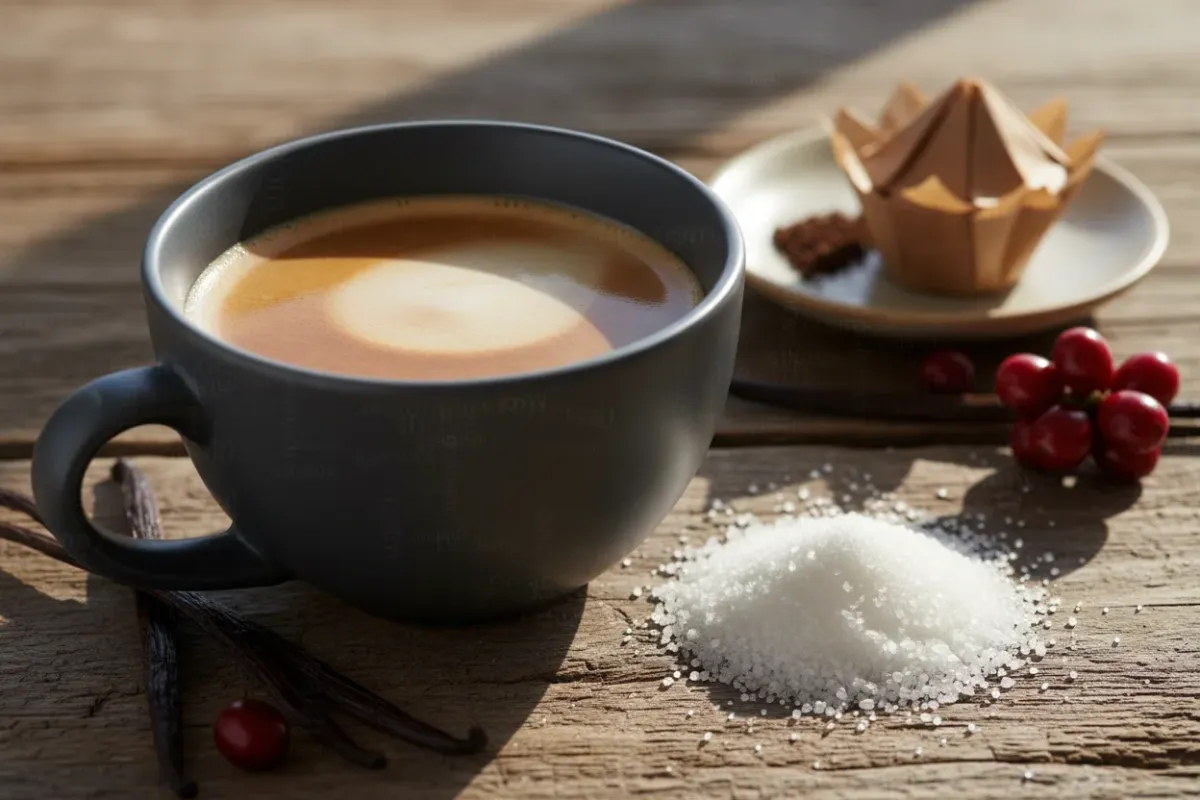
The morning ritual with a cup of aromatic coffee is unthinkable for many without a spoonful or two of coffee creamer. It transforms the slightly bitter drink into a delicate, sweet, and truly cozy dessert. But what lies behind this creamy taste? How does your favorite creamer fit into the concept of mindful eating, and is it possible to find a balance between pleasure and benefit? This article is not a call to give up small joys, but a guide on how to make a conscious choice, understanding exactly what goes into your cup.
Why should you take a closer look at creamer ingredients?
Coffee creamer seems like a harmless additive because we use so little of it. However, that's precisely the main nuance. Manufacturers often list the nutritional value per one tablespoon (about 15 ml) on the packaging, while many people pour significantly more into their coffee. When you evaluate real volumes, the numbers become truly telling.
According to a comparison conducted by nutrition experts, if you take half a cup (about 120 ml) of a popular vanilla coffee creamer for analysis, that portion can contain up to 40 grams of sugar Source 3. This is practically the daily limit for added sugar recommended by the WHO for an adult. It turns out that just one "harmless" coffee additive can seriously impact your overall nutritional balance for the day.
The second important aspect is the type of fats. Many turn to plant-based alternatives, for example, based on coconut milk, considering them a healthier choice. However, such creamers can be "loaded with saturated fats," which is also worth considering when planning your diet Source 3. Not everything of plant origin automatically becomes dietary.
The third fact is the variety of serving sizes on labels. Some manufacturers list nutritional values per tablespoon, others per ¼ cup, and others per 50 ml. This makes direct product comparison in the store difficult. Conscious choice begins with the habit of recalculating data to the same volume to see the real picture.
What are coffee creamers made of and how to understand them?
Dozens of options can be found on store shelves. In one popular line alone, there are 54 products in different formats Source 5. To avoid confusion, it's useful to understand the main categories.
Traditional Dairy Products This is the natural classic, which can also be considered a creamer.
- Milk. The least caloric option with high protein content. Provides a light texture.
- Half-and-half. This is a mixture of milk and cream, standard fat content is 10-12%. The ideal balance between richness and lightness. There are also fully dairy versions that are positioned as containing no butter or artificial flavors Source 2.
- Heavy cream. The fattiest (33-36%) and most caloric option. Creates a very thick, velvety texture.
Ready-Made Flavored Creamers (Liquid and Dry) This is a broad category most commonly associated with the term "coffee creamer." Their composition, in addition to a dairy or plant-based base, almost always includes sugar (or sweeteners), stabilizers, emulsifiers, and flavors.
- Popular flavors: vanilla, caramel, hazelnut, chocolate, Irish cream Source 2, 4. Natural flavors, for example, vanilla, can be derived from a concentrate of real vanilla beans Source 2.
- Forms of release: Liquid in bottles (from 32 fl. oz. to 1 gallon for HoReCa Source 4), single-serve disposable containers of 0.375 fluid ounces (11 ml) Source 4, 5, dry mixes.
- Zero Sugar. A separate subcategory where sugar is replaced with sweeteners (sucralose, stevia, etc.). An example is French Vanilla Creamer Singles Zero Sugar Source 4.
Plant-Based Alternatives Created for those who avoid lactose or follow a vegan diet. The base can be almond, coconut, oat, or soy milk. It's important to read the composition: to achieve creaminess, oils and thickeners are often added. Experts mention products based on pea protein (for example, Ripple) as an interesting alternative, which may contain less saturated fat and more protein Source 3.
Nutritional Value (C/P/F): Numbers Worth Knowing
To make an informed decision, you need to rely on facts. Here is a comparative table of nutritional values for a standard volume of 100 ml. These are average values that may vary depending on the specific brand and flavor.
| Product (100 ml) | Calories (kcal) | Protein (g) | Fat (g) | Carbs (g) | Sugar (g) |
|---|---|---|---|---|---|
| Milk 2.5% | 52 | 2.8 | 2.5 | 4.7 | 4.7 |
| Half-and-half 10% | 120 | 3.0 | 10.0 | 4.0 | 4.0 |
| Heavy Cream 33% | 330 | 2.2 | 33.0 | 3.6 | 3.6 |
| Ready-made Vanilla Creamer | ~300-350 | 1-2 | 10-15 | ~40-50 | ~35-45 |
| Plant-based Creamer (almond) | ~150-200 | 0.5-1 | 8-12 | 15-20 | 10-15 |
| "Zero Sugar" Creamer | ~150-250 | 1-2 | 10-15 | 5-10 | 0 |
What do these numbers tell us?
- Ready-made flavored creamers are record-holders for sugar. Their main nutritional downside is the extremely high content of added sugars with a relatively modest amount of protein.
- "Zero Sugar" does not mean "zero calories." Their calorie content is provided by fats, so it can be comparable to regular versions.
- Natural dairy products win on protein. Milk and half-and-half provide not only texture but also a useful nutrient that promotes satiety.
- Portion size decides everything. Adding 20 ml (a heaping tablespoon) of heavy cream to your coffee gives you about 66 kcal. The same amount of ready-made vanilla creamer will "gift" 60-70 kcal, but primarily from sugar. And 50 ml of the same creamer is already 150-175 kcal and almost 20g of sugar.
How to Use Creamer Wisely: Not Just in Coffee
Coffee creamer can be more than just an additive; it can be an ingredient for healthy desserts and dishes. Experts suggest several non-obvious ways to use it.
1. Preparing Healthy Drinks
- Smoothies and Lattes. Adding a portion of creamer (especially protein-based or nut-based) to a smoothie will make its texture creamy and enrich the flavor. Whipped creamer can be used for healthy lattes.
- Protein Coffee. Shake cold coffee, a portion of vanilla or chocolate protein, and a bit of sugar-free almond creamer in a shaker. You'll get a nutritious protein drink.
- Iced Coffee with Healthy Cream. Whip chilled heavy cream or its plant-based alternative with a drop of vanilla extract and erythritol. Place a spoonful of the resulting cream on the surface of iced coffee — it's tastier and healthier than ready-made sweet syrups.
2. Creating Fitness Desserts Natural cream, cream cheese, or even unsweetened plant-based creamers can become the base for cream in healthy cheesecakes, mousses, and cake soakings. They provide the necessary fat and texture, while sweetness can be controlled using dates, bananas, or natural sweeteners.
3. Preparing Soups and Sauces Unsweetened versions of creamers, for example, based on pea protein or simply thick cream, work excellently as a thickener and texture enricher in pureed soups (pumpkin, mushroom, broccoli) and in healthy sauces for pasta or meat Source 3.
Recipe for Homemade Healthy Coffee Creamer
Making creamer at home is the best way to control every ingredient. We offer a basic recipe that can be adapted to your goals.
Basic Vanilla Creamer with Coconut Milk (Sugar-Free)
Ingredients:
- Coconut cream (not milk) — 200 ml (from a can, chilled)
- Unsweetened almond milk — 100 ml (for desired consistency)
- Vanilla extract — 1-2 tsp.
- Erythritol or other preferred sweetener — to taste (start with 1 tbsp.)
- A pinch of salt (enhances flavor)
Preparation:
- Whip the chilled coconut cream (the solid part) with a whisk or mixer until light foam forms.
- Gradually pour in the almond milk, continuing to whip.
- Add vanilla extract, sweetener, and salt. Whip until homogeneous.
- Pour into a clean jar with a lid. Store in the refrigerator for up to 5 days. Shake well before use.
Nutritional Value per 100g (approximate): Calories: ~180 kcal, Protein: 2g, Fat: 18g, Carbs: 3g (of which sugar: 1g). Values may change depending on specific ingredient brands.
Variations:
- Chocolate: add 1 tbsp of high-quality cocoa powder.
- Protein: mix 1 scoop of vanilla or caramel protein powder into the finished mixture, whip.
- "Pastry Chef Friend Advises": for a caramel hue, add 1 tsp of maple syrup (account for it in nutritional value) or a bit of date syrup.
Try It Yourself: Your Path to the Perfect Cup
Healthy eating is not about prohibitions, but about conscious choice and balance. Coffee creamer can be either the "weak link" in your diet or its pleasant and safe part.
Practical Steps for This Week:
- Research. Look at the label of your usual creamer. Recalculate the nutritional value not based on the manufacturer's serving, but on the volume you typically use.
- Experiment. Try replacing ready-made creamer for a week with natural 10% cream or almond milk, sweetening your coffee separately with a drop of sugar-free syrup or a pinch of stevia. Feel the difference in taste and well-being.
- Create. Set aside 15 minutes on the weekend to make homemade creamer using our recipe. It's not only healthy but also fascinating — you become the creator of your own flavor.
Remember that even within the framework of calorie counting, keto, or healthy eating, there is always room for maneuver. Sometimes it can be a spoonful of your favorite vanilla creamer in a long-awaited Saturday cup of coffee — simply because it's delicious and brings joy. And on other days — a conscious choice in favor of healthier alternatives. It is precisely this non-fanatical approach that makes healthy eating a sustainable and happy habit for life.
This article is for informational purposes only and is not medical advice. Consult a doctor or dietitian before making dietary changes.