How to Break the Fast Food Habit: A Science-Based Approach and Practical Steps
Break free from fast food cravings with science-backed strategies that rewire your brain. Discover practical steps to quit the habit for good—without willpower.
Short answer: yes, you can. But not through willpower — through strategy
When your hand reaches for the phone to order a burger — again — a familiar voice sounds in your head: "Here we go again. Maybe I just can't live without this?" This isn't a character flaw. It's neurobiology. And the good news is that the brain that learned to crave fast food can just as easily learn to crave something else — if you approach the process with smarts, not self-hatred.
Why fast food is so addictive: it's not about laziness
The brain perceives fast food as a reward
Foods high in sugar, salt, and fat activate the brain's reward system — the very same dopamine pathways that respond to other addictive stimuli. As researchers at the University of California note, certain foods can trigger overeating, cravings, and withdrawal symptoms — reactions analogous to those caused by alcohol or tobacco.
This is not a metaphor. The American Society of Addiction Medicine defines addiction as "a primary chronic disease of brain reward, motivation, and memory" that manifests as a pathological drive to seek pleasure, impaired behavioral control, and the presence of cravings. According to a systematic review in the journal Nutrients, approximately 24.9% of overweight individuals and 11.1% of normal-weight individuals exhibit clinically significant symptoms of food addiction.
It's more than "just a habit"
A meta-analysis covering 272 studies found an overall prevalence of food addiction at 24% in the general population and 14% among people without co-occurring eating disorders. That's one in four — and one in seven even among those who never considered themselves addicted.
Moreover, as research on the psychological and neurobiological aspects of food addiction shows, food addiction is accompanied by more pronounced depression, negative affect, and overall distress compared to other eating disorders. People reach for fast food not because it tastes good, but because their brain has learned to use it for emotional regulation.
A diet of processed foods takes a toll on mental health
A diet high in processed foods can contribute to the development of anxiety, depression, and memory impairment. As specialists note, these effects are linked to inflammation caused by unhealthy ingredients and their impact on brain function. Over time, this impairs concentration, emotional regulation, and even the motivation to change anything. A vicious cycle: fast food worsens your condition → your condition drives you back to fast food.
Four steps that actually work
You don't need to declare war on burgers. You need a strategy — specific, step-by-step, no heroics required.
Step 1. Define your goal and honestly answer yourself — why
Give up fast food forever? Cut back to once a month? Replace it with homemade alternatives? The more specific your goal, the higher your chances. Specialists in dietary behavior change recommend writing down your goal and the reasons it matters to you. This isn't a "motivational exercise" — it's an anchor you can return to when you feel like giving up.
The reasons can be anything: "I want clearer skin," "I'm tired of feeling heavy after meals," "I want to set a different example for my kids." The more reasons you have, the more resilient your motivation becomes.
Step 2. Identify and neutralize your triggers
A trigger is what sets off the chain of "craved → ordered → ate → regretted." It could be:
- Your route — the drive home past your favorite burger joint
- An app — the delivery icon on your phone's home screen
- An emotion — stress, boredom, fatigue, loneliness
- A time — the lunch break when there's no time to cook
- An ad — a vivid picture of a juicy burger in your feed
The CDC recommends asking yourself two questions about each trigger: "Can I avoid this situation?" and "If I can't — what healthy thing can I do instead?" For example, changing your route home is a small thing, but it breaks the automatic chain of "saw the sign — turned in — ordered."
Deleting delivery apps from your phone is another simple but powerful move. Yes, you can reinstall them. But that extra step gives your brain a pause for a conscious decision instead of an impulsive one.
Step 3. Prepare alternatives in advance
The most common reason people go back to fast food is "there was nothing else to eat." Hunger + no alternative = predictable outcome.
Here's what helps:
- Meal prep for 2–3 days. You don't have to cook like a chef — just have containers of simple food ready: grain + protein + vegetables
- Healthy snacks within reach. Protein bars, nuts, sliced vegetables, hummus — anything you can grab faster than placing a delivery order
- Frozen homemade meals. Homemade turkey burgers, frozen soup portions, prepped ingredients for quick bowls
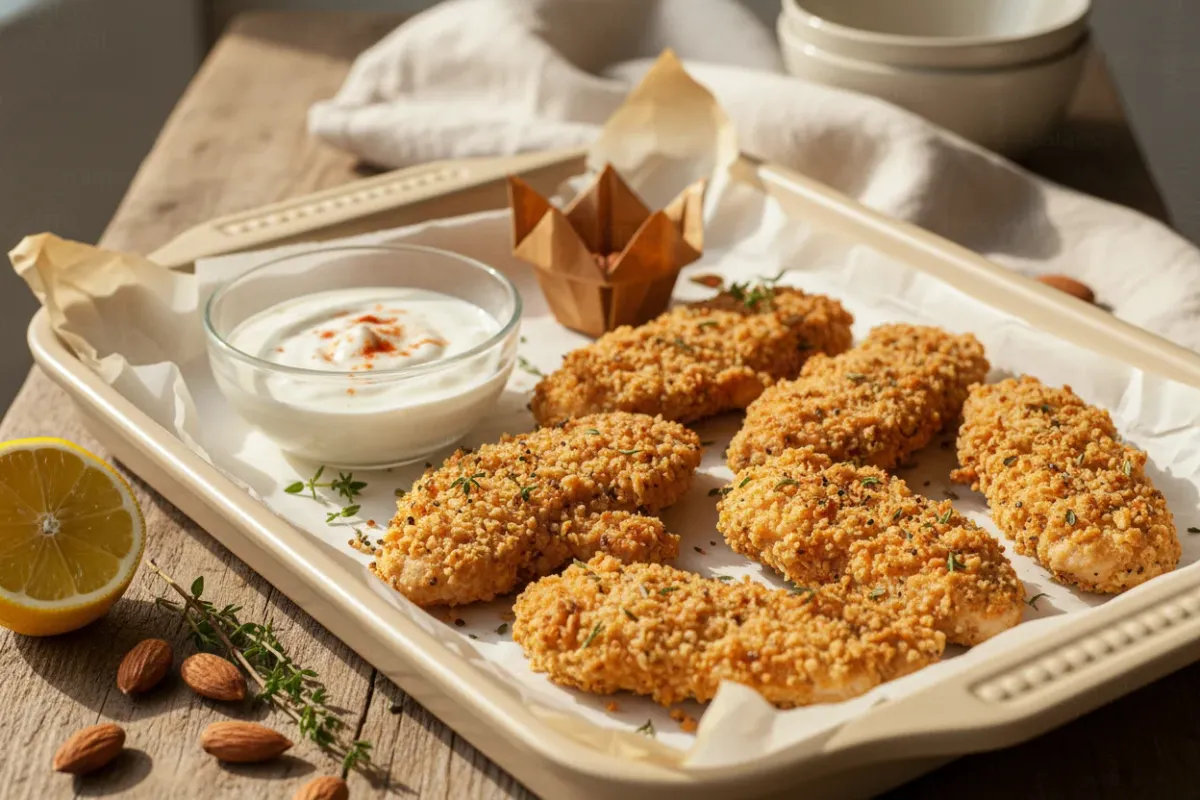
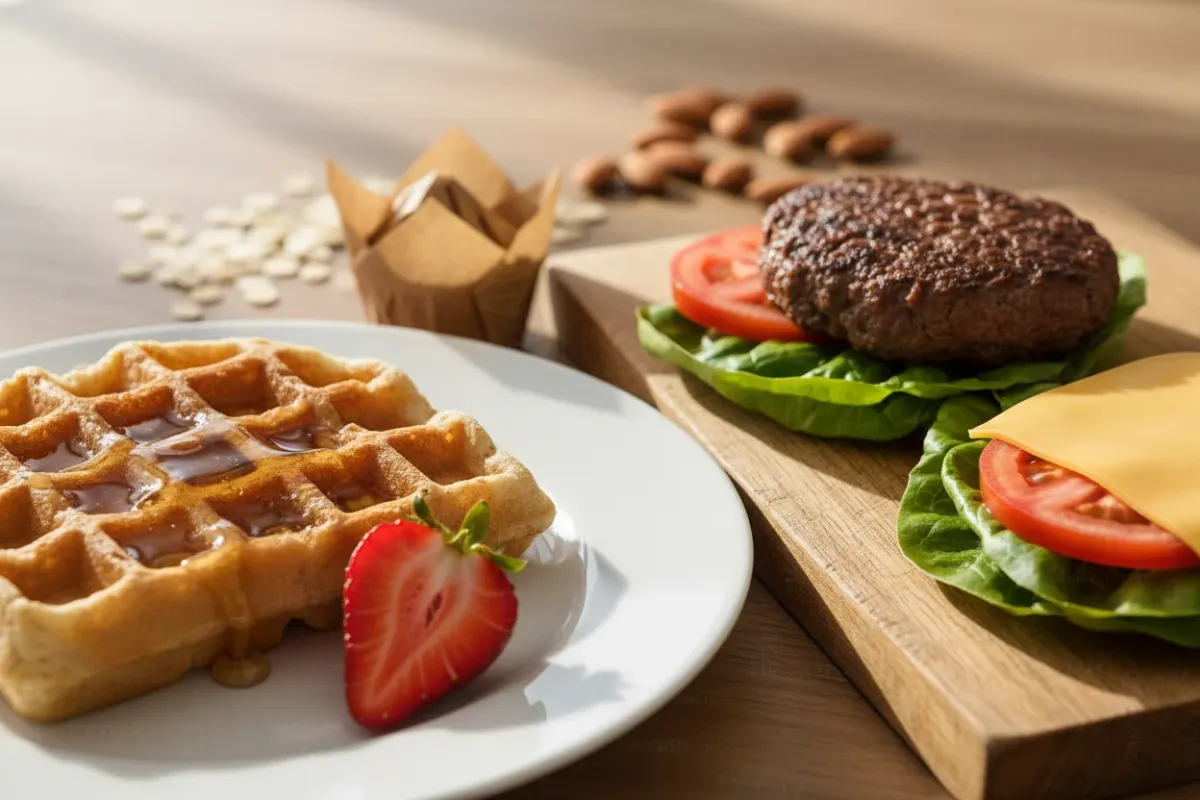
- Healthy fast food alternatives. Homemade shawarma on whole-grain flatbread, oven-baked chicken nuggets, a burger on an oat flour bun
As UCSF specialists note, it's important not to go grocery shopping hungry, to buy only from a list, and if you're craving something "forbidden," to buy a single-serving package — this reduces the risk of overeating.
Substitution example with macros:
| Meal | Kcal | Protein | Fat | Carbs |
|---|---|---|---|---|
| Fast food burger (classic) | ~550 | 25 g | 30 g | 45 g |
| Homemade burger (oat flour bun, chicken patty, vegetables) | ~320 | 30 g | 10 g | 28 g |
| French fries (medium) | ~365 | 4 g | 17 g | 48 g |
| Baked sweet potato fries | ~180 | 3 g | 5 g | 32 g |
The difference isn't about "giving up something tasty" — it's that the homemade version is more satiating at lower calories with significantly more beneficial nutrients.
Step 4. Reward yourself — but not with food
Fast food delivers a quick dopamine spike. If you simply remove it, the brain will demand a replacement. That's why it's important to consciously build a reward system: a favorite podcast, a walk, a hot bath, a new episode of a show — anything that brings pleasure and isn't food-related.
Using food as a reward is a trap: it creates a new unhealthy cycle in place of the old one.
What science says about timelines: it's a marathon, not a sprint
The popular myth that "21 days and the habit is formed" is not supported by research. Establishing lasting dietary behavior is a process that takes considerably longer.
A six-year study of the Bright Line Eating program revealed an interesting pattern in the form of a "dose-dependent" effect: the longer people stuck with the program, the better their results. Among those who lost more than 20% of their weight, 80% had been in the program for 5–6 years. And among those who regained the weight, 88% had participated for less than 4 years.
This isn't a reason to despair — it's a reason to stop expecting instant results and start playing the long game. Every day without fast food isn't a heroic feat — it's training. And with each passing day, it gets easier.
Practical techniques for every day
Here are specific techniques backed by CDC recommendations and UCSF guidelines:
- The 20-minute rule. When you crave fast food — wait 20 minutes. Drink a glass of water. In most cases, the intense craving passes
- Eat slowly. The stomach needs about 20 minutes to send the brain a satiety signal. Put your fork down between bites, take a pause midway through the meal
- Eat only when truly hungry. Fatigue, anxiety, and boredom are not hunger. If the urge to eat comes from emotions, a short walk or a call to a friend helps
- Plan your meals in advance. It sounds boring, but it's the most reliable way to avoid standing in front of an empty fridge in the evening with a phone in your hand
- Remove distractions while eating. Eating while watching a show or the news is a direct path to overeating. The brain doesn't register how much was eaten, and an hour later it "wants to eat" again
- The plate formula. Half vegetables, one quarter protein, one quarter complex carbs. A simple rule that automatically makes your diet balanced
When "just pulling yourself together" doesn't work
If your attempts to change your diet end in relapses time after time, if your relationship with food causes suffering, if food has become the only way you cope with emotions — that's not weakness. It may be a signal that you need professional support.
According to research, food addiction is characterized by unsuccessful attempts to cut back despite high motivation, the presence of cravings, and the negative impact of eating habits on responsibilities and social relationships. If this description resonates — a consultation with a dietitian or a psychologist specializing in eating disorders could be a turning point.
Studies on the effectiveness of behavioral interventions show that multi-component programs — combining education, counseling, and support — are significantly more effective than simply "knowing fast food is harmful." 60–80% of such programs demonstrate a positive impact on reducing consumption of sugary drinks, fast food, and snacks. Willpower alone is not enough — and that's okay.
Give it a try: a plan for your first week
You don't need to change everything at once. Here's a gentle start:
Days 1–2: Write down all your fast food triggers over two days. Just observe, without judgment.
Day 3: Delete delivery apps. Make a list of 5 quick homemade meals (15–20 minutes to prepare).
Days 4–5: Do meal prep for 2 days. Portion it into containers. Put a healthy snack in your bag.
Day 6: When you crave fast food — apply the 20-minute rule. Write down what helped (or didn't).
Day 7: Reward yourself for the week — not with food, but with something enjoyable.
The fast food habit is not a life sentence or a character defect. It's a neural pathway that your brain wore in because fast food provided quick relief. But neural pathways can be rewired — step by step, without warring against yourself, with a homemade burger in one hand and a glass of water in the other.
Frequently Asked Questions
How long does it take to overcome food addiction?
There is no single timeline. Research shows that lasting results come with sustained effort — from several months to several years. What matters is not speed, but consistency: every day without a relapse strengthens the new habit.
How do you cope with fast food cravings?
The most effective technique is the 20-minute rule: drink some water and wait. It also helps to remove triggers (delivery apps, the usual route past a restaurant) and to have a ready healthy alternative on hand. If the craving is emotion-driven, a short walk or any attention-shifting activity helps.
Do you have to give up fast food completely?
Not necessarily. For most people, a balance strategy works: reduce the frequency, find homemade versions of your favorite meals, and occasionally allow yourself fast food consciously — not as an impulse, but as a choice. A total ban often leads to relapses, while moderation leads to lasting change.
This article is for informational purposes only and is not medical advice. Consult a doctor or dietitian before making dietary changes.