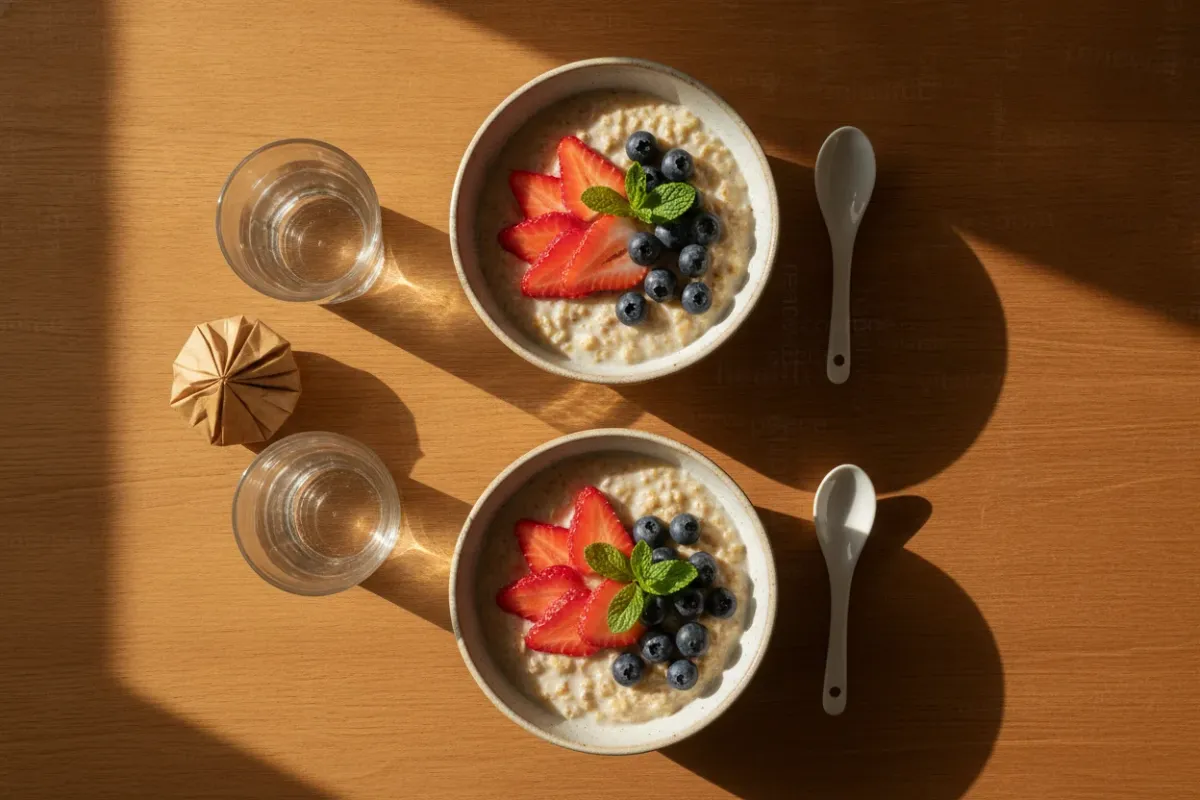
Protein Oatmeal: 422 Calories and 32g of Protein for Breakfast
High-protein oatmeal breakfast: 422 calories and 32g of protein that keeps you full. Discover the game-changing recipe nutrition experts love.
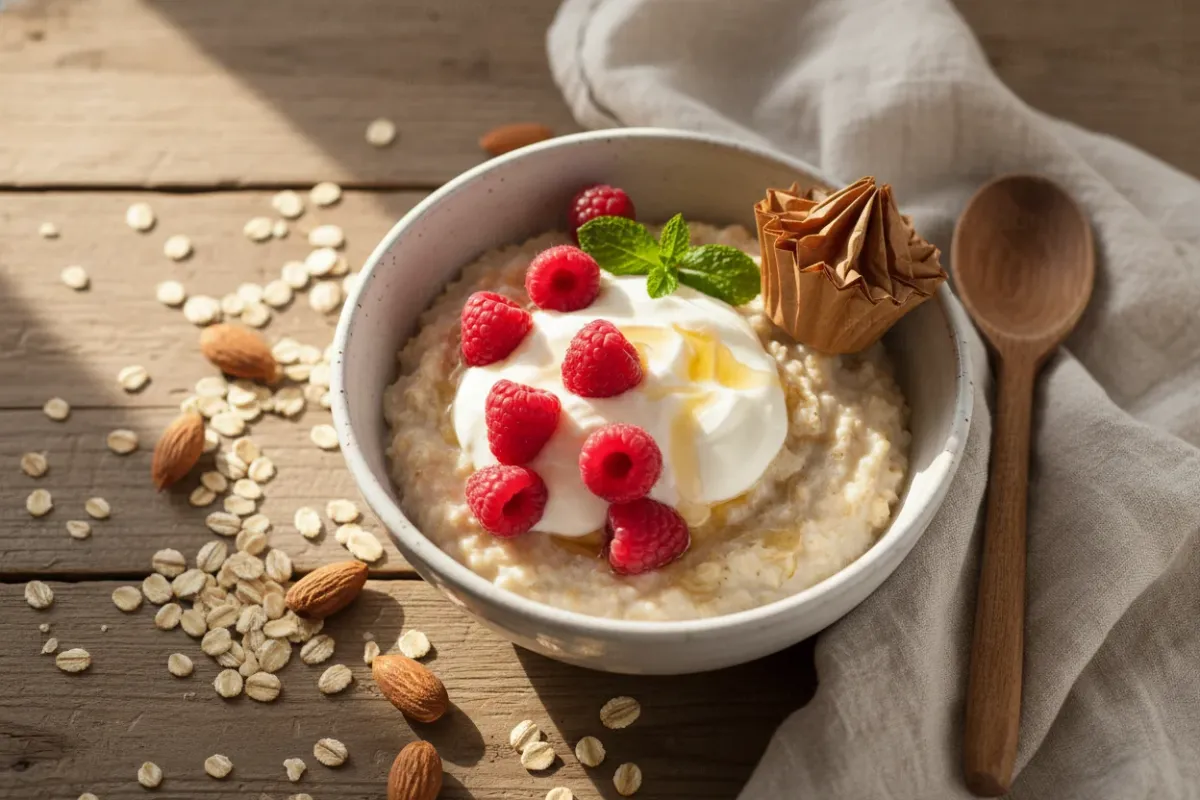
Protein Oatmeal — A Breakfast That Changes the Game
Oatmeal has long stopped being the boring porridge from childhood. When you add protein powder, Greek yogurt, and a couple of clever ingredients to ordinary oats, you get a dish with serious numbers: 422 calories, 32g of protein, 32g of carbs, and 5g of fiber in a single serving. This isn't just breakfast — it's a complete meal that keeps you full until lunch and covers a significant portion of your daily protein needs.
For those trying this format for the first time, it's a real discovery. Let's break down why protein oatmeal works, what it's made of, and how to prepare it so you'll want to make it every morning.
Why Oatmeal Is the Perfect Base for a High-Protein Breakfast
The Unique Protein Profile of Oats
Oats are one of the most protein-rich grains. According to Wellbeing Nutrition, oats contain approximately 17 grams of protein per 100 grams of dry product, making them one of the leaders among cereals. The primary protein in oats is avenin, which makes up about 80% of the total protein content. It's a plant-based protein with a respectable amino acid profile.
What's especially valuable: oats have a high content of leucine, isoleucine, and valine — three branched-chain amino acids (BCAAs) that play a key role in muscle protein synthesis. The biological value of oat protein is approximately 70–80%, meaning the body efficiently absorbs most of the incoming protein.
Slow Carbs and Steady Energy
Oatmeal has a low glycemic index, which ensures a gradual release of energy without sharp spikes in blood sugar. As noted on Workout Temple, this makes oatmeal an indispensable food for those who train: sustained energy during workouts without feeling heavy.
Fiber That Works for Satiety
Oats are rich in beta-glucan — a type of soluble fiber that lowers "bad" cholesterol (LDL) and provides a long-lasting feeling of fullness. According to Wellbeing Nutrition, beta-glucan slows protein absorption, ensuring a gradual delivery of amino acids to the muscles over several hours. This turns an ordinary breakfast into a true "IV drip" for muscle tissue.
CPCF Breakdown: What's Behind the Numbers 422/32/32/5
Let's take a closer look at the nutrient composition of a serving of protein oatmeal:
| Parameter | Value | % of Daily Value* |
|---|---|---|
| Calories | 422 kcal | ~21% |
| Protein | 32g | ~43% |
| Carbohydrates | 32g | ~11% |
| Fiber | 5g | ~20% |
*Percentage of daily value is calculated for a ~2000 kcal diet and ~75g of protein.
These numbers are practically a gold standard for those who follow balanced nutrition principles. Protein and carbohydrates in equal ratio, moderate calorie count, enough fiber for comfortable digestion. For comparison: a standard serving of plain oatmeal made with water contains only 5–6g of protein. The difference is 5–6 times.
Dr. Sonali Ruder, recipe author at The Foodie Physician, recommends aiming for 25–30 grams of protein per meal, including breakfast. Protein oatmeal with 32g of protein exceeds this recommendation with room to spare.
What Goes Into Protein Oatmeal: Ingredients and Their Roles
Base Components
To achieve the 422 kcal / 32g protein / 32g carbs / 5g fiber profile, a proven combination of ingredients is used:
Rolled oats (40–50g) — the foundation of the dish. They provide complex carbohydrates, fiber, and baseline protein. It's best to use whole-grain old-fashioned oats or medium-cut oats. They produce a creamier texture and keep you full longer than instant oats.
Protein powder (1 scoop, ~30g) — the main protein "supplier." Whey protein is the classic choice: it dissolves well, gives a pleasant texture, and comes in a wide range of flavors. Vanilla and chocolate are foolproof options for oatmeal. For vegans, a plant-based protein made from pea and rice works well.
Greek yogurt (50–100g) — another source of protein plus probiotics for healthy gut flora. As the recipe authors at Healthful Blondie note, it's specifically the combination of Greek yogurt and protein powder that allows you to reach 40+ grams of protein per serving, while most protein oatmeal recipes top out at 15–25g.
Milk or plant-based alternative (100–150 ml) — for texture. Regular milk adds a bit more protein, while almond or oat milk reduces the calorie count.
Additional Ingredients for Flavor and Texture
Chia seeds (1 tsp) — subtle but powerful: they add fiber, omega-3 fatty acids, and additional protein. Plus, they make the oatmeal thicker — for those who prefer a dense, "pudding-like" consistency.
Nut butter (1 tsp) — peanut or almond. Healthy fats, protein, and that flavor that turns porridge into dessert. It's calorie-dense, so measure by the spoonful, not by eye.
Berries or banana — natural sweetness, antioxidants, and visual appeal. Frozen berries are a budget-friendly alternative to fresh ones, and nutritionally they're identical.
Cinnamon, vanilla, cocoa — flavor accents without calories. Cinnamon also helps stabilize blood sugar levels.
Two Preparation Formats: Hot and Overnight
Hot Protein Oatmeal (5 Minutes)
The quickest option for the morning:
- Pour milk or water over the oats, cook for 3–4 minutes over medium heat (or 2 minutes in the microwave).
- Remove from heat, let it cool for 1–2 minutes — this is a critically important step. If you add protein to boiling porridge, the protein can denature and create an unpleasant "rubbery" texture.
- Stir in the protein powder and Greek yogurt.
- Add toppings: berries, nuts, seeds.
Texture tip: if the oatmeal turns out too thick, add a spoonful of milk and stir. Protein absorbs liquid, so at the initial stage you should use slightly more liquid than for regular oatmeal.
Overnight Protein Oatmeal (Overnight Oats)
A format for those who aren't ready to even turn on the stove in the morning. Everything is assembled in the evening in 5 minutes, and a ready breakfast awaits you in the morning.
- Combine in a jar (or a container with a lid): rolled oats, protein powder, chia seeds, milk.
- Add Greek yogurt, stir.
- Close the lid, place in the refrigerator overnight (minimum 4 hours).
- In the morning, stir, add toppings — and breakfast is ready.
As recommended on Healthful Blondie, if the oatmeal has become too thick by morning — simply add a splash of milk and stir. Overnight oats tend to thicken, and that's completely normal.
Overnight oatmeal is the ideal format for meal prep. You can prepare 3–5 servings at once for the week. According to The Oregon Dietitian, these prepared portions keep in the refrigerator for several days without losing taste or texture.
Five Flavors That Never Get Old
Monotony is the main enemy of healthy habits. Here are five proven combinations that let you eat protein oatmeal every day without getting bored:
Chocolate Banana
Chocolate protein + half a banana (sliced into rounds) + 1 tsp cocoa + a pinch of sea salt. Tastes like chocolate pudding, only with 32g of protein.
Berry Cheesecake
Vanilla protein + 100g Greek yogurt + a handful of frozen berries + lemon zest. Creamy texture, berry freshness.
Apple Pie
Vanilla protein + grated apple + cinnamon + a pinch of nutmeg + 1 tsp almond butter. Autumn coziness in every spoonful.
Peanut Butter and Jam
Chocolate or vanilla protein + 1 tsp peanut butter + frozen raspberries (mashed with a fork for a "jam" effect). A time-tested classic.
Tropical Coconut
Vanilla protein + coconut milk (instead of regular) + mango pieces + 1 tsp shredded coconut. Summer all year round.
According to EatingWell and Allrecipes, it's precisely the variety of flavors that makes protein oatmeal a product that stays in your diet for the long haul.
Protein Oatmeal vs Other Breakfasts: An Honest Comparison
How does protein oatmeal stack up against popular alternatives?
| Breakfast | Kcal | Protein | Carbs | Fiber | Prep Time |
|---|---|---|---|---|---|
| Protein oatmeal | 422 | 32g | 32g | 5g | 5 min |
| Scrambled eggs (3 eggs) + toast | ~380 | 22g | 25g | 2g | 10 min |
| Granola with milk | ~400 | 10g | 60g | 3g | 2 min |
| 5% cottage cheese (200g) + berries | ~250 | 28g | 15g | 1g | 2 min |
| Cheese pancakes (3 pcs) | ~350 | 18g | 30g | 0g | 20 min |
| Plain oatmeal with water | ~180 | 6g | 30g | 4g | 5 min |
Protein oatmeal wins on the balance of protein and carbohydrates, fiber content, and preparation speed. The only competitor in terms of protein is cottage cheese, but it falls short on carbs (and for those who train, morning carbs are fuel).
As emphasized on BarBend, the combination of whey protein and oats is a "powerful duo for building lean muscle mass." A study published in the journal Nutrition & Metabolism showed that people who maintained a 500-calorie deficit over three months preserved muscle mass better when consuming whey protein.
Common Beginner Mistakes and How to Avoid Them
Mistake 1: Adding Protein to Boiling Porridge
Whey protein denatures at high temperatures — the oatmeal becomes lumpy and "rubbery." Solution: let the porridge cool to at least 50–60°C (so you can comfortably hold your hand near the bowl) and only then add the protein.
Mistake 2: Too Little Liquid
Protein powder actively absorbs moisture. If you use the same amount of water or milk as for regular porridge, the result will be dry and dense. Increase the liquid volume by 30–50 ml compared to your usual recipe.
Mistake 3: Boring, Monotonous Flavor
Eating the same vanilla oatmeal every day is the path to "I can't even look at this anymore" within two weeks. Changing flavors, rotating toppings, and trying new combinations is the key to making the habit stick.
Mistake 4: Ignoring Fats
The macros presented don't include fat data, but that doesn't mean fats should be absent. A teaspoon of nut butter or a few nuts will provide healthy fats that help absorb fat-soluble vitamins and add extra satiety.
Mistake 5: Expecting Oatmeal to Replace Everything
32g of protein is an excellent number, but it's not your entire daily requirement. To maintain and build muscle mass, it's recommended to consume approximately 1.6g of protein per kilogram of body weight per day, as noted on BarBend. For a person weighing 70 kg, that's ~112g of protein per day. Protein oatmeal covers approximately 29% of that requirement — a great start, but not the finish line.
Meal Prep: Preparing for the Week in 20 Minutes
For those who choose the overnight oatmeal format, meal prep is a superpower. Here's a step-by-step plan:
- Prepare 5 identical jars (400 ml glass jars are ideal).
- Add the dry ingredients to each jar: rolled oats, protein powder, chia seeds, cinnamon.
- Pour in the liquid: milk + Greek yogurt, stir.
- Close the lids, place in the refrigerator.
- In the morning: take out a jar, add fresh toppings (berries, nuts, fruit), stir.
The entire process takes 15–20 minutes on a Sunday evening. Five breakfasts are ready — in the morning there's no need to think, cook, or count grams. Just open a jar.
A small life hack: it's better to add toppings in the morning rather than in advance. Bananas will brown overnight, nuts will get soggy, and berries will release too much juice. Dry ingredients — in the evening, fresh ones — in the morning.
Who Is Protein Oatmeal For
Protein oatmeal is a universal breakfast, but it will be especially appreciated by:
- Those who work out — enough protein for muscle recovery, carbs for energy
- Those who are losing weight — 422 kcal with 32g of protein will keep you full for 4–5 hours
- Those who don't have time to cook — overnight oatmeal takes 5 minutes to prepare in the evening
- Those who don't like typical "fitness breakfasts" — this is genuinely delicious, especially in the chocolate-banana version
- Those who meal prep — keeps in the refrigerator for several days
According to VeryWell Health, adding protein powder to oatmeal helps control blood sugar levels and blood pressure, supports weight loss, and simplifies reaching your daily protein target.
Try It Yourself
Protein oatmeal is one of those cases where healthy and delicious truly align. 422 calories, 32g of protein, a perfect macronutrient balance, and 5 minutes to prepare. You don't need to be a professional athlete to appreciate this breakfast. Just try it once — and regular porridge will never be the same again.
The easiest way to start is with the basic recipe: rolled oats + protein + milk + yogurt. Try it, figure out your preferences for texture and flavor — and then experiment with add-ins. The main thing is not to be afraid of trying something new and not to wait for the perfect moment. The best time for your first protein oatmeal is tomorrow morning.
Frequently Asked Questions
Can you get 32g of protein from oatmeal without protein powder?
From oatmeal alone — practically no. Even with 17g of protein per 100g of dry oats, a standard serving (40–50g) will yield only 7–8g. To reach 32g, you need additional sources: protein powder, Greek yogurt, or a combination of both. As noted on Healthful Blondie, it's specifically the combination of two protein sources that is the key to high-protein oatmeal.
How do you keep protein oatmeal from getting too thick?
The main rule is to add 30–50 ml more liquid than for regular porridge, since protein powder absorbs moisture. If overnight oatmeal turns out too dense in the morning, simply pour in a bit of milk and stir. Also, chia seeds significantly increase thickness — it's best to start with half a teaspoon.
Why is protein oatmeal better than a regular breakfast for satiety?
The combination of protein and fiber is the most effective pairing for long-lasting fullness. Beta-glucan from oats slows digestion, while protein stabilizes blood sugar levels. As a result, 422 kcal of protein oatmeal keeps you full significantly longer than the same 422 kcal from granola or a jam sandwich.
What ingredients make protein oatmeal truly delicious?
Nut butter, cocoa, cinnamon, and a pinch of salt — four ingredients that transform "healthy porridge" into a dish you actually want to eat. Salt enhances the sweetness of the protein, cinnamon adds depth of flavor, cocoa provides a chocolatey note, and nut butter brings the creaminess and richness that the basic recipe lacks.
This article is for informational purposes only and is not medical advice. Consult a doctor or dietitian before making dietary changes.