Pesto Chicken with Broccoli + Pancake Bowls with Raspberries
Easy pesto chicken with broccoli and raspberry pancake bowls—stunning recipes for healthy meal prep with complete macro breakdowns.
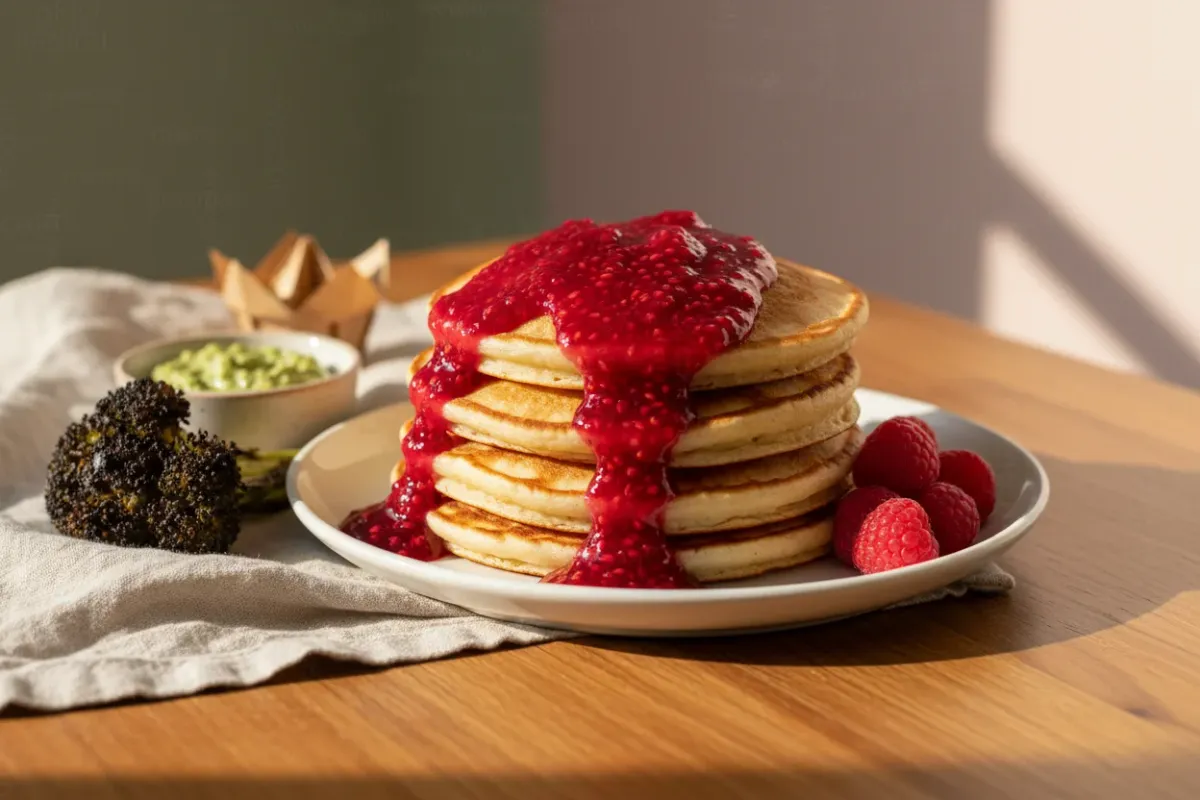
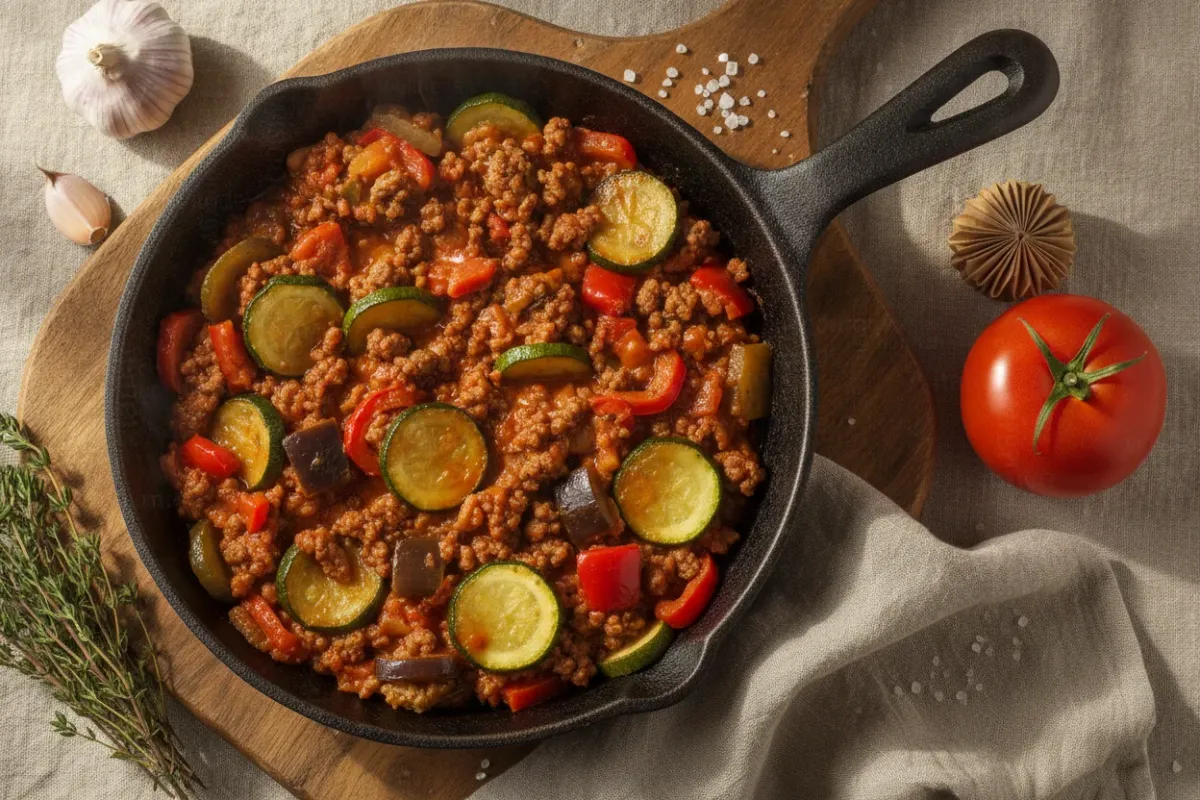
Sometimes you want both a hearty dinner and a beautiful breakfast, but time is short. Days like these call for recipes that practically cook themselves yet look on the plate as though a chef had worked magic. Today — two such dishes: oven-baked pesto chicken with broccoli for dinner and tender pancake bowls with raspberries for the morning. Both fit within a healthy-eating framework, both are perfect for meal prep, and both come with an honest macro breakdown.
Oven-Baked Pesto Chicken with Broccoli: Why It Works
The combination of chicken, pesto, and broccoli isn't just a trendy Instagram fad. There is a very concrete balanced-nutrition logic behind it.
Protein + Fiber + Healthy Fats
Chicken breast is one of the most concentrated sources of protein with minimal fat content. A 120–150 g serving delivers roughly 30–35 g of pure protein. As the authors at HealtheCooks note, even 4 ounces (≈113 g) of oven-baked chicken with vegetables provides 30 g of protein at only 317 kcal per serving.
Broccoli adds fiber, vitamin C, and chromium — a trace mineral involved in blood-sugar regulation. And pesto, made from basil, pine nuts, olive oil, and Parmesan, brings unsaturated fatty acids and makes the dish truly satisfying.
Just 4 Main Ingredients
According to the recipe from Delicious Meets Healthy, making pesto chicken requires just 4 main ingredients and 5 minutes of prep. It's a low-carb dinner you can realistically prepare in under 30 minutes — from slicing to serving. This approach saves both time and nerves, especially on weeknight evenings after work.
Perfect for Meal Prep
A single-sheet-pan dish is a godsend for those who cook food several days ahead. According to Clean Food Crush, the finished chicken with broccoli keeps in the fridge for up to 4 days. The recipe yields 4 servings, and the authors recommend adding half a cup of cooked quinoa or brown rice to each portion — for those who need energy from complex carbohydrates.
Step-by-Step Recipe: Sheet Pan Pesto Chicken with Broccoli
This recipe is an adaptation of the classic sheet pan method used by many Western fitness bloggers. The idea is simple: everything on one pan, minimal dishes, maximum flavor.
Ingredients (serves 4)
- Chicken breast fillet — 600 g
- Broccoli — 400 g (broken into florets)
- Pesto (basil) — 4 tablespoons (80 g)
- Olive oil — 1 tablespoon
- Grated Parmesan — 30 g
- Salt, black pepper — to taste
- Garlic powder — ½ teaspoon (optional)
How to Cook
Step 1. Preparation. Preheat the oven to 200 °C (400 °F). Line a baking sheet with parchment paper — this will significantly simplify cleanup. As recommended by The Whole Cook, the optimal sheet pan size is approximately 30×43 cm so that the ingredients lie in a single layer and cook evenly.
Step 2. Preparing the chicken. If the fillets are thick, slice them horizontally into two thinner pieces — this way the chicken will cook faster and more evenly. This technique is recommended by the authors at The Whole Cook: thin pieces bake through in 15 minutes, whereas whole breasts may require 30–35 minutes.
Step 3. Marinating. Coat the chicken with 3 tablespoons of pesto on both sides. Set the remaining tablespoon of pesto aside for the broccoli. If the pesto is thick, you can thin it slightly with a teaspoon of olive oil.
Step 4. Broccoli. Place the broccoli florets in a bowl, add the remaining pesto and a tablespoon of olive oil, season with salt, and toss to combine. If you want variety — The Whole Cook notes that green beans (cut in half) or zucchini cut into cubes work in place of broccoli. The key is to choose a vegetable that cooks in roughly the same time.
Step 5. Assembly and baking. Arrange the chicken and broccoli on the sheet pan with some space between the pieces. Bake for 20–25 minutes. The recipe from Clean Food Crush specifies 25 minutes at 190 °C (375 °F). At a higher temperature (200 °C), 15–20 minutes is enough. Important: the internal temperature of the chicken must reach 74 °C (165 °F) — this guarantees safety, as emphasized by HealtheCooks.
Step 6. The finishing touch. Five minutes before it's done, sprinkle the dish with grated Parmesan and return it to the oven, as recommended by Carlsbad Cravings. The Parmesan will partially melt and create a golden crust.
Macros per Serving (≈280 g)
| Nutrient | Value |
|---|---|
| Calories | 310 kcal |
| Protein | 36 g |
| Fat | 15 g |
| Carbs | 7 g |
| Fiber | 3 g |
This calculation is for a serving without a side dish. Adding 80 g of cooked brown rice brings the calories up to approximately 410 kcal, and carbs to 27 g.
Tips for Variations
Pesto chicken is an incredibly versatile recipe. According to Cookies and Cups, leftovers can be frozen and later used in pasta, salads, or sandwiches. And according to Tastes Better From Scratch, you can add bell pepper, zucchini, and cherry tomatoes alongside the chicken and broccoli — creating a full-on "veggie paradise" on the sheet pan, all within the same 30 minutes.
For those watching their sodium intake: the recipe from HealtheCooks lists only 173 mg of sodium per serving, making the dish suitable for people on a salt-restricted diet.
Pancake Bowls with Raspberries: A Breakfast You'll Want to Photograph
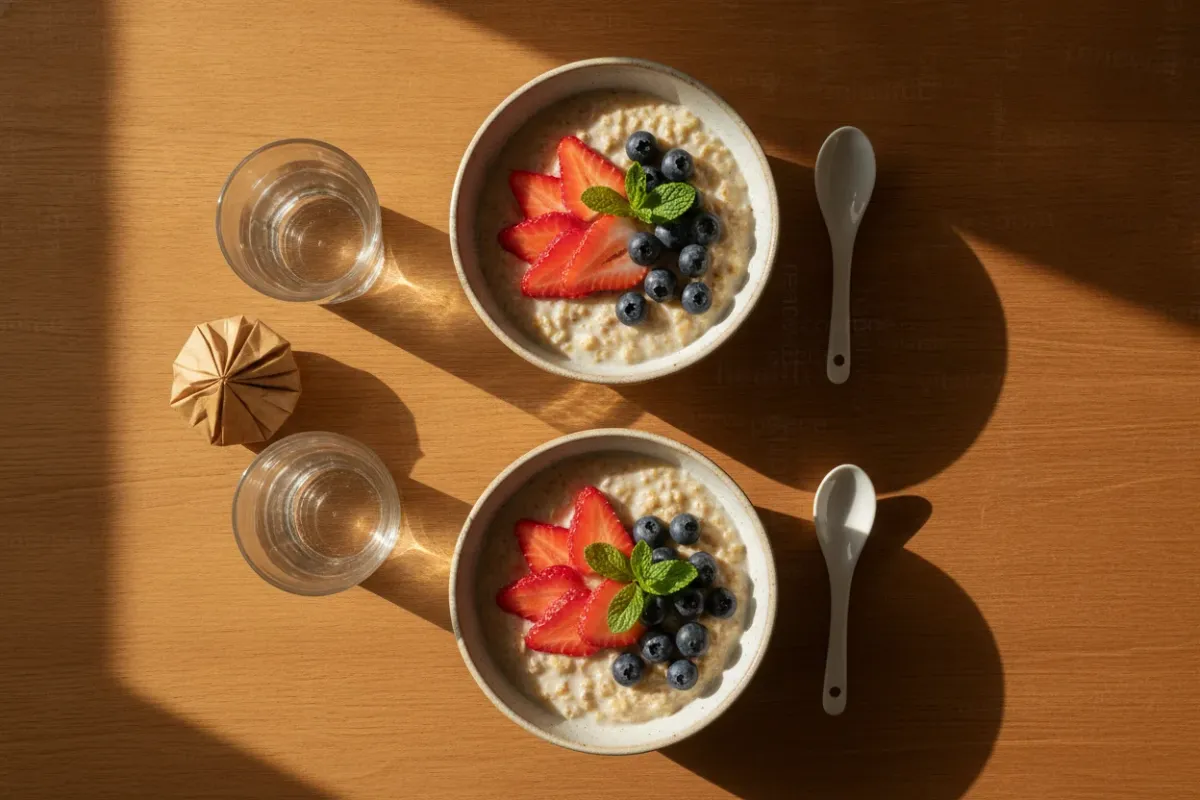
Now — on to the morning portion. A pancake bowl is essentially a thick, fluffy pancake baked in the shape of a bowl, which is then filled with berries, yogurt, and toppings. The result is beautiful, satisfying, and very convenient for serving.
Why a Bowl Instead of a Stack of Pancakes
A classic stack of pancakes is delicious but not always practical. Syrup drips down, berries roll off, and portion control is tricky. A bowl solves all these problems: the sides hold the filling in place, every bite is evenly coated with sauce, and the format itself is portioned — you won't overeat.
Moreover, the bowl format allows you to add more protein: the "bowl" can hold a serving of Greek yogurt or a cottage cheese cream that would simply slide off flat pancakes.
Why Raspberries
Raspberries are one of the lowest-calorie berries: about 52 kcal per 100 g. At the same time, they contain a significant amount of fiber (about 6.5 g per 100 g — more than most fruits) and are a source of vitamin C, manganese, and antioxidants. Frozen raspberries are every bit as nutritious as fresh ones, and cost significantly less, especially out of season.
Step-by-Step Recipe: Pancake Bowls with Raspberries
Batter Ingredients (makes 2 bowls)
- Oat flour — 80 g (you can grind oats in a blender)
- Chicken egg — 1
- Milk (any kind, including plant-based) — 100 ml
- Protein powder (vanilla or unflavored) — 1 scoop (≈30 g), optional
- Baking powder — 1 teaspoon
- Sweetener (erythritol, stevia, or honey) — to taste
- Pinch of salt
- Coconut oil for greasing the molds — ½ teaspoon
Filling Ingredients (for 2 bowls)
- Raspberries, fresh or frozen — 120 g
- Greek yogurt (2–5% fat) — 100 g
- Peanut or almond butter — 1 tablespoon (15 g)
- Granola or shredded coconut — 1 tablespoon (for serving)
- Honey or maple syrup — 1 teaspoon (optional)
How to Cook
Step 1. Batter. Combine the oat flour, protein powder (if using), baking powder, and salt in a bowl. Separately, whisk the egg with the milk and sweetener. Combine the dry and wet ingredients and mix until smooth. The batter should be slightly thicker than for regular pancakes — this is important so the bowl holds its shape.
Step 2. Molds. Grease two muffin molds or small oven-safe bowls (10–12 cm in diameter) with coconut oil. Divide the batter between the molds, filling them about ⅔ full — the batter will rise during baking.
Step 3. Baking. Preheat the oven to 180 °C. Bake the pancake bowls for 18–22 minutes, until the surface is golden and a toothpick inserted in the center comes out clean. Let them cool for 5 minutes right in the molds — the bowl will settle slightly in the center, forming a natural well for the filling.
Step 4. Raspberry topping. While the bowls bake, prepare the raspberry "cushion." Lightly mash half the raspberries (60 g) with a fork and mix with a teaspoon of honey — this makes a quick berry sauce. Leave the other half as whole berries for serving.
Step 5. Assembly. Place 50 g of Greek yogurt in the center of each bowl, top with the raspberry sauce, whole berries, a drizzle of peanut butter, and a sprinkle of granola. Serve immediately — warm batter with cold yogurt and berries creates a stunning contrast.
Alternative Method: On the Stovetop
No oven or don't want to wait? You can make the pancakes on a non-stick skillet the classic way — 2–3 minutes per side over medium heat. Then stack 2–3 of them in a deep bowl and fill with the toppings. It's faster, although an oven-baked bowl has a more textured and impressive appearance.
What About the Microwave?
A pancake bowl can also be made in the microwave — it's the fastest option. The batter is placed in a microwave-safe mug or small bowl and cooked for 2–3 minutes on medium power. The texture will be slightly moister and more "cake-like," without a golden crust, but for a Monday morning — a perfectly respectable result.
Macros per Pancake Bowl (with filling)
| Nutrient | Value |
|---|---|
| Calories | 295 kcal |
| Protein | 22 g |
| Fat | 10 g |
| Carbs | 30 g |
| Fiber | 5 g |
Calculation includes protein powder. Without it: calories ≈240 kcal, protein ≈12 g.
Meal Prep: How to Combine Both Recipes for the Week
Both dishes fit perfectly into a multi-day food prep strategy. Here's what that can look like in practice.
Sunday Cook Session (1–1.5 hours)
- Oven to 200 °C. While it heats — slice the chicken, break apart the broccoli, mix with pesto.
- Sheet pan with chicken and broccoli into the oven for 20–25 minutes.
- While the chicken bakes — mix the batter for the pancake bowls.
- Remove the chicken, lower the temperature to 180 °C, place the molds with batter in for 20 minutes.
- Divide the chicken into containers (4 servings for Mon–Thu dinners).
- Cool the bowls and pack them separately from the filling (2 pieces for breakfast).
Storage
- Chicken with broccoli: refrigerator — up to 4 days in an airtight container, as confirmed by Tastes Better From Scratch and Clean Food Crush. Reheat in the microwave for 2 minutes or on the stovetop.
- Pancake bowls (without filling): refrigerator — 3 days, freezer — up to 2 weeks. Reheat in a toaster oven or microwave. Add the filling (yogurt, raspberries, nut butter) immediately before serving.
Containers
For the chicken with broccoli, standard rectangular containers with a 500–600 ml capacity work well. For the pancake bowls, it's better to use small round containers or even silicone molds — this way the bowl retains its shape.
Daily Macro Breakdown: An Example
Here's how these two dishes fit into a daily diet of 1,600–1,800 kcal:
| Meal | Dish | Kcal | P | F | C |
|---|---|---|---|---|---|
| Breakfast | Pancake bowl with raspberries | 295 | 22 | 10 | 30 |
| Lunch | Your choice (soup, salad, grain + vegetables) | ~500 | 25 | 15 | 55 |
| Dinner | Pesto chicken with broccoli + 80 g brown rice | 410 | 36 | 15 | 27 |
| Snacks | A piece of fruit + a handful of nuts | ~250 | 6 | 14 | 24 |
| Total | ≈1,455 | 89 | 54 | 136 |
That leaves a buffer of 150–350 kcal for a second snack, dessert, or an extra side dish. Protein at 89 g is a solid figure for a person weighing 60–70 kg who engages in moderate physical activity.
Pesto: Store-Bought or Homemade?
A question that comes up for many people. Both options are perfectly valid.
Store-Bought Pesto
As the authors at The Whole Cook observe, using store-bought pesto means "zero chopping, mixing, or blending." It saves 10–15 minutes and eliminates one step of cooking. The key is to read the label: good pesto should contain basil, olive oil, pine nuts (or cashews), Parmesan, and garlic. Avoid versions with large amounts of sunflower oil and starch.
Homemade Pesto
The homemade version wins on freshness of flavor and lets you control the amount of oil and salt. For a healthier version, you can reduce the proportion of oil and replace some of the pine nuts with pumpkin seeds — this lowers the calorie count without sacrificing texture.
Mortar or Blender?
Traditionally, pesto is made in a stone mortar (the word "pesto" comes from the Italian "pestare" — to pound). Grinding in a mortar yields a coarser texture and allows the oil to release from the basil gradually, creating a richer flavor. A blender works faster but can slightly heat the mixture, which sometimes causes the basil to darken. For a weeknight dinner, a blender is an excellent choice. For a special occasion, it's worth trying a mortar — the difference is noticeable.
Frequently Asked Questions
Can I add protein powder to the pancake bowl?
Yes, and it's a great way to boost the protein content from 12 to 22 g per serving. It's best to use whey or casein protein with a neutral or vanilla flavor. Important: adding protein can make the batter drier, so you should increase the milk by 20–30 ml.
Can I make a pancake bowl in the microwave?
You can. The batter is placed in a microwave-safe mug or small bowl and cooked for 2–3 minutes on medium power. The texture turns out softer and moister, without a crispy crust. For a rushed morning — a workable option, especially with berries and yogurt on top.
What size container do I need for a pancake bowl?
The optimal diameter is 10–12 cm, volume — 300–400 ml. Muffin molds, small ramekins, or silicone molds all work. It's important that the walls are tall enough (at least 4 cm), otherwise the bowl will turn out flat and won't hold the filling.
Mortar or blender — what's the difference for pesto?
A mortar yields a coarser texture and richer flavor because the basil is crushed rather than chopped. A blender is faster and more convenient but can slightly heat the mixture. For everyday cooking, a blender is the ideal choice. If you want maximum aroma — it's worth trying a mortar at least once.
Give It a Try This Week
Two recipes — dinner and breakfast — cover a large portion of your daily protein needs, provide plenty of fiber and healthy fats, and don't require any culinary heroics. Pesto chicken with broccoli cooks on a single sheet pan in half an hour and keeps in the fridge for up to four days. Pancake bowls can be baked on Sunday and assembled each morning in two minutes.
Healthy eating doesn't have to be boring or complicated. Sometimes all you need is good pesto, a handful of raspberries, and a little inspiration.
This article is for informational purposes only and is not medical advice. Consult a doctor or dietitian before making dietary changes.