Meal Prep at 1,200 Calories: A Week-Long Menu Without Going Hungry
Meal prep at 1,200 calories without going hungry. Complete week-long menu with high-protein & high-fiber recipes for sustainable weight loss.
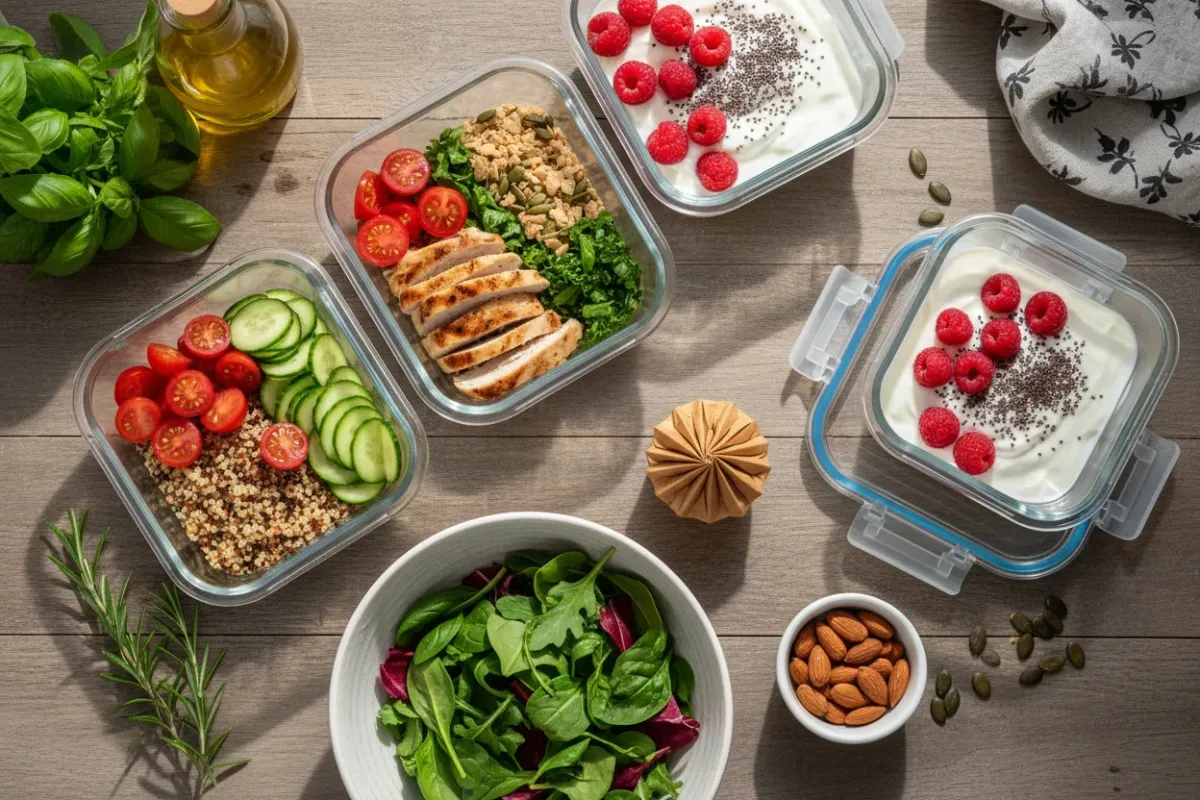
Why You Need Meal Prep on a Calorie Deficit
A calorie deficit is the only reliable way to lose weight. But when calories are scarce, every single one has to pull its weight: delivering protein, fiber, vitamins, and a feeling of fullness. This is exactly where meal prep becomes not just a convenience but a survival strategy while dieting.
A 1,200-calorie-per-day diet is the lower comfortable threshold for most adult women with moderate activity levels. For men and people with high physical activity, this calorie count may be too low, and it's worth consulting a specialist. But for those who find this number appropriate, a well-assembled meal prep solves several problems at once:
- Portion control — food is already divided into containers, no need to guess "how much did I put in?"
- Binge protection — when a ready-made lunch is sitting in the fridge, your hand doesn't reach for the pizza delivery app
- Time savings — one evening of preparation instead of daily cooking
- Accurate macro tracking — everything is weighed and calculated in advance
According to recommendations from the Harvard T.H. Chan School of Public Health, half your plate should be vegetables and fruits, a quarter should be whole grains, and a quarter should be protein. On a calorie deficit, this principle works especially well: vegetables provide volume and fiber with almost no calories, protein supports muscles, and complex carbohydrates supply energy.
Principles of Building a 1,200-Calorie Meal Plan
Before jumping into recipes, it's important to understand the logic of distributing calories throughout the day. Here's a working framework that helps you avoid feeling hungry:
Meal Distribution
| Meal | Calories | Role |
|---|---|---|
| Breakfast | 250–300 kcal | Kickstarting metabolism, protein + slow carbs |
| Lunch | 400–450 kcal | The most substantial meal, the foundation of the day |
| Dinner | 300–350 kcal | Light but filling — protein + vegetables |
| Snack | 100–150 kcal | Insurance against an evening fridge raid |
The key point is protein. On a calorie deficit, your protein needs don't decrease — they actually increase. The target is at least 1.2–1.6 g of protein per kilogram of body weight per day. At 65 kg (143 lbs), that's 78–104 g of protein that need to fit into 1,200 kcal. That's why every meal should include a protein source: cottage cheese, chickpeas, chicken breast, eggs, Greek yogurt, or fish.
Champion Foods for a Deficit
Some foods are especially valuable on a limited calorie budget — they deliver maximum benefit per calorie:
- Cottage cheese (2–5% fat) — about 90–100 kcal per 100 g, with 16–18 g of protein. An ideal base for salads and breakfasts
- Chickpeas (canned) — roughly 165 kcal per 100 g, with a good balance of protein (9 g) and fiber (7 g). Keeps you full for hours
- Cucumbers — 15 kcal per 100 g, yet full of water, crunch, and volume. You can eat them generously
- Pearl couscous (ptitim, Israeli couscous) — about 170–180 kcal per 100 g dry weight. Cooks in 10 minutes, absorbs dressings beautifully
- Olive oil — yes, it's calorie-dense (about 120 kcal per tablespoon), but 1–2 tablespoons a day are essential for absorbing fat-soluble vitamins and maintaining hormonal balance
Recipe 1: Cottage Cheese and Chickpea Salad (~350 kcal)
This salad is a true meal prep gem. It doesn't get soggy over 3–4 days in the fridge, packs a serious protein punch, and takes literally 10 minutes to prepare. Perfect for lunch or dinner.
Ingredients (for 5 servings)
- Cottage cheese (curd-style) — 450 g (2 cups)
- Canned chickpeas — 1 can (425 g), drained and rinsed
- Fresh cucumbers — 2, sliced into rounds
- Red onion — 1/2, thinly sliced into half-rings
- Olive oil — 2 tablespoons
- Red wine vinegar — 1 tablespoon
- "Everything but the bagel" seasoning (or a mix of: sesame seeds, poppy seeds, dried garlic, dried onion, coarse salt) — to taste
- Salt and pepper — to taste
Preparation
- Drain the chickpeas in a colander and rinse well with cold water — this removes the "tinny" taste and excess sodium
- Slice the cucumbers into medium-thick rounds (too thin and they'll get soggy by day three)
- Slice the red onion into the thinnest possible half-rings. To remove bitterness, blanch in boiling water for 30 seconds
- In a large bowl, combine the cottage cheese, chickpeas, cucumbers, and onion
- Dress with olive oil and wine vinegar, then toss
- Add the "Everything but the bagel" seasoning, salt, and pepper
- Divide evenly into five containers
Macros Per Serving
| Calories | Protein | Fat | Carbs | Fiber |
|---|---|---|---|---|
| ~350 kcal | ~22 g | ~12 g | ~35 g | ~6 g |
Storage Tips
You can store the dressing (oil + vinegar) separately in small jars and add it right before eating — this way the salad stays crunchy for all 5 days. Cucumbers are also best placed in a separate container compartment, if your container has one.
Cottage cheese releases a little liquid after a day — this is normal. Just stir the contents of the container before eating.
Recipe 2: Autumn Couscous Salad (~450 kcal)
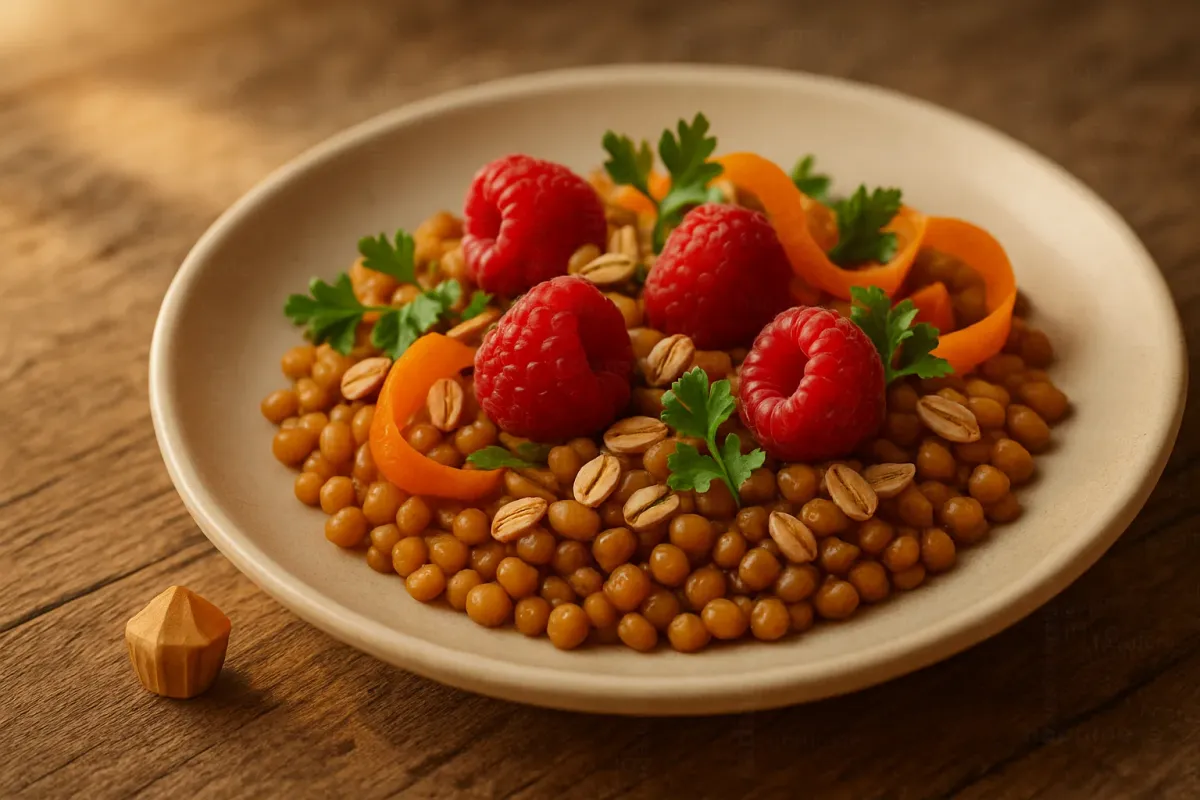
A heartier option — perfect as a main lunch. Pearl couscous (ptitim, aka Israeli couscous) provides a pleasant texture, and the autumn vegetables with a savory dressing make this dish so delicious you forget you're on a deficit.
Dressing
- Olive oil — 2 tablespoons (for 5 servings)
- Water — 2 tablespoons
- Garlic — 1 clove, crushed or finely grated
- Salt and pepper — to taste
Diluting oil with water is a great trick for a deficit: the dressing becomes liquid enough to coat the entire dish, but with fewer calories than a standard portion of oil.
Base
- Pearl couscous (ptitim) — 200 g (dry weight)
- Pumpkin or sweet potato — 200 g, cubed and roasted at 200 °C (400 °F) for 20 minutes
- Dried cranberries — 50 g
- Arugula or spinach — 100 g
- Walnuts — 30 g, roughly chopped
- Red onion — 1/2, thinly sliced into half-rings
Preparation
- Cook the couscous according to the package instructions (usually 8–10 minutes in salted water), drain, and let cool
- Cut the pumpkin or sweet potato into 1.5–2 cm cubes, place on parchment paper, drizzle with a minimal amount of oil, and roast at 200 °C (400 °F) until soft (about 20 minutes)
- Mix the dressing ingredients together
- In a large bowl, combine the cooled couscous, roasted pumpkin, cranberries, onion, and walnuts
- Add the dressing and toss
- It's best to add the greens (arugula or spinach) just before serving — this way they won't wilt
- Divide into five containers. Put the greens in a separate bag or the top compartment
Macros Per Serving
| Calories | Protein | Fat | Carbs | Fiber |
|---|---|---|---|---|
| ~450 kcal | ~12 g | ~14 g | ~68 g | ~5 g |
This dish is rich in carbohydrates — which makes it ideal for a training day when your body needs energy.
How to Build a Full Day at 1,200 Calories
With two base recipes in hand, you can put together a working plan for each day. Here's an example:
Sample Day
| Meal | What | Calories |
|---|---|---|
| Breakfast | Oatmeal made with water (40 g) + half a banana + 1 tsp honey | ~250 kcal |
| Lunch | Autumn couscous salad | ~450 kcal |
| Dinner | Cottage cheese and chickpea salad | ~350 kcal |
| Snack | Greek yogurt (150 g) + a handful of berries | ~150 kcal |
| Total | ~1,200 kcal |
Daily Macros (approximate)
| Calories | Protein | Fat | Carbs |
|---|---|---|---|
| ~1,200 kcal | ~65–70 g | ~35–40 g | ~150–160 g |
Protein here is around 65–70 g — for a person weighing 55–60 kg (121–132 lbs), this is an acceptable minimum. If you weigh more or do strength training, consider adding a protein-rich snack: a serving of casein shake, a pack of curd-style cottage cheese, or a couple of boiled eggs instead of the yogurt.
Step-by-Step Weekly Preparation Plan
The entire meal prep can be done in 1.5–2 hours on a single Sunday evening. Here's the order of operations:
Step 1: Shopping (Weekly List)
- Curd-style cottage cheese — 900 g (two batches of salad)
- Canned chickpeas — 2 cans
- Cucumbers — 4
- Red onion — 2
- Pearl couscous (ptitim) — 400 g
- Pumpkin or sweet potato — 400 g
- Dried cranberries — 100 g
- Walnuts — 60 g
- Arugula or spinach — 200 g
- Olive oil — check your supply
- Rolled oats — 280 g
- Bananas — 3–4
- Greek yogurt — 5–7 individual cups (150 g each)
- Berries (frozen work fine) — 200 g
- Red wine vinegar, garlic, seasonings — check what you have
Step 2: Cooking Order
- Preheat the oven to 200 °C (400 °F). Cut the pumpkin/sweet potato and put it in to roast (20 min)
- While it roasts — start cooking the couscous (10 min)
- In parallel — rinse the chickpeas, chop the cucumbers and onion for both salads
- Assemble the cottage cheese salad — mix, dress, divide into 5 containers
- Assemble the couscous salad — let the couscous and pumpkin cool, combine with the remaining ingredients, divide into 5 containers
- Oatmeal — portion out 40 g of dry oats into bags or small containers. In the morning, just add boiling water — 3 minutes and breakfast is ready
- Label the containers — day of the week and meal type. It's a small thing that saves precious morning minutes
Step 3: Storage
- Containers for Monday through Wednesday — into the fridge
- Containers for Thursday and Friday — can be frozen if it's the couscous salad (cottage cheese salad is best not frozen)
- Store greens separately, wrapped in a damp paper towel
How to Add Variety and Stay Sane
Eating the same thing five days in a row isn't for everyone. Here are simple ways to mix things up without recalculating all your macros from scratch:
Swaps for the Cottage Cheese Salad (keeping ~350 kcal)
- Instead of chickpeas — white beans (canned, nearly identical calorie count)
- Instead of cucumbers — bell pepper or cherry tomatoes
- Instead of red wine vinegar — lemon juice
- Add fresh dill or basil — zero calories, completely different flavor
Swaps for the Couscous Salad (keeping ~450 kcal)
- Instead of pumpkin — roasted beets or carrots
- Instead of cranberries — dried apricots, finely chopped (watch the quantity — dried apricots are more calorie-dense)
- Instead of walnuts — pumpkin seeds or sliced almonds
- Add pomegranate seeds for a pop of tartness and color
Week-to-Week Rotation
To keep the meal plan from getting stale, you can alternate recipes: one week — cottage cheese salad + couscous, the next — chicken breast with grilled vegetables + buckwheat with tuna. The principle stays the same: calculate your macros, cook in one evening, divide into containers.
Common Mistakes on 1,200 Calories
Mistake 1: Cutting Fat to Zero
Fat is not the enemy. It's essential for your hormonal system, absorption of vitamins A, D, E, and K, and feeling full. The minimum is 0.8–1 g of fat per kilogram of body weight. On 1,200 kcal, that's about 35–45 g of fat per day. The olive oil in the recipes above is a deliberate choice, not "extra calories."
Mistake 2: Skipping Meals
Skipping lunch to "save" calories for dinner is a path to overeating in the evening. Distributing calories evenly throughout the day helps maintain stable blood sugar levels and prevents binges.
Mistake 3: Ignoring Fiber
On a calorie deficit, food volume decreases, and digestion can slow down. Fiber from chickpeas, vegetables, and whole grains solves this problem. The target is at least 20–25 g of fiber per day. In our sample meal plan, you get about 20 g — that's a solid baseline.
Mistake 4: Forgetting About Water
Hunger often masks thirst. On a calorie deficit, you should drink at least 1.5–2 liters of water per day, not counting tea and coffee. A glass of water 20 minutes before a meal is a simple trick that helps you eat exactly what's in the container without reaching for seconds.
Mistake 5: Staying at 1,200 Calories for Too Long
A deficit is a tool, not a lifestyle. Prolonged calorie restriction slows metabolism and can lead to muscle loss. The recommendation from the Academy of Nutrition and Dietetics is to periodically schedule "refeeds" (days with increased calories up to maintenance level) and not stay on a strict deficit for longer than 8–12 weeks without a break.
Containers and Equipment
The right containers are 50% of meal prep success. Here's what actually matters:
- Glass containers with snap-lock lids — they don't absorb odors, are microwave-safe, and easy to clean. A 500–700 ml capacity is optimal for 350–450 kcal portions
- Containers with dividers — allow you to store dressing or greens separately from the main dish
- A kitchen scale — accurate macro tracking is impossible without one. Weighing an "eyeballed" portion just once and discovering it's not 100 g of cottage cheese but 170 g — that's a priceless experience
- A marker or stickers — to label containers with the preparation date and day of the week
When 1,200 Calories Is Too Few
It's important to understand: 1,200 kcal isn't right for everyone. This calorie level may be insufficient for:
- Men (basal metabolic rate is typically higher)
- People with high physical activity (more than 3 workouts per week)
- Breastfeeding women
- Teenagers who are still growing
If at 1,200 kcal you experience persistent fatigue, dizziness, hair loss, or menstrual irregularities — that's a signal to increase your calorie intake. A deficit should be comfortable: minus 300–500 kcal from your maintenance level, no more. You can calculate your maintenance level using a TDEE calculator.
Frequently Asked Questions
How do I avoid feeling hungry on 1,200 calories a day?
Your three greatest allies are protein, fiber, and water. Protein and fiber slow digestion and provide a lasting feeling of fullness. And a glass of water before meals fills the stomach and helps you distinguish real hunger from a habitual urge to snack.
How do I organize meal prep for 1,200 calories efficiently?
Set aside 1.5–2 hours on a day off, make your grocery list in advance, and cook several dishes in parallel: while the pumpkin is roasting — cook the couscous and chop vegetables. Divide everything into labeled containers — and your fridge is working for you all week long.
Do I need to eat the same number of calories every day?
No, and it's actually beneficial to vary them. On a training day, you can eat 1,300–1,400 kcal (by adding a serving of carbs), and on a rest day — 1,100–1,200. What matters is the average weekly calorie intake, not the exact number each day.
How do I preserve muscle mass on a 1,200-calorie deficit?
Adequate protein intake (at least 1.2 g per kg of body weight) and strength training 2–3 times a week. Without placing a load on your muscles, the body will "burn" them along with fat, and while the number on the scale may look good, the reflection in the mirror won't.
Which nutrients are especially important on a limited calorie budget?
Protein — for muscles and satiety. Fat — for hormones and vitamin absorption. Fiber — for digestion. Iron and calcium — these often fall short on low-calorie diets, so it's worth including cottage cheese (calcium) and legumes like chickpeas (iron) in your daily meal plan.
This article is for informational purposes only and is not medical advice. Consult a doctor or dietitian before making dietary changes.