Meal Prep for Teens: How to Cook for the Week and Lose Weight Without Stress
Master meal prep as a teen without stress: Learn to cook healthy meals for a week, naturally lose weight, and control your portions easily.
Why Meal Prep Is a Teen's Best Friend When Trying to Lose Weight
The teenage years are a time when you want both pizza after school and to look great in photos. And that's where the inner conflict begins: go on a diet or just give up? In reality, you don't need either. It's enough to learn to cook ahead — and control over your nutrition will come naturally.
Meal prep (short for meal preparation) isn't about boring containers of boiled chicken. It's about opening the fridge at any moment and finding something tasty, filling, and healthy. No bingeing on chips. No hungry evenings. No guilt.
As specialists at Summer Health point out, planning meals creates structure around eating habits, reduces impulsive decisions, and leads to more mindful food choices. And for a teenager who is just learning to manage their diet, this is especially valuable.
Portion Control: Why It Matters More Than Counting Calories
Many people think you need to count every calorie to lose weight. But for a teenager, that's a path to stress and an unhealthy relationship with food. It's much simpler and safer to learn portion control.
Here's an interesting fact: what's now called a "kids' portion" at cafés and restaurants was a normal adult portion 40 years ago. Experts at Seger MD remind us of this. Portions grew unnoticed — and calorie intake grew right along with them.
Portion control isn't a restriction — it's a tool. Even if the container is full of healthy foods, overeating can still lead to weight gain. That's why meal prep works perfectly: the food is already portioned out, and you don't have to decide how much to put on your plate every time.
What Helps Control Portions During Meal Prep
- Fixed-size containers — you physically can't put in more than you need
- Measuring spoons and kitchen scales — as Everyday Health notes, the right tools "make all the difference"
- The visual plate rule — half vegetables, a quarter protein, a quarter complex carbs
- Pre-portioned snacks — a handful of nuts in a small bag instead of an open package on the table
The Key Principle: Add, Don't Restrict
Here's what's truly important for both parents and teens to understand: effective weight loss at this age is built not on restrictions, but on adding healthy options.
Child nutrition specialist Silber recommends starting with "small, achievable goals" and not overwhelming teenagers with too many changes at once. The focus is on adding: a fruit with breakfast, an extra serving of vegetables with lunch.
As the authors at Meal Prep Kingz suggest, small steps like "add one more vegetable to every meal" or "swap sugary soda for water" are exactly what starts a lasting transformation.
This approach works for a simple reason: when there are more vegetables, protein, and fiber in the diet, the body feels full faster, and there's simply less room left for chips and candy.
Step-by-Step Meal Prep Plan for Teens
Step 1. Plan the Weekly Menu Together
This is the key moment. According to recommendations from Banner Health, planning should start with the teenager's favorite dishes — it's easier to engage and maintain interest that way. Create a weekly meal calendar together, discussing dishes, ingredients, and budget.
Important: active parent involvement in this process is critical. As dietitian Florek notes, it's the parent's example that shapes a teenager's attitude toward the process.
Sample weekly plan:
| Day | Breakfast | Lunch | Dinner | Snack |
|---|---|---|---|---|
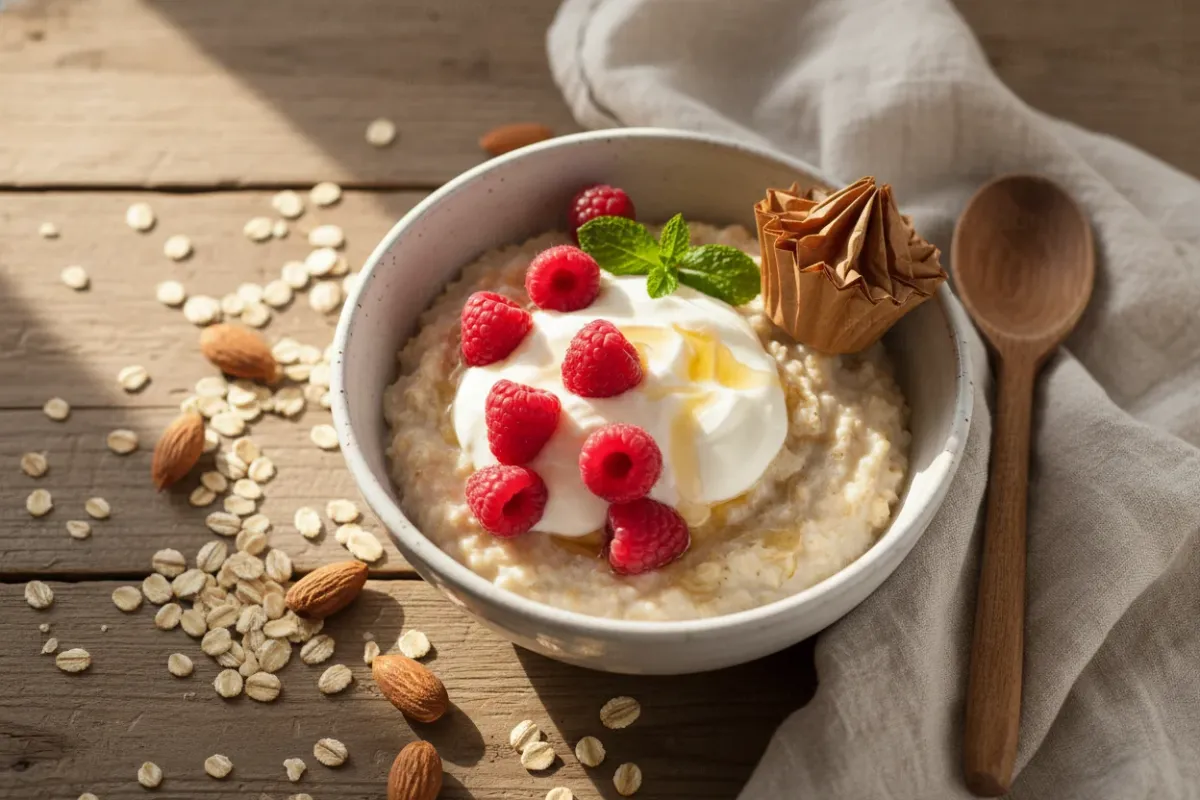
| Mon | Oatmeal with berries | Bento box | Chicken fajitas | Greek yogurt |
| Tue | Egg muffins | Thermos soup | Veggie stir-fry | Fruit + nuts |
| Wed | Smoothie | Turkey rolls | Salmon + sweet potato | Carrots + hummus |
| Thu | Oatmeal with berries | Bento box | Turkey meatballs | Popcorn |
| Fri | Egg muffins | Pasta soup | Veggie quesadilla | Yogurt parfait |
Step 2. Shop Together
Banner Health recommends going to the store together with your teenager. It's a great opportunity to teach them to read labels, compare prices, and choose fresh produce. A useful skill for life.
Basic meal prep shopping list:
- Protein: chicken breast, turkey, eggs, Greek yogurt, tofu
- Complex carbs: rice, quinoa, whole-grain bread, oatmeal, sweet potato
- Vegetables: broccoli, bell pepper, carrots, spinach, tomatoes, cucumbers
- Fruits: berries, bananas, apples, oranges, strawberries
- Healthy fats: avocado, nuts, olive oil
- Extras: hummus, whole-grain crackers, air-pop popcorn
As experts emphasize, avocado, nuts, and olive oil are healthy fats that support brain function and are an essential part of a teenager's diet.
Step 3. Cook "Building Blocks"
The idea from Centred Nutrition Collective is to cook not specific dishes, but "building blocks": proteins, grains, and vegetables separately, then combine them throughout the week.
On Sunday, prepare:
- 1 kg of grilled or baked chicken breast
- Turkey meatballs (try honey-sriracha — sweet and spicy, teens love them)
- A pot of rice or quinoa
- Hard-boiled eggs — 10
- Chopped vegetables for bento boxes
- Overnight oats in jars — breakfast for 3 days
- Smoothie packs for the freezer (banana + berries + spinach)
This approach saves time while keeping meals different every day. From the same chicken, you can make a stir-fry, a roll, fajitas, and a salad.
Step 4. Pack Containers Wisely
As Everyday Health experts note, the main advantage of meal prep is complete control over ingredients and cooking methods. Unlike restaurant food or delivery, at home you can calculate the exact portion for your needs.
Packing rules:
- Main meals — in 400–500 ml containers
- Snacks — in small containers or zip bags
- Sauces and dressings — separately, so the food doesn't get soggy
- Label the day of the week with a marker on masking tape
Recipes and Macros: What Exactly to Cook
Veggie Egg Muffins (Grab-and-Go Breakfast)
The perfect option for mornings when every minute counts. Centred Nutrition Collective calls them a tried-and-true "grab and go" breakfast.
Ingredients for 6 muffins:
- 4 eggs
- 50 ml milk
- 50 g spinach
- 50 g bell pepper
- 30 g cheese
- Salt and pepper to taste
Directions: Mix eggs with milk, add chopped vegetables and cheese. Pour into silicone muffin molds. Bake at 180°C (350°F) for 20 minutes. Keeps in the fridge for up to 4 days.
Macros per 2 muffins: ~220 kcal | P: 16 g | F: 14 g | C: 4 g
Bento Box (School Lunch)
As dietitians suggest, many teens prefer not traditional sandwiches but a "grazing" style — an assortment of different small snacks in one container.
Option 1:
- 80 g sliced chicken breast
- 30 g cheese + whole-grain crackers
- Carrots and cucumber + hummus (2 tbsp)
- A handful of grapes
- 2 squares of dark chocolate
Macros: ~420 kcal | P: 30 g | F: 18 g | C: 35 g
Option 2:
- 80 g hard-boiled eggs (2 eggs)
- Whole-grain tortilla with veggies and hummus
- Strawberries
- A handful of nuts
Macros: ~400 kcal | P: 22 g | F: 20 g | C: 32 g
An important point from dietitians: adding something enjoyable — a cookie, chocolate, or chips — makes lunch more appealing and reduces the chance that the teen will toss the container and head for fast food instead.
Smoothie Packs (Freezer Prep)
Ingredients per pack:
- 1 banana (sliced)
- 70 g frozen berries
- A handful of spinach
- 1 tbsp rolled oats
In the morning, dump the contents into a blender, add 200 ml of milk or yogurt, and blend. Ready in 2 minutes.
Macros (with 1.5% milk): ~250 kcal | P: 9 g | F: 4 g | C: 45 g
Honey-Sriracha Turkey Meatballs
A recipe inspired by Trifecta Nutrition — sweet-and-spicy meatballs that, according to reviews, become the favorite dish of the week.
Ingredients for 15 meatballs:
- 500 g ground turkey
- 1 egg
- 3 tbsp breadcrumbs
- Salt, garlic, pepper
- Sauce: 2 tbsp honey + 1 tbsp sriracha + 1 tbsp soy sauce
Directions: Form the meatballs, bake at 200°C (400°F) for 20 minutes. Drizzle with sauce and return to the oven for 5 minutes. Serve with rice and vegetables.
Macros per 5 meatballs + 100 g rice: ~430 kcal | P: 35 g | F: 10 g | C: 48 g
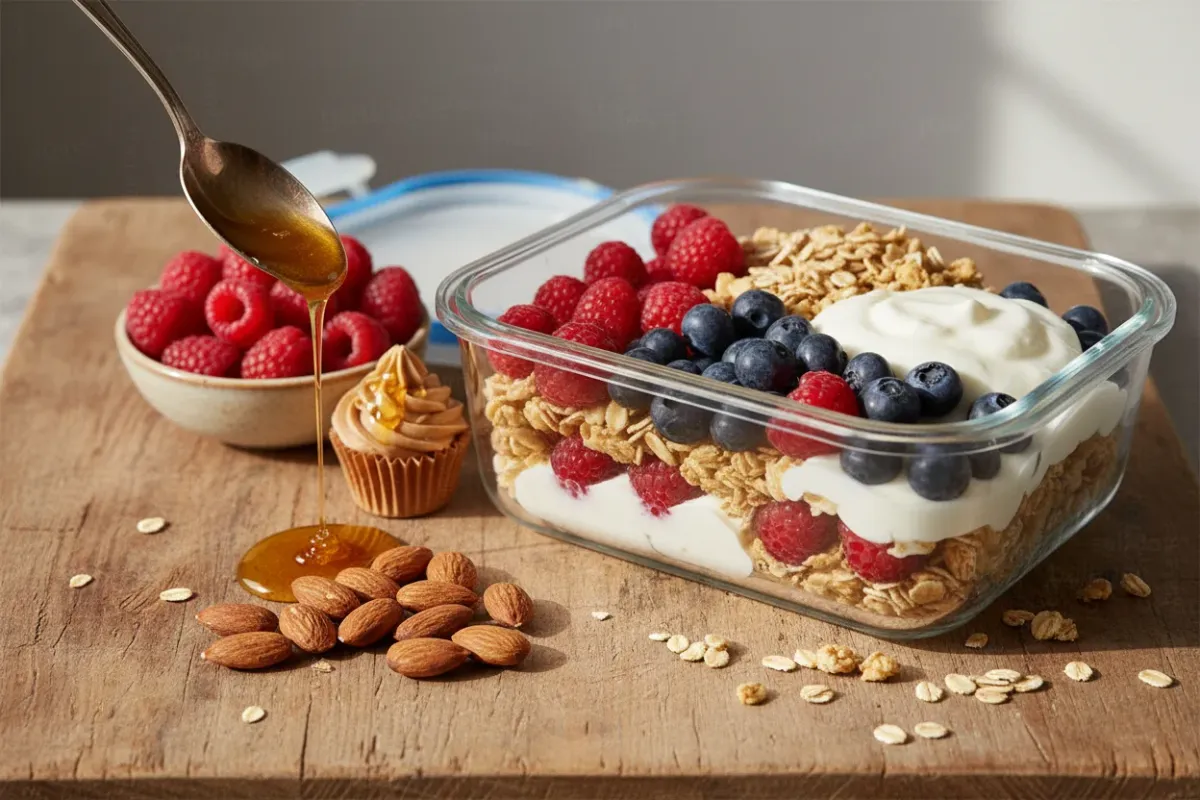
Yogurt Parfait (Snack)
As Trifecta Nutrition advises, fill small mason jars in advance — and grab them on the go.
Layers:
- 150 g Greek yogurt (fat-free or 1%)
- 30 g granola
- 50 g fresh berries
- 1 tsp honey
Macros: ~200 kcal | P: 15 g | F: 3 g | C: 28 g
Kaiser Permanente also recommends Greek yogurt with berries as one of the best snacks for teenagers.
Mindful Eating: Small Habits with a Big Impact
Meal prep answers the question of "what to eat," but equally important is "how to eat." Here are a few habits that experts recommend:
- Eat slowly. Your stomach needs time to send your brain the fullness signal. The rule is simple: eat slowly, give your stomach the chance to tell you it's full.
- Don't eat in front of the TV or with your phone. Mindful eating means paying attention to the process of eating, savoring every bite, and listening to hunger and fullness cues.
- Snack on protein. If real hunger strikes between main meals, choose protein-rich snacks — they keep you full longer.
- Aim for a colorful plate. Green, orange, red, yellow — a variety of colors guarantees a wide range of vitamins and minerals.
What to Do About Fast Food
Banning fast food for a teenager is a recipe for rebellion and secret burger-eating around the corner. It's better to teach them to make more mindful choices.
Kaiser Permanente recommends simple strategies:
- Share a portion with a friend
- Order a small size instead of a large
- Skip deep-fried items — fries, chips, onion rings, chicken strips
- Choose water instead of soda
When a delicious meal-prepped container is waiting at home, the temptation to grab fast food naturally decreases.
How to Get Your Teen Involved Without Making It a Chore
The most common mistake is turning meal prep into an obligation. Here's how to avoid that:
Start small. Banner Health advises giving the teenager responsibility for planning one side dish first, then gradually working up to entire meals. This builds skills and confidence over time.
Respect their preferences. If your teen hates broccoli, don't put it in every container "because it's healthy." There are dozens of other vegetables.
Make cooking an event. Sunday meal prep can be a family ritual: music, a podcast, chatting — and in a couple of hours, food for the whole week is done.
Don't forget about movement. Kaiser Permanente recommends aiming for 60 minutes of physical activity on most days of the week. And it doesn't have to be done all at once — it can be broken into parts.
Saving Money — A Nice Bonus
Meal prep doesn't just help with weight loss — it also saves money. When food is ready in advance, there's no temptation to order delivery or grab something at a café on the go. For the family budget, that's a noticeable difference, especially if there are several teenagers in the family.
Additional Recipe Ideas
For inspiration, check out Nemours KidsHealth — a resource that has been providing trusted health information for over 30 years. There you can find recipes specifically designed for teens who want to lose weight: oven-baked chicken fajitas, bean and corn salsa, kale and white bean soup, Mediterranean pasta soup, quesadillas, and strawberry-banana smoothies.
Frequently Asked Questions
Should a Teenager Keep a Food Diary?
For teens, a food diary is a double-edged sword. On one hand, it helps them become aware of what and how much they've eaten during the day. On the other hand, it can trigger an unhealthy obsession with calorie counting. The best approach is to keep a photo diary for one or two weeks to get the big picture, then transition to intuitive control through meal prep with ready-made portions.
Can You Lose Weight Through Meal Prep Alone?
Meal prep is a powerful tool because it solves the main problem: impulsive overeating and uncontrolled portions. However, for lasting results, it's important to combine it with regular physical activity and an overall mindful approach to eating. Meal prep creates the foundation, but it doesn't replace movement and healthy sleep.
Can You Eat Rice While Losing Weight?
Rice is an excellent source of energy and a great base for meal prep. The key is portion size: 100–150 g of cooked rice per meal fits perfectly into a balanced diet. Brown rice contains more fiber and keeps you full longer, but white rice isn't the enemy either — especially when your plate has plenty of vegetables and enough protein.
Is Pasta Suitable for Weight Loss?
Pasta can absolutely be part of a weight-loss diet if you control the portion (about 80 g of dry pasta per person) and pair it with vegetables and protein. Whole-grain pasta is preferable — it has more fiber. The Mediterranean pasta soup from the Nemours KidsHealth recipe list is a good example of how pasta can be part of a light yet filling meal.
This article is for informational purposes only and is not medical advice. Consult a doctor or dietitian before making dietary changes.