Chicken Drumsticks: Are They Worth Buying for a Healthy Diet
Chicken drumsticks: Why everyone overlooks this budget protein superstar. Uncover macros, nutrition facts, and health benefits here.
Chicken Drumsticks — Budget Protein Source or a Fatty Compromise?
When it comes to healthy eating, the first thing that comes to mind is chicken breast. It has long been the symbol of a clean diet: minimal fat, maximum protein, perfectly "clean" macros. But what if your budget is tight and the monotony of chicken breast is already causing a mild sense of dread? That's where chicken drumsticks enter the picture — a product that many people unfairly overlook.
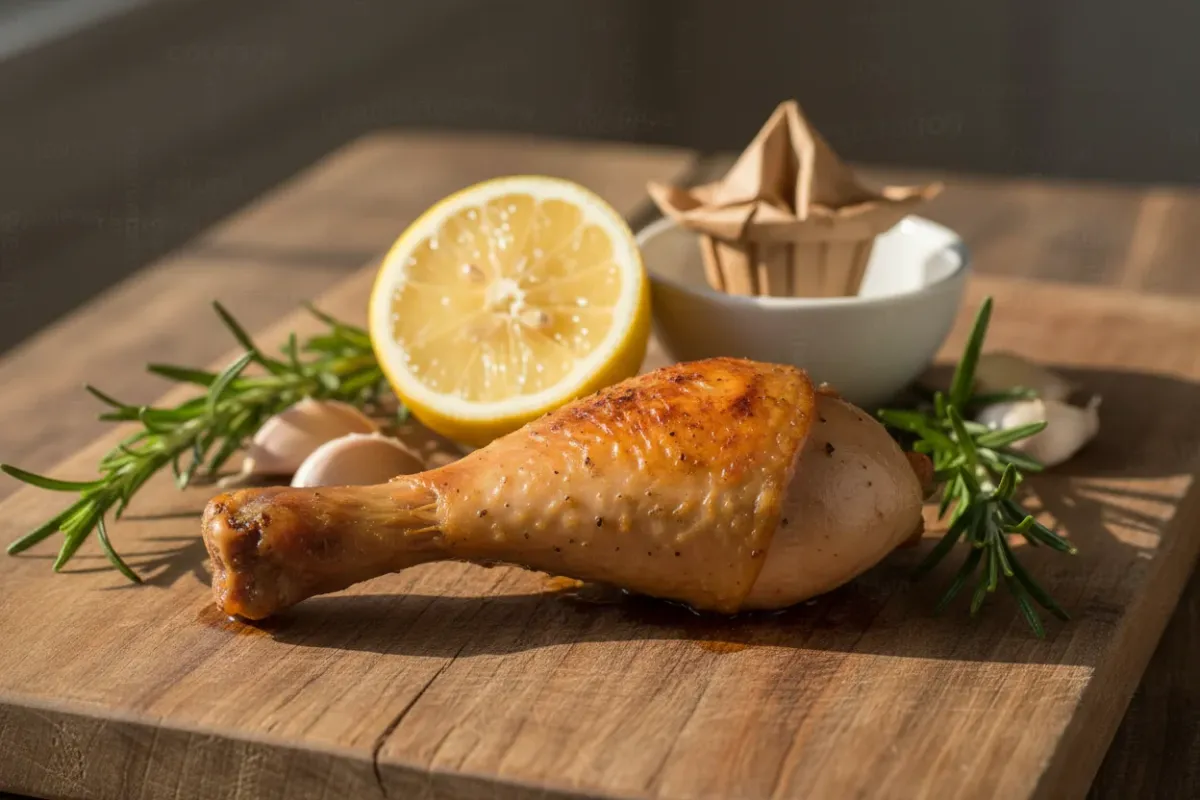
Drumsticks are the lower part of the chicken leg, sold on the bone and with the skin on. They are significantly cheaper than most other chicken cuts, yet they contain a decent amount of protein and have a rich flavor that chicken breast can only dream of. But are they suitable for those who count calories and monitor their macro balance? Let's break it down in detail.
Chicken Drumstick Macros: Breaking Down the Numbers
Before drawing conclusions, let's look at the specific numbers. According to data from Healthline, one chicken drumstick without skin and bone (about 96 g) contains approximately 149 kcal. Per 100 g, that works out to:
- Calories: 155 kcal
- Protein: 24.2 g
- Fat: 5.7 g
- Carbohydrates: 0 g
The calorie ratio breaks down as follows: roughly 65% comes from protein and 35% from fat. This means the drumstick is far from the "fatty" product it's commonly believed to be. Yes, there's more fat here than in breast meat, but there's also enough protein to cover your daily requirements.
Comparison with Chicken Breast
For clarity — a direct comparison per approximately 100 g serving (without skin):
| Parameter | Drumstick (100 g) | Breast (100 g) |
|---|---|---|
| Calories | 155 kcal | ~165 kcal |
| Protein | 24.2 g | ~31 g |
| Fat | 5.7 g | ~3 g |
| Carbohydrates | 0 g | 0 g |
Breast wins on protein content — approximately 31 g per 85 g serving, as noted by L2PC Group. But the difference in calories is surprisingly small. Additionally, breast contains 24% of the daily value of vitamin B6 and 31% of the daily value of selenium — important micronutrients.
However, drumsticks have their own trump card: the dark meat of the legs may contain higher levels of certain minerals, particularly iron, compared to breast. This makes drumsticks an interesting choice for those seeking a more diverse micronutrient profile.
What to Do with the Skin?
This is the key point for anyone counting calories. The skin means extra fat and calories. If you remove the skin before or after cooking, the drumstick becomes a perfectly healthy product with moderate fat content. If you leave it on, the calorie count increases noticeably. The choice depends on your daily calorie budget and personal preferences. A compromise option: bake with the skin on (for juiciness) but remove it before eating.
Why Drumsticks Are a Find for Budget-Friendly Healthy Eating
A Price That Makes You Happy
One of the main advantages of chicken drumsticks is their cost. According to the ranking by The Kitchn, drumsticks rank third among the cheapest chicken cuts with an average price of about $1.20 per pound (approximately 450 g). In Russia, drumsticks also traditionally cost significantly less than breast fillet — sometimes 1.5 to 2 times less.
As noted by Quaker Valley Foods, drumsticks cost roughly 20% less than chicken quarters, and this savings adds up quickly with regular purchases. Drumsticks are described as a "smart, budget-friendly option" that provides "significant savings."
On a popular Reddit forum, users confirm: drumsticks have "surprisingly a lot of meat," and buying 2–2.5 kg at a good price is an excellent deal.
Juiciness as a Bonus
The bone inside the drumstick isn't just an inconvenience — it's a culinary advantage. The bone helps retain moisture during cooking, resulting in juicy and tender meat. This is especially valuable for those who are tired of dry breast meat cooked without any special techniques. Drumsticks forgive cooking mistakes — they're much harder to dry out than breast.
Flavor That Keeps You Motivated
The dark meat of drumsticks has a richer, more vibrant flavor compared to the white meat of breast. For long-term healthy eating, this is critically important: food should bring pleasure. If every meal is about "enduring" for the sake of a goal, sooner or later there will be a breakdown. Drumsticks help make a healthy diet tastier without serious damage to your macros.
How to Cook Drumsticks Properly: The Healthy Approach
The cooking method makes all the difference. The same drumstick can be either a wholesome healthy meal or a calorie bomb — it all depends on the method.
Oven Baking — The Gold Standard
Baking is the best way to prepare drumsticks for a healthy diet. No oil needed for frying, the skin becomes crispy (and you can remove it afterward), and the meat stays juicy.
According to a recipe from RecipeTin Eats, the optimal approach is a two-stage method: first 30 minutes at 200°C, then increase the temperature to 220°C for another 15 minutes for a crispy crust. An important hack: use a rack on the baking sheet — this ensures a crispy surface on all sides.
A recipe from Budget Bytes suggests a different approach: 425°F (about 220°C) for 40 minutes, flipping halfway through. The key rule — don't place the drumsticks too close together on the baking sheet so they cook evenly and the skin can brown properly.
Internal Temperature — An Important Detail
The minimum safe temperature for chicken is 74°C (165°F). But for drumsticks there's a nuance: as noted by RecipeTeacher, dark meat is best brought to 85–90°C (185–195°F). At this temperature, the collagen breaks down and the meat literally falls off the bone — that's the tenderness worth waiting those extra minutes for.
Healthy Seasonings for Drumsticks
You don't need calorie-laden sauces and oil-based marinades. Drumsticks shine beautifully with dry spices:
- Smoked paprika — gives a deep smoky flavor
- Garlic powder — a classic that always works
- Onion powder — a mild sweetness
- Oregano — a Mediterranean note
- Cayenne pepper — a mild heat (you can adjust the amount)
- Salt and black pepper — the foundation
This spice combination is recommended by multiple sources, including Budget Bytes and Healthy Recipes Blog. Cayenne pepper, by the way, not only adds a kick but may also slightly boost metabolism — a nice bonus for those watching their weight.
Preparation Before Baking
A few simple steps that will improve the result:
- Pat dry with a paper towel — remove excess moisture from the surface. This is the key to a crispy crust.
- Smooth out the skin — stretch and distribute the skin so it covers the meat as much as possible. Without this step, the drumstick may end up "bare" and less juicy, as RecipeTin Eats warns.
- Shake off excess seasoning — if you apply too thick a layer, you'll get a paste-like crust instead of an appetizing coating.
- Don't overcrowd the baking sheet — there should be space between the drumsticks for air circulation.
Other Healthy Cooking Methods
Besides baking, drumsticks are excellent for:
- Grilling — minimal added fat, beautiful grill marks, and a characteristic aroma
- Slow cooker/pressure cooker — the meat literally melts, ideal for meal prep
- Braising — in tomato sauce or with vegetables, you get a complete dish
Meal Prep with Chicken Drumsticks: A Practical Guide
Drumsticks are ideal for preparing food for several days ahead. They're affordable (you can buy a large pack at once), store well, and don't lose flavor when reheated — unlike breast, which often becomes "rubbery."
A Simple Weekly Plan
Sunday (preparation):
- Buy 1.5–2 kg of drumsticks
- Bake a batch in the oven at 200–220°C for 40–50 minutes
- Divide into containers with sides (grains, vegetables)
Storage: cooked drumsticks keep in the refrigerator in an airtight container for 3–4 days, as recommended by Rachael's Good Eats.
Reheating tip: oven or air fryer at 180°C for 10–15 minutes — this way the meat stays juicy and the skin (if you left it on) stays crispy. The microwave works too, but the texture will be less impressive.
Approximate Macros for One Meal with Drumsticks
Let's say lunch consists of:
- 2 baked drumsticks without skin (~192 g of pure meat) — ~300 kcal, 46 g protein, 11 g fat
- 150 g of cooked buckwheat — ~185 kcal, 6 g protein, 1 g fat, 37 g carbohydrates
- 150 g of vegetable salad (cucumbers, tomatoes, greens) — ~30 kcal
Total: ~515 kcal, 52 g protein, 12 g fat, 37 g carbohydrates
This is a complete, satisfying meal with an excellent amount of protein — and it's budget-friendly too. For comparison: a similar lunch with chicken breast would be slightly "cleaner" in terms of fat but would cost more and would most likely be less tasty.
Drumsticks for Different Goals: Weight Loss, Muscle Gain, Maintenance
For Weight Loss
Skinless drumsticks are a perfectly suitable product for a calorie deficit. Yes, they have slightly more fat than breast, but the difference in calories per 100 g is only about 10 kcal in favor of breast — that's practically nothing. The key is to account for the bone weight when counting. Approximately 30–35% of a drumstick's weight is bone, meaning from 100 g of raw drumstick, you'll get about 65–70 g of actual meat.
For Muscle Gain
24 g of protein per 100 g is a serious number. Combined with the affordable price, drumsticks become an excellent option for those who need to consume large amounts of protein without breaking the bank. The slightly higher fat content in this case is actually an advantage, since calorie intake is already elevated when bulking.
For Weight Maintenance
An ideal option. Drumsticks add variety to the diet without disrupting the macro balance and allow you to prepare a wide range of dishes — from Asian marinades to Mediterranean bakes.
Myths About Chicken Drumsticks That Need to Go
Myth 1: "Drumsticks Are Nothing But Fat"
In reality, without the skin, a drumstick contains only 5.7 g of fat per 100 g. For comparison, 100 g of salmon contains about 13 g of fat — and nobody calls salmon "fatty" in a negative sense.
Myth 2: "There's Barely Any Meat on Drumsticks — Just Bones"
Yes, the bone takes up part of the weight. But drumsticks have "surprisingly a lot of meat," as users note on Reddit. When properly cooked, you can get 60–80 g of meat from one large drumstick.
Myth 3: "Only Breast Meat Is Suitable for Healthy Eating"
Healthy eating isn't a set of restrictions — it's a mindful balance. If drumsticks fit into your daily macros and help you enjoy your food, they are absolutely "healthy."
Who Drumsticks Are Especially Good For
- Families with children — kids love eating with their hands, and drumsticks are made for that
- Those on a budget — maximum protein for minimum money
- Those tired of chicken breast — flavor variety with similar macros
- Meal prep enthusiasts — drumsticks store well and handle reheating perfectly
- Beginner cooks — drumsticks are hard to ruin, they forgive mistakes
Frequently Asked Questions
How do drumsticks differ from breast in nutritional value?
The main difference is in the protein-to-fat ratio. Breast contains about 31 g of protein and 3 g of fat per 100 g, while drumstick has 24.2 g of protein and 5.7 g of fat. At the same time, drumsticks may contain more iron and other minerals. The difference in calories is minimal.
How many calories are in two chicken drumsticks?
Two drumsticks without skin and bone (approximately 192 g of pure meat) contain about 298 kcal, 46.5 g of protein, and 11 g of fat. With the skin, the calorie count increases by approximately 40–60 kcal.
Are drumsticks suitable for weight loss and muscle gain?
Yes, for both goals. For weight loss — remove the skin and account for bone weight when counting macros. For muscle gain — drumsticks provide plenty of protein for little money, and the extra fat helps reach the necessary calorie intake.
What are the pros and cons of eating drumsticks regularly?
Pros: affordable price, rich flavor, juiciness, good protein content, ease of preparation, recipe variety. Cons: slightly more fat than breast, the need to account for bone weight, slightly less protein per 100 g. Overall — the pros significantly outweigh the cons.
Try It Yourself: A Simple Healthy Recipe
Paprika and Garlic Drumsticks (serves 4)
- 8 chicken drumsticks
- 1 tsp smoked paprika
- 1 tsp garlic powder
- ½ tsp oregano
- Salt, pepper to taste
- A pinch of cayenne pepper (optional)
Pat the drumsticks dry with a paper towel, rub with the spice mixture. Arrange on a rack on a baking sheet with space between them. Bake at 200°C for 30 minutes, then increase to 220°C for another 15 minutes. Let rest for 5 minutes before serving — the juices will redistribute and the meat will become even juicier.
Macros per serving (2 drumsticks without skin): ~300 kcal | 46 g protein | 11 g fat | 0 g carbohydrates.
Chicken drumsticks are not a compromise — they're a deliberate choice. They're cheaper, tastier, and easier to cook than breast, with a perfectly respectable nutritional profile. If the goal is to eat healthy, delicious food without overspending, drumsticks deserve a permanent spot in your shopping cart.
This article is for informational purposes only and is not medical advice. Consult a doctor or dietitian before making dietary changes.