74 Grams of Protein for Breakfast: Recipes Under 450 kcal
Satisfy hunger with 74g protein breakfast recipes under 450 calories. Stay full until lunch, boost energy, and support weight management naturally.
74 Grams of Protein for Breakfast: How It's Possible and Why You Need It
Imagine a breakfast after which you feel full until lunch, experience an energy boost, and have complete peace of mind about your figure. Now add specific numbers to this picture: 74 grams of protein and fewer than 450 calories. Does it sound like a challenge or a marketing gimmick? In fact, it's an absolutely achievable goal with the right selection of whole foods, and it's backed by research and healthy eating practices.
Such a breakfast is not just food; it's a strategic approach to nutrition. It helps control appetite throughout the day, supports muscle mass (which is especially important for an active lifestyle), and sets the right metabolic rhythm. As experts note, a high-protein breakfast helps maintain a calorie deficit, which is critical for weight management. At the same time, you don't need to become a fanatic about counting—it's enough to understand the principles and have a repertoire of proven food combinations.
Why Protein, and Why So Much?
Protein is a fundamental macronutrient for our bodies. It not only serves as a building material for muscles, skin, and hormones but also has the highest thermic effect—the body spends more energy digesting it. This means that some of the calories from protein simply "burn" during absorption. Furthermore, protein is excellent for satiety, helping to avoid unhealthy snacks before lunch.
The goal of 74 grams of protein in one meal may seem high, but it makes sense for those aiming to distribute their daily protein intake evenly. If the total daily requirement is, for example, 100-120 grams (a common recommendation for active people), then a breakfast covering a significant portion of this norm becomes a powerful nutritional tool.
The Magic Ingredients: The Foundation of a High-Protein Breakfast
The secret to the amazing "74g protein / <450 kcal" ratio lies in choosing foods with maximum protein density—that is, with the highest amount of protein per calorie. This isn't about protein powders (although they can also be a useful tool), but primarily whole, minimally processed foods.
The main "heroes" of such a breakfast, according to the analysis of numerous recipes, are:
- Cottage cheese and Greek yogurt. Absolute leaders. Low-fat cottage cheese can contain about 16-18 grams of protein per 100 grams with a calorie content of 70-90 kcal. Greek yogurt, especially strained, also offers a high protein concentration.
- Egg whites. Pure protein with almost no fat or carbs. One egg white is about 3.5g of protein and 17 kcal. By combining whole eggs (for fats and flavor) and additional whites, you can easily reach the required amount.
- Lean breakfast meat products. Turkey, chicken breast, turkey ham. It's important to choose options with minimal added fat content.
- Fish. Lightly salted red fish (salmon, trout) or canned tuna in its own juice are excellent sources of protein and healthy fats.
- Oatmeal + protein. Oatmeal itself is a source of complex carbohydrates, but, as BBC Good Food advises, adding protein powder to oatmeal or pancakes sharply increases the protein value of the dish.
Putting the Puzzle Together: Meal Examples and Their Macros
What does a plate with 74 grams of protein look like? It's not a giant mountain of food, but a smart combination. Here are a few ideas based on principles from the presented sources.
Example 1: Cottage Cheese-Egg Power Combo
This option is ideal for those who love a hearty hot breakfast.
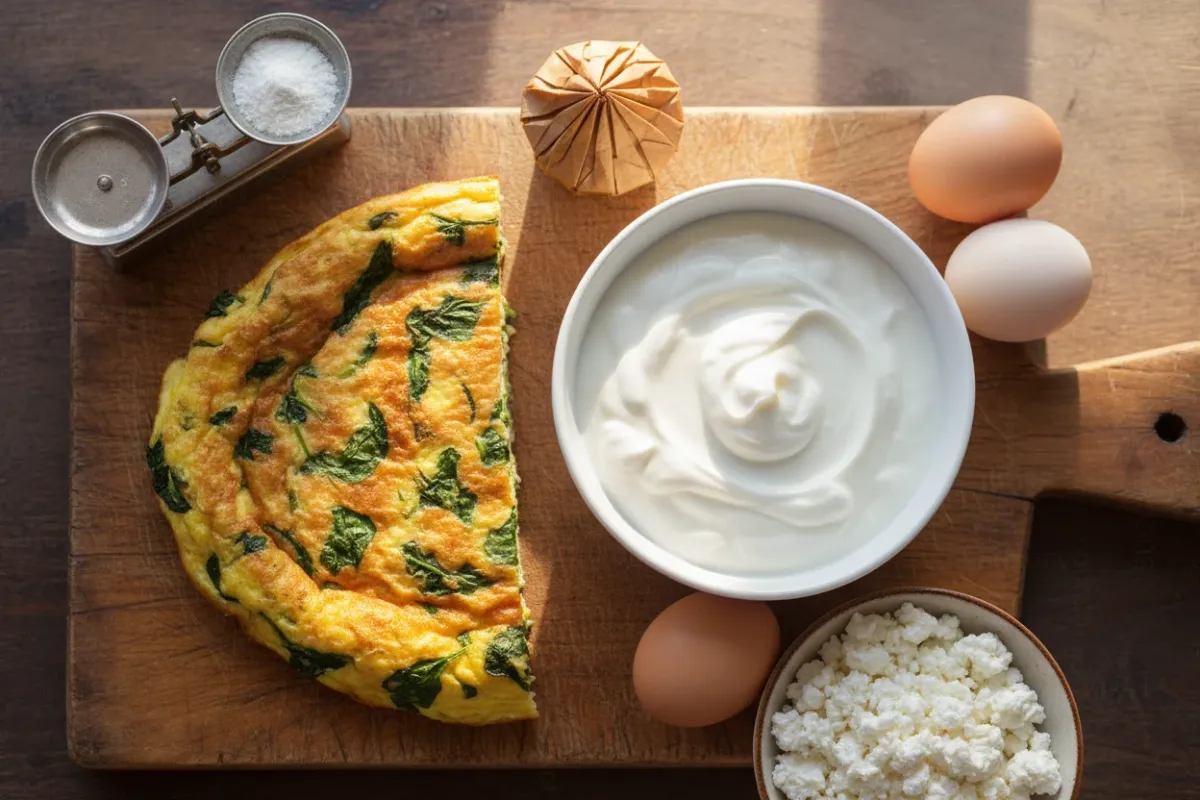
- An omelet made from 3 whole eggs + 4 egg whites with pieces of turkey fillet (150g) and spinach.
- A serving of cottage cheese (200g) with herbs and cucumber on the side.
Approximate Macros (estimate):
- Calories: ~440 kcal
- Protein: ~75 g
- Fat: ~18 g
- Carbs: ~10 g
Example 2: Cold Start: Yogurt-Cottage Cheese Bowl
Perfect for a hot morning or when there's no time to cook.
- Greek yogurt (250g) — the base.
- Cottage cheese (150g), blended with yogurt until creamy.
- Protein powder (1 scoop, ~30g) — for a boost.
- Chia seeds (10g) and a handful of berries for texture, antioxidants, and fiber.
Approximate Macros (estimate):
- Calories: ~430 kcal
- Protein: ~78 g
- Fat: ~12 g
- Carbs: ~25 g
Example 3: Meal Prep: Muffins and a Sandwich
As examples from The Real Food Dietitians website show, you can combine several pre-prepared dishes. For instance, three cottage cheese-egg muffins (which provide about 21g of protein) plus a protein sandwich with turkey on whole-grain bread.
The Science of Satiety: Why This Approach Works
Such a breakfast is not just numbers in an app. It's physiology. High protein intake in the morning directly affects the levels of satiety hormones, such as peptide YY and GLP-1, and reduces the level of the hunger hormone ghrelin. Simply put, you feel full longer. Research, similar to that cited on the Eat This resource, confirms that this approach is effective for weight control.
Furthermore, evenly distributing protein throughout the day (rather than consuming it only at dinner) is considered more optimal for maintaining muscle protein synthesis—the constant process of muscle tissue renewal and repair.
Practical Steps: How to Implement This in Your Life
- Start with calculation. Determine your approximate daily protein requirement (often recommended as 1.6-2.2g per kg of target body weight for active people). Divide it into 3-4 meals.
- Stock up on staples. Cottage cheese, Greek yogurt, eggs, chicken breast, or turkey fillet should always be in the fridge.
- Experiment with formats. You don't have to eat cottage cheese with a spoon every day. It can be syrniki (baked, not fried), cottage cheese soufflé, omelets, cottage cheese spreads on crispbread, smoothies.
- Use protein as an ingredient. As advised by BBC Good Food, add pure protein powder (vanilla, chocolate) to oatmeal, pancakes, or even cottage cheese for flavor variety.
- Prepare in advance (Meal Prep). On the weekend, make portioned cottage cheese-egg muffins, like those on The Real Food Dietitians, or a frittata. This will save you on weekdays.
Try It Yourself: Your Path to a Mindful Morning
The number "74 grams" is not dogma, but a vivid example of possibilities. Perhaps your starting point is 30 or 40 grams. The main thing is to make protein a priority at breakfast and feel the difference: in energy levels, in appetite control, in lightness.
Healthy eating is the art of balance between science and taste, between discipline and pleasure. Such a breakfast proves that you can eat heartily, healthily, and with care for your goals without giving up gastronomic joy. Start with one such morning and see how your day changes.
This article is for informational purposes only and is not medical advice. Consult a doctor or dietitian before making dietary changes.