Lemon Blueberry Cake: Healthy Recipe and Secrets to Perfect Texture
Perfect your lemon blueberry cake with this healthy recipe. Learn the texture secrets that will transform your baking and delight your taste buds.
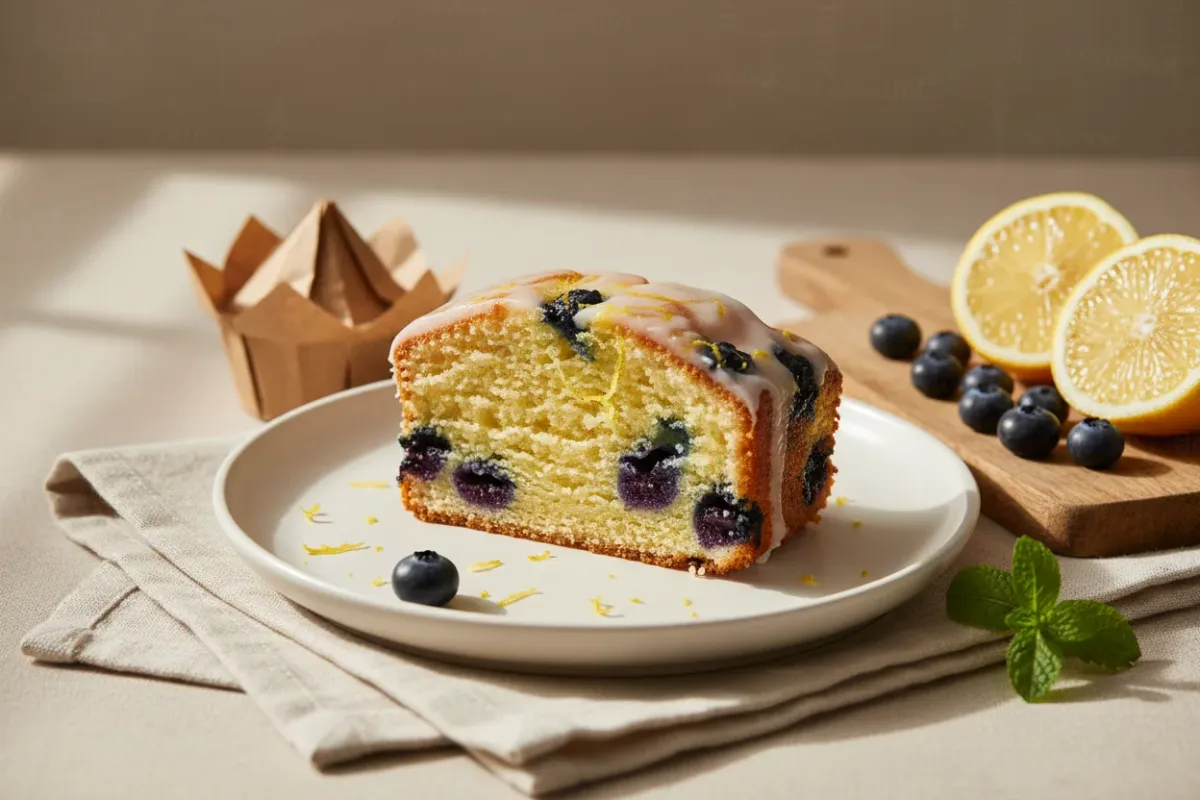
Why Lemon and Blueberry Are the Perfect Pair for a Healthy Dessert
Some flavor combinations are simply made for each other. Lemon and blueberry are exactly that kind of match. As the culinary blog MY 100 Year Old Home aptly puts it, "the bright citrus freshness of lemon perfectly complements the sweet, juicy burst of blueberry" — contrasting flavors merge harmoniously, creating depth and complexity in every bite.
But it's not just about flavor. From a nutritional standpoint, both ingredients are true superfoods.
Blueberries are one of the most antioxidant-rich foods among berries. A 100-gram serving of blueberries contains only about 57 calories, yet packs a decent dose of vitamin C, vitamin K, and manganese. The fiber in blueberries helps maintain stable blood sugar levels, which is especially valuable for those watching their diet.
Lemon is more than just tartness. Lemon juice and zest contain vitamin C, flavonoids, and citric acid, which aids mineral absorption. In baking, lemon plays another important role: the acid reacts with leavening agents, making the batter airy — which means you can use less fat and still achieve a tender texture.
This is precisely why lemon blueberry cake is one of the best candidates for a "lighter" makeover: the flavor is so vibrant and self-sufficient that you can significantly cut the sugar and butter without the dessert losing its appeal.
Classic Cake vs. Healthy Version: What We Change and Why
A classic lemon blueberry cake is undoubtedly a flavor celebration. But let's take an honest look at the ingredients. Traditional recipes call for generous amounts of butter, one to one and a half cups of sugar, white all-purpose flour, and on top — cream cheese frosting made from full-fat cream cheese and powdered sugar. A single slice of such a cake easily racks up 400–500 calories.
The good news: virtually every ingredient can be replaced with a healthier alternative while still preserving that same fluffy, tender result.
Flour
Classic recipes use all-purpose flour or even specialty cake flour. As noted by My Cake School, cake flour "contains less protein than all-purpose flour, which results in less gluten development and, consequently, a softer cake."
For a healthy version, a blend works beautifully: 50% whole wheat flour + 50% almond flour. Whole wheat provides fiber and slow-release carbs, almond flour contributes healthy fats and protein, and together they create a solid structure. For a keto version, you can switch entirely to almond or coconut flour.
Sugar
Instead of white sugar — erythritol, stevia, or an erythritol-monk fruit blend. Lemon juice and zest are so aromatic that the need for sweetness naturally decreases. You can also add a bit of honey or maple syrup — these do contain calories, but in a much smaller volume than a cup of refined sugar.
Fats
Butter is replaced with Greek yogurt (partially or entirely) or coconut oil. Greek yogurt serves the same function as sour cream in classic recipes — as explained by My Cake School, sour cream "adds richness, and the extra fat and slight acidity make the cake softer and more tender." Yogurt works on the same principle but with fewer calories and more protein.
Frosting
Classic buttercream is butter + powdered sugar + lemon juice. The recipe at Preppy Kitchen suggests "beating butter with salt, then sifting in powdered sugar in two to three additions and pouring in lemon juice." Sounds delicious, but the calorie count is through the roof.
A healthier alternative: frosting based on ricotta or cream cheese with a minimal amount of sweetener, lemon zest, and a drop of vanilla extract. Or a fluffy frosting made from whipped coconut cream for a vegan version.
Recipe: Healthy Lemon Blueberry Cake
This recipe yields 12 servings and uses an 8-inch (20 cm) round pan. This is the exact size recommended by Sally's Baking Addiction for achieving "thick, tall cake layers" — 9- to 10-inch pans will produce thinner layers.
Ingredients for the Cake Layers
- 200 g whole wheat flour (or a blend of 100 g whole wheat + 100 g almond flour)
- 2 eggs + 1 egg white
- 150 g Greek yogurt (2% fat)
- 80 ml lemon juice (roughly 3–4 medium lemons, as noted by Sally's Baking Addiction)
- Zest of 2 lemons
- 60 g erythritol (or another sweetener to taste)
- 2 tablespoons coconut oil (melted)
- 1 teaspoon baking powder
- 0.5 teaspoon baking soda
- A pinch of salt
- 150 g blueberries (fresh or frozen)
- 1 tablespoon cornstarch
Ingredients for the Frosting
- 300 g ricotta (or soft farmer's cheese, 5% fat)
- Zest of 1 lemon
- 2 tablespoons lemon juice
- 30 g erythritol (or honey — recalculate macros accordingly)
- 0.5 teaspoon vanilla extract
Making the Cake Layers
Step 1. Preheat the oven to 175 °C (350 °F). Prepare the pan: grease with a thin layer of coconut oil and lightly dust with flour.
Step 2. Zest the lemons on a fine grater. An important tip: always zest before juicing — it's much easier to do with a whole lemon. This technique is mentioned in many professional recipes, including at Sugar Spun Run.
Step 3. Sift and whisk the dry ingredients (flour, cornstarch, baking powder, baking soda, salt) in a separate bowl. Cornstarch is the secret ingredient here which, as noted by Sugar Spun Run, "helps achieve a soft, fluffy cake."
Step 4. In another bowl, beat the eggs with the sweetener until light and fluffy. Add the yogurt, lemon juice, zest, and melted coconut oil. Mix together.
Step 5. Add the dry mixture to the wet in two to three additions, gently folding with a spatula. Do not use a mixer at this stage — overmixing activates the gluten and will make the cake tough. Carlsbad Cravings recommends the "reverse creaming" method, where the dry ingredients are first mixed with the fat before adding the wet ingredients — this helps avoid "a dry cake with tiny holes" and yields "a velvety, soft, moist texture."
Step 6. Lightly toss the blueberries in a tablespoon of flour (from the total amount) and gently fold them into the batter. Tossing in flour is a classic technique that prevents the berries from sinking to the bottom of the pan. Incidentally, My Cake School recommends using small (wild) blueberries because they are "smaller in size and lighter, meaning they are far less likely to sink in the batter during baking."
Step 7. Pour the batter into the prepared pan and bake for 25–30 minutes. Check for doneness with a toothpick. Divas Can Cook recommends "checking the cake at the 20-minute mark" — this is also relevant for the healthy version with whole wheat flour, as baking time may vary.
Step 8. Let the cake cool in the pan for 10 minutes, then invert onto a wire rack and cool completely.
Making the Frosting
Blend the ricotta (or farmer's cheese) until smooth. Add the sweetener, lemon juice, zest, and vanilla. Mix until uniform. Refrigerate for at least 30 minutes — chilled frosting holds its shape better. As rightly noted by My Cake School, lemon frosting is "best applied chilled."
Assembly
If the cake has a domed top, carefully trim it to create a flat surface. Spread the frosting and decorate with fresh blueberries and thin lemon slices. Before serving, be sure to chill in the refrigerator for at least one hour. Carlsbad Cravings particularly emphasizes: "Do not skip chilling before slicing — because of the lemon curd, the cake is much easier to cut cold, otherwise it may fall apart."
Macros Per Serving (1/12 of the Cake)
| Nutrient | Value |
|---|---|
| Calories | ~165 kcal |
| Protein | ~8 g |
| Fat | ~6 g |
| Carbohydrates | ~22 g |
| Fiber | ~3 g |
These calculations are approximate and depend on specific products and sweetener used. If using honey instead of erythritol, the calorie count will increase by approximately 15–20 kcal per serving.
For comparison: a serving of classic lemon cake with buttercream frosting comes in at around 400–500 calories, a significant portion of which comes from saturated fats and refined sugar. The healthy version is roughly 2.5–3 times fewer calories with comparable enjoyment.
Tips That Make the Cake Perfect
How to Measure Flour Correctly
One of the most common reasons for a dense, "brick-like" cake is too much flour. Preppy Kitchen calls this outright "the most common mistake." The recommendation: use a kitchen scale. If you don't have one — "fluff the flour with a spoon, scoop it into a measuring cup, and level it off with a knife." Never scoop directly from the bag with the cup — you'll end up with 20–30% more flour than needed.
Real Lemon Flavor Comes from the Zest
Lemon juice provides tartness, but the main aroma is in the zest. It's the essential oils in the yellow part of the peel that are responsible for that bright, sunny lemon flavor. For one cake, use the zest of 2–3 lemons — don't be shy. The key is to grate only the yellow layer; the white part (pith) is bitter.
Choosing Blueberries: Fresh or Frozen
Both options work beautifully. Virtually all professional sources — from Culinary Hill to Sugar Spun Run — are unanimous: frozen blueberries should not be thawed; add them straight from the freezer. If you thaw the berries, they will release juice and turn the batter purple.
Additionally, Culinary Hill recommends "limiting to 170 grams (6 ounces) of blueberries" per cake — more berries weigh down the batter and prevent it from rising.
An interesting note: Sugar Spun Run warns that "wild blueberries tend to stain the batter, turning it purple." For a more aesthetically pleasing result, opt for large cultivated blueberries.
Real Buttermilk or a Substitute
Many classic recipes call for buttermilk. In the healthy version, it's successfully replaced with kefir or yogurt thinned with milk. But it's worth noting the advice from Sugar Spun Run: for this type of cake, it's better to use real buttermilk (or kefir) rather than an improvised substitute made from milk and lemon juice — the texture difference is noticeable.
Variations for Different Dietary Styles
Keto Version
Replace the whole wheat flour with almond flour (250 g) + 2 tablespoons coconut flour. Sweetener — erythritol or monk fruit only. Yogurt — full-fat. This cake will contain about 5–7 g of net carbs per serving.
Gluten-Free Version
Use rice flour or a ready-made gluten-free baking blend in place of wheat flour. The almond flour in the recipe stays — it's naturally gluten-free.
Vegan Version
Replace eggs with "flax eggs" (1 tablespoon ground flaxseed + 3 tablespoons water, let sit for 5 minutes) or mashed banana. Yogurt — coconut or soy. Frosting — made from whipped coconut cream or cashews.
High-Protein Version
Add 30 g of vanilla or unflavored protein powder to the batter (replacing an equivalent amount of flour). This will boost the protein content to 12–14 g per serving. Important: do not replace more than 20–25% of the flour with protein powder, or the texture will suffer.
Storage and Meal Prep
Lemon blueberry cake is an excellent candidate for weekly meal prep. Baked cake layers without frosting can be frozen by wrapping in plastic wrap and then in foil. As noted by My Cake School, "baked cake layers can be stored in the freezer for up to three months." Before assembling — simply thaw at room temperature, apply the frosting, and decorate.
An assembled cake keeps in the refrigerator for 3–4 days. It's convenient to pre-slice portions and pack them in containers — a ready-made healthy dessert for every day.
Why You Should Try This Particular Cake
Lemon blueberry cake isn't just pretty baking for Instagram. As Ree Drummond from The Pioneer Woman aptly noted, lemon is added to blueberries for two reasons: "first, the juice combined with dairy creates a buttermilk effect… second — lemon with blueberry is simply incredibly delicious."
Culinary Hill calls this cake "spectacular" and notes that the combination of lemon and blueberry "feels like a bridge between winter and summer." And commenter Tanya Bartholomew on Divas Can Cook wrote: "It tastes just as good as it looks! I served the cake at an anniversary party, and everyone was thrilled!"
The healthy version of this cake is an opportunity to get the same emotions and the same wow factor from your guests, but without the guilt and heaviness after a slice. 165 calories, a respectable amount of protein, vibrant flavor — and zero compromises.
Frequently Asked Questions
Can I use frozen blueberries, and do I need to thaw them?
Yes, frozen blueberries work perfectly. You do not need to thaw them — add them straight from the freezer. This is unanimously confirmed by culinary sources, including Culinary Hill and Sugar Spun Run. The only caveat: small wild blueberries may tint the batter purple.
Can I add lemon juice to the frosting? Won't it become too runny?
Lemon juice in the frosting is both correct and delicious. The key is to add it gradually (1–2 tablespoons) and whip thoroughly. If the ricotta- or farmer's cheese-based frosting turns out too thin, add a small amount of thickener (cornstarch or psyllium husk) and chill in the refrigerator before applying.
Why did my cake turn out very dense, almost like a pound cake?
Most often the culprit is too much flour or overmixing the batter. Use a scale for precise measurement, and fold the batter with a spatula only until the dry ingredients have just combined with the wet. Density can also result from adding too many blueberries — stick to the recommended 150–170 g.
Can I bake this cake in a Bundt pan?
Yes, the batter adapts beautifully to a Bundt pan. Baking time will increase to 40–50 minutes — rely on the toothpick test. In fact, the lemon blueberry Bundt cake became a hit on Culinary Hill, inspiring readers to request the recipe "for years."
Can I use blueberry compote instead of fresh berries?
You can, but the result will be different. Compote contains a lot of liquid and sugar, which will alter the batter texture and increase the calorie count. It's better to use fresh or frozen blueberries. If you want to add a berry accent — make a thin layer of compote between the cake and the frosting rather than mixing it into the batter.
This article is for informational purposes only and is not medical advice. Consult a doctor or dietitian before making dietary changes.