Doughnuts Without Palm Oil: A Recipe Free From Harm
Discover why most doughnuts contain harmful palm oil & how to make healthier, delicious doughnuts at home. Free recipe inside.
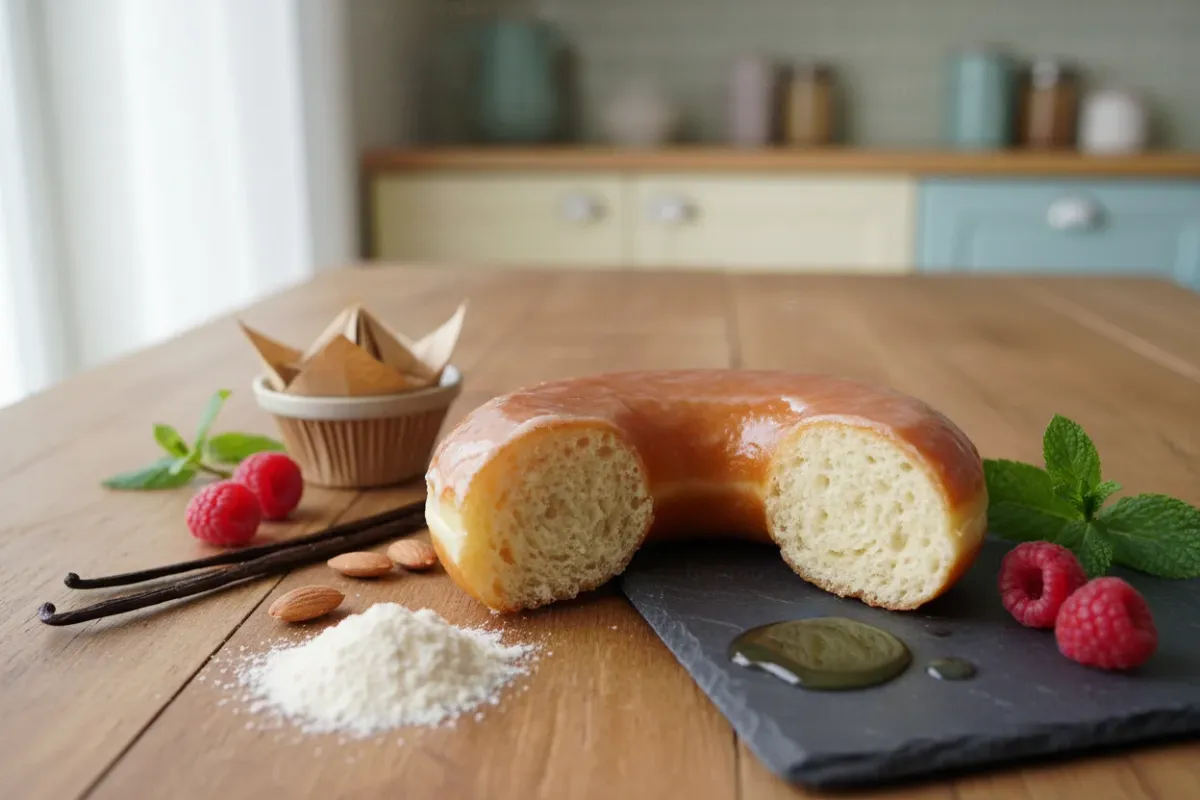
Why Classic Doughnuts Aren't the Best Choice
That unmistakable aroma of fresh doughnuts from your favorite coffee shop… Who hasn't missed it while trying to eat clean? But one look at the ingredients list — and the craving fades. Major chains — Dunkin' Donuts, Krispy Kreme, Tim Hortons — fry their doughnuts in palm oil or palm oil–based blends. This is confirmed by an NPR investigation conducted back in 2014.
Palm oil contains about 52% saturated fatty acids. The primary component of refined palm oil — palmitic acid — is, according to a review published in PMC, linked to the development of obesity, type 2 diabetes, cardiovascular disease, and even cancer.
The European Food Safety Authority (EFSA) warns that refining palm oil at high temperatures produces contaminants that may contribute to kidney toxicity and cancer development. These findings come from a Food Revolution Network review.
And besides palm oil, industrial doughnuts contain massive amounts of sugar, dough conditioners, emulsifiers, and artificial flavors. A single such doughnut can pack 300–400 calories, more than half of which come from fats of questionable quality.
What's Wrong With Palm Oil in Baked Goods
Composition and Properties
Palm oil is the only vegetable oil with a nearly equal ratio of saturated to unsaturated fatty acids (52% to 48%). That's exactly why it behaves like butter — it solidifies at room temperature, has a high melting point (36°C), and excellent oxidative stability. For manufacturers, it's a dream: cheap, stable, no hydrogenation required. But for your health — it's a completely different story.
Why Manufacturers Love It
Three reasons the food industry chooses palm oil:
- Price. Palm oil imports to the US grew by 352% between 2002 and 2012 — the enormous demand driven precisely by its low cost.
- Texture. The high melting point gives doughnuts that perfect crispy exterior and soft interior.
- Shelf life. Antioxidants in its composition ensure long storage without going rancid.
What Your Body Gets
When deep-fried in palm oil, a doughnut absorbs a significant amount of fat. The result — high calorie content, excess saturated fats, and potential carcinogens from repeated heating. As the Food & Environment Reporting Network notes: "palm oil has contributed to the proliferation of ever more fried snacks and fast food — with potentially catastrophic consequences for health."
The Alternative: Doughnuts Without Oil and Without Compromise
The good news: you can get that same taste and texture without palm oil, without deep frying, and without excess calories. Baked doughnuts are a true gem for anyone watching their diet.
The Core Principle
Instead of deep frying — baking in an oven or air fryer at 175°C. Instead of palm oil — applesauce, which provides moisture and tenderness to the dough. Instead of refined sugar — natural sweeteners or a moderate amount of coconut sugar.
Macros for a Baked Oil-Free Doughnut
One baked oil-free doughnut (using the recipe below) contains approximately:
| Metric | Per 1 doughnut |
|---|---|
| Calories | ~130 kcal |
| Protein | 3 g |
| Fat | 0.6 g |
| Carbs | 28 g |
| Saturated fat | 0.1 g |
For comparison: a classic glazed doughnut from a coffee shop runs 350–450 kcal, 20–25 g of fat (8–12 g of which are saturated), and 40–50 g of carbs. The difference is enormous.
Recipe: Healthy Doughnuts Without Palm Oil
Ingredients (makes 6 doughnuts)
Dough:
- 150 g whole wheat flour (or a blend of wheat + oat flour)
- 60 ml plant-based milk (soy, almond, or oat)
- 60 g unsweetened applesauce
- 1 tsp apple cider vinegar
- 2 tbsp coconut sugar (or erythritol for a keto version)
- 1 tsp baking powder
- ½ tsp baking soda
- Pinch of salt
- 1 tsp vanilla extract
Glaze (optional):
- 2 tbsp coconut oil (melted)
- 1 tbsp cocoa powder
- 1 tbsp honey or maple syrup
- Pinch of salt
Preparation Steps
Step 1. Preheat the oven to 175°C (350°F). Lightly grease a doughnut pan or use a silicone one.
Step 2. In one bowl, combine the dry ingredients: flour, baking powder, baking soda, salt, and sugar.
Step 3. In another bowl — the wet ingredients: plant-based milk, applesauce, apple cider vinegar, and vanilla. The vinegar activates the baking soda and creates airiness without oil.
Step 4. Combine the wet and dry ingredients, stirring until just combined. Don't overmix — the batter should be slightly lumpy. As experienced bakers warn: too much flour and overmixing produce tough doughnuts.
Step 5. Distribute the batter into the molds, filling them ⅔ full.
Step 6. Bake for 11–12 minutes. The doughnuts are done when a toothpick comes out clean.
Step 7. Cool for 5 minutes in the pan, then transfer to a wire rack. Apply the glaze while still warm.
Variations
- Protein version: Add 20 g of protein powder (vanilla or chocolate) and reduce the flour by 20 g. Macros per doughnut: ~145 kcal / 8 g protein / 1 g fat / 24 g carbs.
- Keto version: Replace the flour with almond flour (100 g) + coconut flour (30 g), and swap the sugar for 2 tbsp erythritol. Macros per doughnut: ~160 kcal / 5 g protein / 12 g fat / 4 g net carbs.
- Spiced (gingerbread-style): Add 1 tsp ground ginger, ½ tsp cinnamon, ¼ tsp nutmeg. Glaze — powdered sugar with maple syrup.
Yeast Doughnuts: The Classic Without the Harm
For those who want to get as close as possible to the texture of "real" doughnuts — airy, glazed, melting in your mouth — there's a yeast dough option. Yes, it takes more time, but the result is worth it.
Key Principles for Yeast Dough Without Palm Oil
- Palm oil substitute: coconut oil (in small amounts) or no oil at all, using applesauce instead.
- The dough is kneaded for 10 minutes by hand or 3 minutes in a stand mixer on high speed.
- First rise — 2 hours (until doubled in size).
- The dough is rolled out to 8–10 mm thickness — thinner will be dry, thicker will be raw inside.
- Second rise of the cut doughnuts — 45–60 minutes until doubled.
If You Still Want Them Fried
You can fry without palm oil. Canola (rapeseed) oil is a healthier alternative for deep frying: fewer saturated fats, neutral flavor. Temperature — strictly 175–190°C. As noted in the Mary's Test Kitchen recipe: at lower temperatures, doughnuts come out greasy and oil-soaked. Fry for 2–3 minutes per side until golden brown.
But even when frying in canola oil, the calorie count will be significantly lower than industrial counterparts made with palm oil, since home cooking lets you control the oil quality and avoid reusing it multiple times.
Glazes and Toppings: Where the Calories Hide
The doughnut itself is only half the equation. A glaze can add anywhere from 50 to 150 extra calories. Here are some healthy alternatives:
Chocolate Glaze (Healthy)
- 1 tbsp cocoa + 1 tbsp coconut oil + 1 tsp honey
- ~40 kcal per doughnut
Maple Glaze
- Powdered sugar (or powdered erythritol) + maple syrup + pinch of salt
- ~35 kcal per doughnut (with erythritol — about 10 kcal)
Powdered Sugar
- A simple dusting of powdered erythritol or coconut sugar
- ~15 kcal per doughnut
Protein Glaze
- 1 scoop vanilla protein + 2 tbsp water, mixed until thick
- ~30 kcal / 6 g protein per doughnut
Storage and Meal Prep
Baked oil-free doughnuts keep:
- At room temperature in a container: 2–3 days
- In the refrigerator: up to 5 days
- In the freezer: up to 2 months
For meal prep, it's convenient to freeze them unglazed, then reheat for 30 seconds in the microwave before serving and top with fresh glaze. This way the texture stays as close as possible to freshly baked.
Yeast doughnuts are best eaten fresh — after a day they noticeably lose their airiness. However, the dough can be stored in the refrigerator for up to 24 hours (set for a slow rise), then cut and bake in the morning.
The Environmental Aspect: Why It Matters
Giving up palm oil isn't just about health. Oil palm plantations are the leading cause of tropical deforestation in Malaysia and Indonesia, which together produce 90% of the world's palm oil. Palm oil consumption in India has grown by more than 230% since 2001 — the pressure on ecosystems is only intensifying.
By choosing baked goods without palm oil — or at least with certified sustainable oil (RSPO) — everyone makes a small contribution. One doughnut won't change the world, but a mindful approach to ingredients is already a habit.
Comparison: Store-Bought vs. Homemade Doughnut
| Parameter | Store-bought (Dunkin'/Krispy Kreme) | Homemade baked |
|---|---|---|
| Calories | 350–450 kcal | 130–160 kcal |
| Fat | 20–25 g | 0.6–3 g |
| Saturated fat | 8–12 g | 0.1–2 g |
| Sugar | 20–30 g | 5–10 g |
| Palm oil | Yes | No |
| Trans fats | Possible | No |
| Ingredient control | None | Full |
| Prep time | — | 25 minutes |
Tips for Perfect Results
- A silicone mold is your best friend. No need to grease with oil, and doughnuts pop out easily.
- Don't overmix the batter. 15–20 strokes with a spatula is enough. Small lumps of flour are fine.
- Applesauce is the key to moisture. It's what replaces the oil, providing tenderness without fat.
- Don't open the oven for the first 8 minutes. That's when the doughnuts are rising.
- Glaze while warm. The glaze adheres better and absorbs in, creating that perfect crust on top.
When a Doughnut Fits Into Your Diet
Even on a calorie deficit, a healthy doughnut is a perfectly acceptable snack. At 130 kcal and minimal fat, it easily fits into a 1,500–1,800 kcal meal plan. The key is to account for it in your daily macros.
The ideal time for this kind of dessert:
- After a workout (fast carbs for glycogen replenishment)
- In the first half of the day (energy for the whole day)
- As part of a protein-rich breakfast (doughnut + Greek yogurt + nuts = a balanced meal)
Trying your hand at healthy doughnuts means discovering that the taste of childhood and taking care of your body don't have to be at odds. Simple ingredients, 25 minutes of your time — and you have a dessert on the table that won't cost you your health or your conscience. A doughnut pan, applesauce, and good flour — that's all you need to get started.
Frequently Asked Questions
Do these doughnuts contain trans fats?
No. Baked oil-free doughnuts contain no trans fats. Palm oil in commercial doughnuts is technically also "trans fat–free," but repeated heating produces harmful compounds. Home baking in the oven eliminates this risk entirely.
How long do oil-free doughnuts keep?
In a sealed container at room temperature — 2–3 days, in the refrigerator — up to 5 days, in the freezer — up to 2 months. Without oil in the recipe, they won't go rancid, but they can dry out — so an airtight container is a must.
Can these doughnuts be made gluten-free?
Yes. Replace the wheat flour with a blend of rice flour + buckwheat flour + starch (tapioca or corn) in a 2:1:1 ratio. The texture will be slightly denser, but the taste will still be excellent. A ready-made gluten-free baking mix also works well.
What's used for the sugar topping on healthy doughnuts?
The main options are: powdered erythritol (0 kcal), powdered coconut sugar (slightly caramelly flavor, ~15 kcal per doughnut), or a mix of cinnamon with a minimal amount of regular powdered sugar. For a chocolate version — cocoa powder with sweetener.
This article is for informational purposes only and is not medical advice. Consult a doctor or dietitian before making dietary changes.