What to Serve with Soup Instead of Bread: Healthy Alternatives for the Health-Conscious
Discover healthy bread alternatives to serve with soup that boost nutrition and satisfy cravings. Ditch white bread for smarter, tastier options.
Soup means comfort, warmth, and care in a single bowl. But it's worth asking: what if that usual slice of white bread isn't the best companion? It gets soggy fast, causes a blood sugar spike, and adds empty calories to your meal. The good news is there are plenty of alternatives that can make your lunch both tastier and healthier. Let's explore what you can serve with soup instead of bread — no extremes, just smarter choices.
Why You Should Look for Alternatives to Regular Bread
A slice of white bread (30 g) packs roughly 80 kcal, 15 g of carbs, and just 1 g of fiber. It quickly raises blood glucose levels and leaves you feeling hungry again just as fast. If you eat 2–3 slices with your meal, that's an extra 160–240 kcal added to your soup with almost no nutritional value.
Replacing bread isn't about giving up enjoyment. It's about making a conscious choice: getting more fiber, protein, or healthy fats from what sits next to your bowl. As the experts at Sonshine Kitchen point out, choosing whole-grain or seeded bread over white adds fiber, protein, and healthy fats to your meal — turning soup into a complete, balanced course.
Vegetable and Protein Sides for Soup
Baked Potato or Sweet Potato
Potato wedges roasted with herbs are a satisfying and familiar alternative. Sweet potato is even more interesting: it's higher in beta-carotene and fiber.
Macros for sweet potato (100 g, baked without oil): 90 kcal | P 2 g | F 0.1 g | C 21 g | Fiber 3.3 g
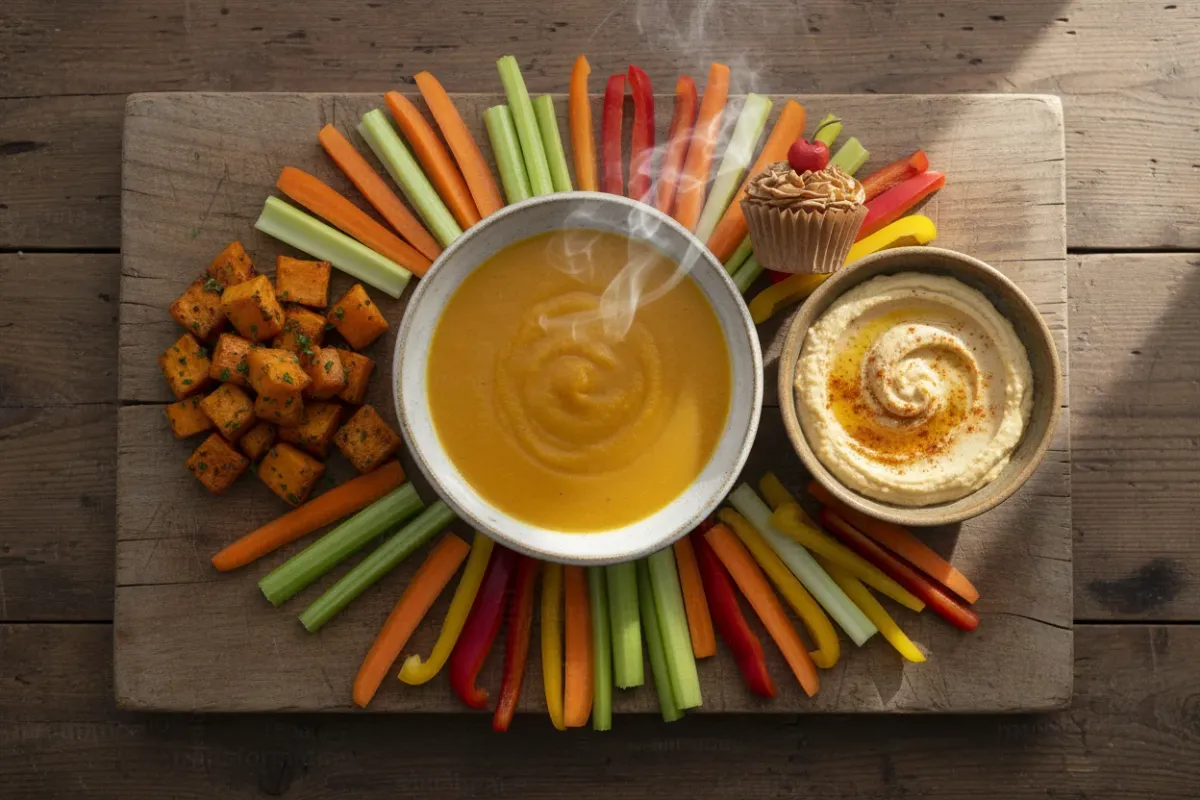
Cut the sweet potato into cubes, drizzle with olive oil, add paprika and rosemary — 20 minutes in the oven at 200°C. These cubes can be dipped into cream soups like croutons, only much more filling.
Veggie Sticks with Hummus
Carrots, celery, cucumber, bell pepper — crunchy, fresh, and low in calories. As Salted Plains notes, cool vegetables with a creamy dip complement any soup beautifully, creating a contrast of textures. Hummus adds plant-based protein and healthy fats.
Macros for hummus (30 g, ~1 heaping tbsp): 50 kcal | P 2.5 g | F 3 g | C 4 g | Fiber 1.5 g
Macros for veggie sticks (100 g, mixed): ~25–35 kcal | P 1 g | F 0.2 g | C 6 g | Fiber 2 g
Roasted Vegetables
Cauliflower, zucchini, broccoli — roasted until golden brown, they add bulk and fiber to your meal. Cauliflower is especially versatile: it can even be turned into flatbreads and pizza bases, as BBC Good Food suggests in their guide to bread alternatives.
Grain-Based Alternatives
A Grain Salad Instead of Bread
Quinoa, bulgur, buckwheat, or brown rice — any of these grains can serve as a full-fledged "base" alongside your soup. A grain salad with greens and a light dressing doesn't just complement soup — it turns lunch into a balanced meal.
Macros for quinoa (100 g, cooked): 120 kcal | P 4.4 g | F 1.9 g | C 21 g | Fiber 2.8 g
Quinoa contains all essential amino acids — a rarity among plant foods. Boil it, add cucumber, tomato, parsley, and a lemon dressing — and you've got a salad that pairs beautifully with any broth-based soup.
Cornbread
In American tradition, cornbread is a classic soup companion. It's easy to make a healthier version: cornmeal, an egg, a little milk, and baking powder. As members of the Reddit community share, you can make an even simpler version: cornmeal, a pinch of salt, and boiling water — pan-fry by the spoonful until golden. The result is crunchy, gluten-free corn cakes.
Macros for cornbread (homemade, 50 g): ~110 kcal | P 3 g | F 3 g | C 18 g | Fiber 1.5 g
Low-Carb Options for Keto and LCHF
For those cutting carbs, giving up bread isn't a problem — it's an opportunity.
Cloud Bread
As BBC Good Food describes, cloud bread is a light and airy bread made without flour or yeast. It's prepared from eggs, cream cheese, and a pinch of baking powder. Just 30 minutes — and you have a low-carb base for dipping into soup.
Macros for cloud bread (1 piece, ~30 g): ~35 kcal | P 3 g | F 2.5 g | C 0.5 g
Flatbreads Made with Almond or Coconut Flour
According to Keto Diet App, flatbreads made with almond flour, coconut flour, or simple egg crackers are perfect for a keto diet. They're dense enough not to fall apart in soup and add protein along with healthy fats.
Macros for an almond flour flatbread (50 g): ~160 kcal | P 6 g | F 13 g | C 3 g | Fiber 2 g
Crunchy Veggie Chips
Thinly sliced zucchini, beets, or carrots, dried out in the oven — they crunch like crackers but without the excess carbs. They work as scoops for cream soups.
Bread Croutons — When You Want That Crunch
Giving up bread entirely isn't the only option. Sometimes it's enough to change the form. As Taste of Home suggests, stale bread makes excellent croutons: cut into cubes, drizzle with olive oil, add garlic and herbs, and bake at 180°C for 10 minutes.
A serving of croutons (15–20 g) adds just 40–50 kcal while delivering that satisfying crunch you're craving. Controlling your portion is much easier than with a whole slice of bread.
Tip: if you have whole-grain or rye bread at home that's starting to go stale — don't throw it away. Croutons made from it will be healthier and more flavorful than those from white bread. As Sonshine Kitchen suggests, even day-old bread can be sliced, brushed with garlic olive oil, and turned into crostini for cream soup.
Salads as a Soup Pairing
A fresh green salad is an underrated companion. It adds volume, vitamins, and fiber with minimal calories. Arugula, spinach, or iceberg lettuce with a light lemon and olive oil dressing — and a single-bowl soup lunch becomes a complete meal.
As Ahead of Thyme notes, to turn soup into a full lunch, add a side with protein and bulk — a grain salad, roasted vegetables, or even a quesadilla.
Macros for a green salad with dressing (150 g): ~70 kcal | P 2 g | F 4 g | C 6 g | Fiber 3 g
Cheat Sheet: What to Serve with Each Type of Soup
| Soup Type | Best Bread Alternatives |
|---|---|
| Cream soup (pumpkin, mushroom) | Crunchy croutons, veggie chips, cloud bread |
| Broth-based (chicken, vegetable) | Grain salad, cornbread, quesadilla |
| Hearty (borscht, cabbage soup, solyanka) | Baked potato, rye croutons |
| Cold (gazpacho, cold beet soup) | Veggie sticks with hummus, fresh salad |
| Asian (miso, tom yum, pho) | Rice noodles, veggie sticks, edamame |
How to Count Macros for a Soup Lunch
Simple formula: calculate the calories in your soup portion + add the macros for the side. For comparison, here's what lunch looks like with different options alongside a bowl of pumpkin cream soup (250 ml, ~120 kcal):
| Side Option | Side Calories | Meal Total |
|---|---|---|
| 2 slices of white bread (60 g) | ~160 kcal | 280 kcal |
| Baked sweet potato (100 g) | ~90 kcal | 210 kcal |
| Whole-grain croutons (20 g) | ~50 kcal | 170 kcal |
| Cloud bread (2 pcs.) | ~70 kcal | 190 kcal |
| Veggie sticks + hummus | ~75 kcal | 195 kcal |
The difference ranges from 50 to 110 kcal per lunch. Over a week, that really adds up.
Frequently Asked Questions
Can you use low-carb bread with soup on a keto diet?
Yes, and there are plenty of options. Flatbreads made with almond or coconut flour, egg crackers, and cloud bread — all of these are minimal in carbs and pair well with soups. As Keto Diet App notes, these alternatives let you enjoy comfort food without breaking ketosis.
Which bread doesn't get soggy in cream soup?
Dense, well-baked options: rye croutons, toasted whole-grain bread, cornbread. According to Taste of Home, breads with a dense texture hold their shape best — rustic baguettes, ciabatta, and sourdough. If you want something lighter — dried veggie chips won't get soggy either.
What should you do with stale bread — throw it away or can you use it with soup?
Don't throw it away! Stale bread is the perfect base for croutons. Cut it into cubes, add olive oil, garlic, and spices, and bake for 10 minutes at 180°C. The result is tastier and healthier than store-bought croutons — and zero food waste.
This article is for informational purposes only and is not medical advice. Consult a doctor or dietitian before making dietary changes.