81 g of protein in a serving of spicy alfredo pasta
Spicy alfredo pasta with 81g protein per serving—no diet compromise. Full indulgent flavor, high nutrition. Perfect work-week meal prep.
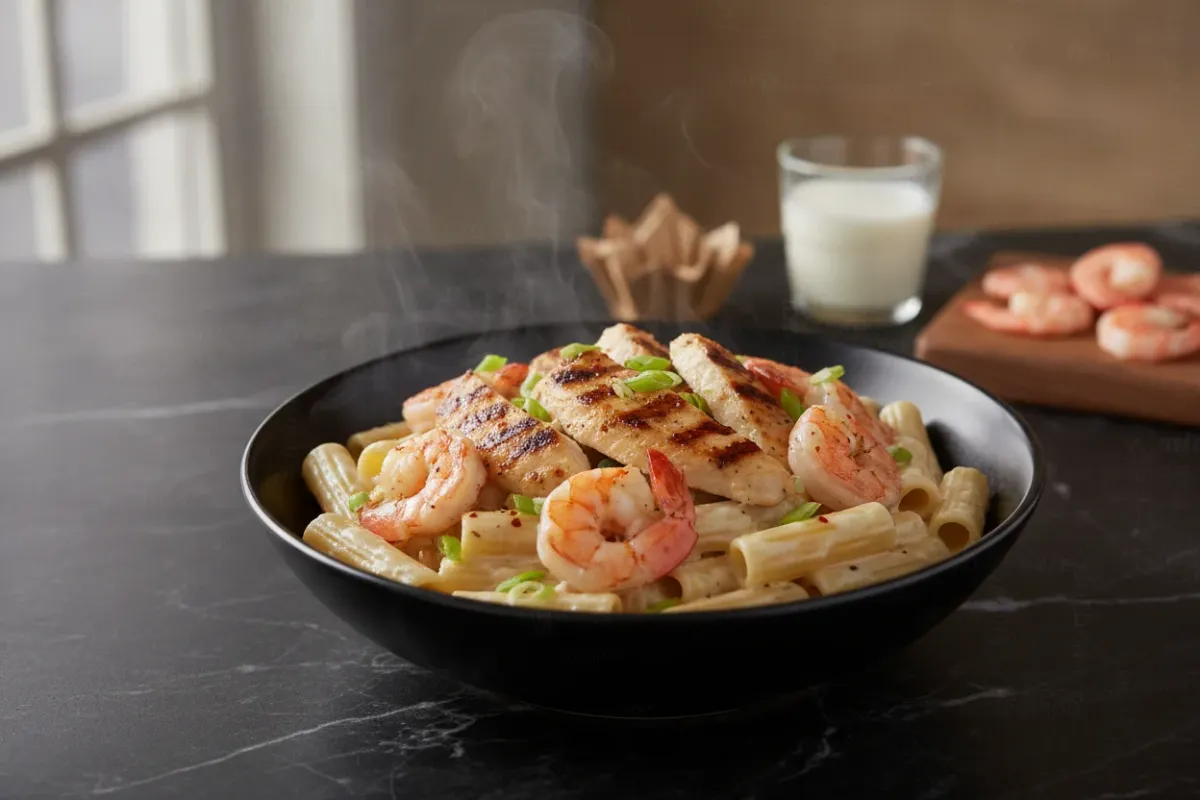
Spicy alfredo pasta is usually associated with cream, butter, and a feeling of heaviness after lunch. But there's a version that flips that idea on its head: chicken, tiger shrimp, rigatoni, and light cream cheese deliver 81 grams of protein in a single serving at 753 kcal. This isn't a diet compromise with a "cardboard-under-sauce" taste — it's a full-fledged hot dish that's cooked in one go for 9 containers at once. The perfect candidate for the role of lunch or dinner for the entire work week.
Why 81 grams of protein is genuinely a lot
To grasp the scale, it helps to compare it with familiar portions. A standard 150 g chicken fillet gives about 35 g of protein. This serving of pasta contains more than twice as much — and on top of that it has carbs for energy and very little fat.
Here are three facts that make this dish special:
- 43% of the calories come from protein. The serving has 81 g of protein, which is 324 kcal out of 753. For a hot pasta dish, that's a very high "protein density." Most pasta dishes get stuck at the level of 15–20% of calories from protein.
- Only 12 g of fat per serving. Classic alfredo made with cream and parmesan easily racks up 30–40 g of fat. Here the fat is cut by nearly threefold by replacing cream with light cream cheese.
- Two protein sources work together. Chicken provides the bulk, shrimp adds "seafood" protein and makes the flavor more interesting, while rigatoni and green onion cover the carbs and fiber.
Protein isn't just "for muscles." It keeps you full longer, helps preserve muscle mass during a calorie deficit, and requires more energy to digest than fats and carbs. According to Harvard Health, many active people benefit from aiming for an amount of protein above the minimum norm of 0.8 g per kilogram of body weight — and a single serving like this covers a noticeable portion of the daily requirement.
A full breakdown of the macros in one serving
The figures for one container (you end up with 9 of them from a single batch):
| Metric | Per serving |
|---|---|
| 🔥 Calories | 753 kcal |
| 🍗 Protein | 81 g |
| 🌾 Carbs | 80 g |
| 🥑 Fat | 12 g |
| 🍀 Fiber | 4 g |
Note the balance: protein and carbs are almost equal in grams (81 and 80), while fat is minimal. This makes the dish convenient for those who count macros. The carbs from rigatoni provide energy — especially valuable if the serving is eaten before or after a workout. The fiber (4 g) comes from the green onion and the pasta itself.
Where all that protein comes from
The whole batch comes out to 6,779 kcal and is divided into 9 containers. The protein is assembled from two main sources:
- Skinless chicken breast — 2,161 g (2,593 kcal). This is the base of the dish. Lean breast is one of the "cleanest" protein sources: lots of protein, little fat.
- Pacific white shrimp — 480 g (408 kcal). The shrimp adds about a fifth of the weight of the protein portion and brings its own set of amino acids, while also making the flavor richer and more "restaurant-like."
The carb and creamy parts are covered by:
- Great Value rigatoni (dry) — 900 g (3,214 kcal) — the main source of carbs.
- Great Value light cream cheese — 500 kcal — the creamy texture of the sauce instead of heavy cream.
- Green onion — about 2 cups (64 kcal) — freshness, color, and a bit of fiber with practically no calories.
Why this is a "lightened" alfredo
The main secret to the low fat is substitution. Traditional alfredo sauce is built on heavy cream, butter, and a large amount of cheese. Here the creaminess comes from light cream cheese, which carries many times less fat at the same velvety texture. That's exactly why the entire batch stays at the level of 12 g of fat per serving — a rare figure for a dish with the word "alfredo" in its name.
Ingredients for a batch of 9 containers
Before cooking, it's worth prepping everything in advance — this is a classic meal-prep principle:
- Skinless chicken breast — 2,161 g
- Pacific white shrimp — 480 g
- Dry rigatoni — 900 g
- Light cream cheese — about 230–250 g (a serving of 500 kcal)
- Green onion — 2 cups chopped
- Olive oil — for drizzling
- Spices for the whole batch: chili powder, Italian herbs, garlic-and-pepper seasoning
The amount of spices is calculated for the entire volume of chicken, so don't be alarmed by the large numbers in the recipe — that's seasoning for more than two kilograms of meat, not for a single serving.
How it's made: a step-by-step process
Step 1. Chicken and spices
The chicken breast is cut into cubes — that way it bakes faster and more evenly, and it's convenient to eat with a fork from the container. The cubes are generously seasoned: with chili powder (which also provides that signature heat), Italian herbs, and garlic-and-pepper seasoning. Then the meat is drizzled with olive oil — it helps the spices "stick" and keeps the chicken from drying out.
Step 2. Baking
The chicken goes into the oven at 350°F — that's about 175°C. Baking (rather than pan-frying) is convenient for large volumes: all the meat cooks at once on a baking sheet, without constant stirring, and excess fat drains off. The main indicator of doneness isn't time but internal temperature: chicken is safe when the center of the piece reaches 74°C (165°F). This is a safety recommendation from the USDA, and in the case of a large batch it's worth checking with a thermometer in several pieces.
Step 3. Shrimp
Shrimp cook very fast — literally in a couple of minutes — so they're added separately to avoid overcooking. Overcooked shrimp turn "rubbery," so they're brought to doneness right up to the moment when the flesh becomes opaque and curls into the letter "C." Too tight a ring is a sign that they're already overcooked.
Step 4. Pasta
The rigatoni is boiled to al dente — a bit firmer than usual. This is an important technique specifically for meal prep: the pasta will keep "cooking" a little more during reheating over the course of the week, and if you boil it soft right away, by Thursday it will turn to mush. The tubular shape of rigatoni holds the sauce well inside — each tube works like a little spoon.
Step 5. Sauce and assembly
The light cream cheese is loosened to a creamy texture — if needed, you can add a little of the pasta cooking water to make the sauce silky. Then the pasta, chicken, shrimp, and sauce are combined, and chopped green onion is added for freshness and aroma. The finished mixture is divided among 9 containers — evenly, so that the macros in each match the calculation.
How to store and reheat
For a week's worth of meal prep, proper packaging is important. A few practical rules:
- Let it cool before sealing. Hot food in a sealed container produces condensation, and the pasta becomes watery. Let the dish cool down before snapping the lid shut.
- Refrigerator — 3–4 days, freezer — longer. If you're making 9 servings at once, it makes sense to put some of the containers in the freezer and take them out as needed.
- Reheat with a drop of water. Cream sauces based on cheese thicken when reheated. A teaspoon of water or milk will return creaminess to the sauce and softness to the pasta.
How to fit a serving into your daily diet
753 kcal is a filling, full-fledged serving that's convenient to plan as a main meal. A few guidelines:
- If your daily norm is around 2,000 kcal, one serving takes up roughly a third of the day and covers a huge part of the protein requirement — all that's left is to top up the protein with light snacks like cottage cheese or a protein dessert.
- After a strength workout the combination of 81 g of protein and 80 g of carbs works almost perfectly: protein for muscle recovery, carbs for replenishing energy.
- If the goal is weight loss, low fat and high protein help you stay full longer on fewer calories. You can reduce the share of pasta in your serving and add a green salad to lower the carbs without losing volume.
You can read more about the role of protein in satiety and body composition in materials from MedlinePlus — a reliable resource for a basic understanding of nutrition without complex medical terms.
Little tricks for a better result
- Heat to your own taste. Chili powder sets the main "fieriness." If you're cooking for a family with different tastes, add it in moderation, and everyone can add hot sauce to their own container themselves.
- Don't salt the sauce to the max in advance. Cream cheese is already a bit salty, and the garlic-and-pepper seasoning also contains salt. It's better to add salt at the end, after tasting the finished dish.
- Green onion at the very end. If you add it to the hot mixture too early, it loses its freshness and color. It's worth saving some of the onion to sprinkle on top before sealing the container.
- Equal servings — accurate macros. For each container to truly hold 81 g of protein, divide the finished mixture by weight, not "by eye." A kitchen scale matters here more than it seems.
Try it yourself
Spicy alfredo pasta with chicken and shrimp proves a simple thing: high-protein food doesn't have to be boring. 81 grams of protein, a creamy sauce, light heat, and the aroma of green onion — and all of it in a format that's cooked once and feeds you for nearly a week.
Gather the ingredients over the weekend, set aside an hour for cooking — and you'll have 9 containers in your fridge that are worth spending your lunch break on. Try making your own batch, weigh the servings honestly, and watch how your sense of fullness changes when there's that much protein on your plate. Mindful eating doesn't start with restrictions, but with truly delicious choices.
This article is for informational purposes only and is not medical advice. Consult a doctor or dietitian before making dietary changes.