Prep day: preparing ingredients on Sunday for a healthy week
Ingredient prep: The underrated healthy eating tool. Learn how Sunday prep of chopped veggies and proteins makes weeknight dinners effortless all week.
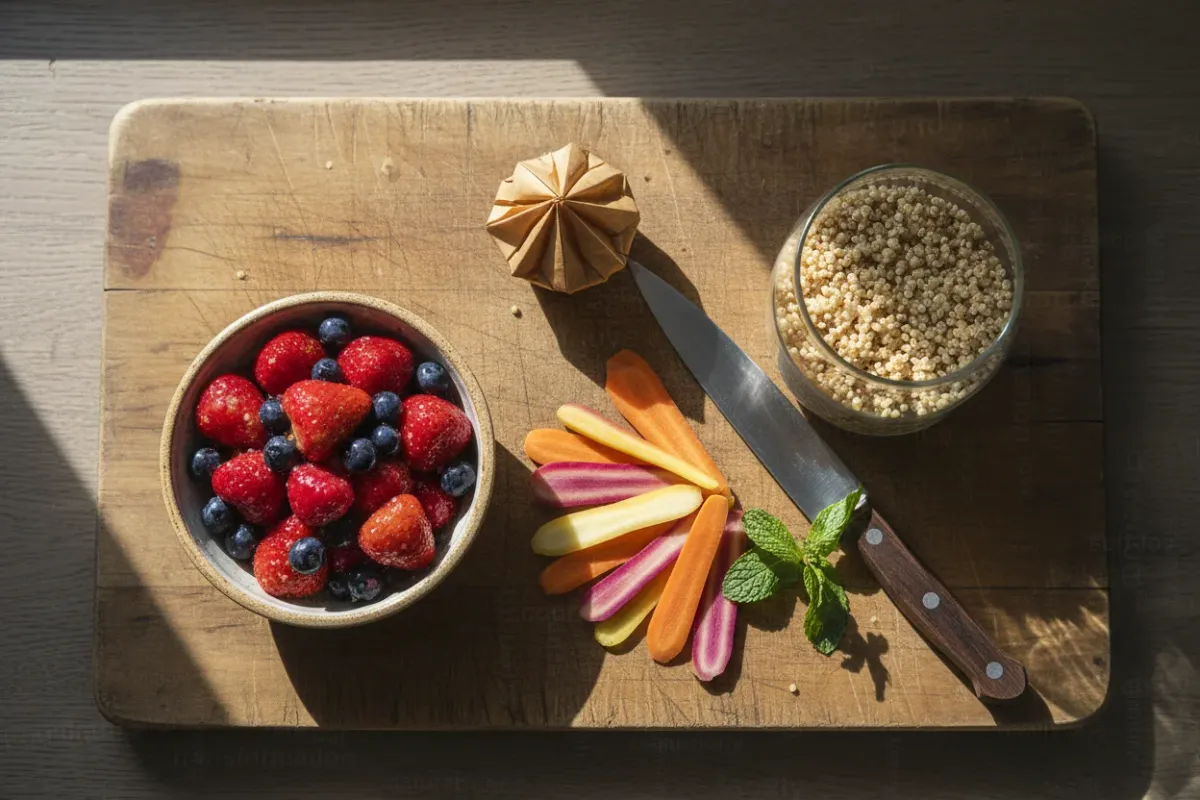
Sunday is the perfect day to slow down, put on your favorite podcast, and calmly prepare ingredients for the entire week. Not ready-made meal containers, but prepped components: chopped vegetables, cooked grains, marinated meat, washed greens. This is called ingredient prep — and it's perhaps the most underrated tool for healthy eating.
When chopped clean vegetables, cooked grains, and portioned proteins are waiting in the fridge after work in the evening, putting together a complete dinner takes just a few minutes. Without this, as the authors of the Nest Wellness blog note, "we start eating out more often or spending too much time in the kitchen after work."
Why ingredient prep rather than full meal prep
Classic meal prep is when you cook five identical containers of chicken, rice, and broccoli on Sunday. This works for some people, but many are put off by the monotony. Ingredient prep is a different philosophy. You prepare basic components from which you can assemble completely different meals throughout the week.
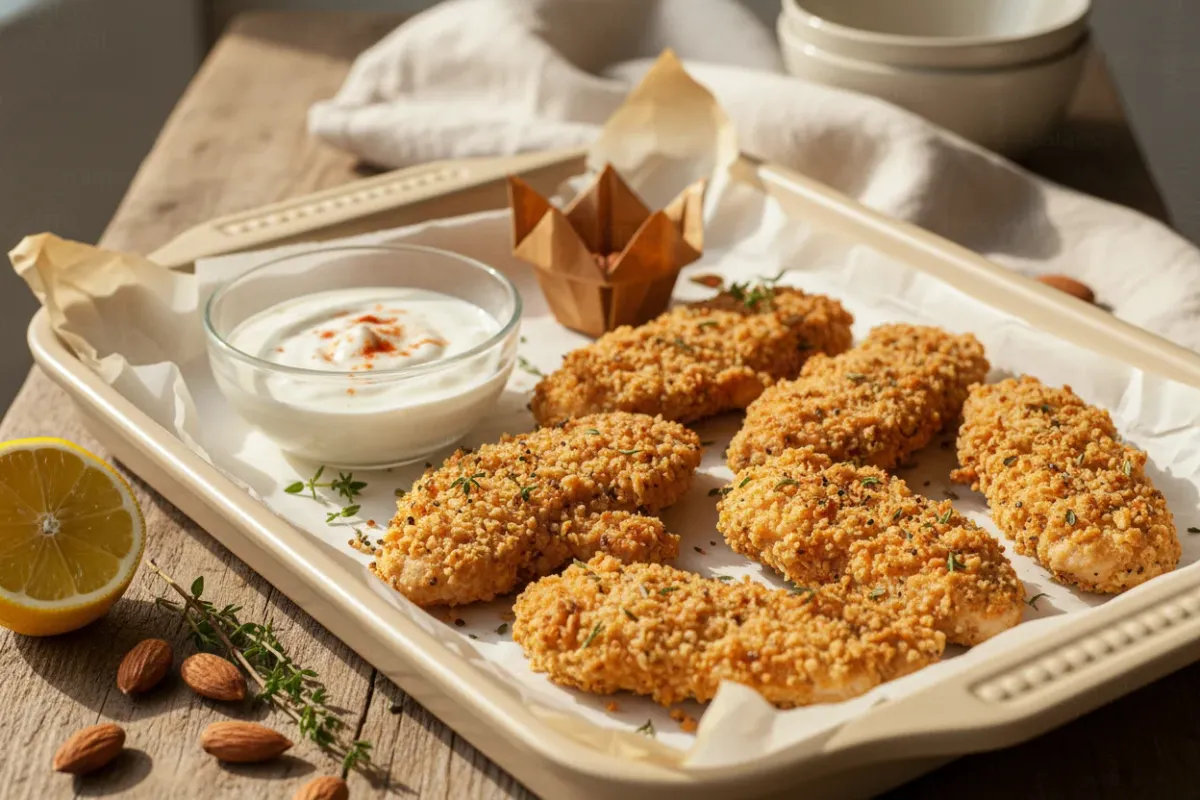
The same baked chicken breast becomes the base for a salad on Monday, a wrap filling on Tuesday, and a warm bowl ingredient on Wednesday. The authors of the Nest Wellness blog describe exactly this approach: "Chicken baked on the weekend provides enough meat for salads, tacos, and other dishes for the entire week."
Time savings — real numbers
According to data from Frive, in the UK 73% of people do meal prep specifically to save time, and 60% — to eat healthier. And while fully outsourcing cooking can save up to seven hours per week, even doing your own ingredient prep on Sunday significantly lightens the weekday load.
A survey by Instacart (2025) showed that the main obstacles to cooking at home are lack of time (20%) and fatigue (19%). Only 7% of respondents cited lack of skills as the reason. In other words, people know how to cook and want to cook — they simply don't have the energy in the evenings. Ingredient prep solves exactly this problem: all the energy-intensive work (washing, peeling, chopping, cooking) is moved to a calm Sunday.
Benefits for health and wallet
Specialists at Everyday Health emphasize: chopped and prepped fruits and vegetables significantly reduce food waste because "if they're ready to use, the likelihood of including them in meals is much higher, especially when time is short." Meal prep also helps control weight through portion management and eliminates impulsive food decisions.
Registered dietitian Bashira Enahora notes in the same article: "Meal prep helps us simply live better overall." And according to Instacart data, saving money (35%) even outpaces concern about nutrition (26%) as the main motivation for cooking at home.
Step-by-step Sunday prep day plan
The authors of The Dinner Shift call it the "power hour" — one powerful hour of preparation. But even if you can only spare 30 minutes, the results are noticeable. One of the blog's readers called Sunday prep "the biggest lifesaver" for her health and sanity after having a baby.
Here's a plan adapted for those who track macros and follow a healthy diet.
Step 1. Planning (10 minutes)
Before pulling out the cutting board, it's worth spending a few minutes on planning. As productivity coach Anna Kornick notes in her blog, the essence of Sunday prep is to "make decisions in advance so you don't spend your precious decision-making resources" during the week.
What you need to do:
- Open the fridge and assess leftovers — what needs to be used first
- Sketch out a rough menu for 4–5 days (you don't have to plan every single meal)
- Make a shopping list by category: proteins, grains, vegetables, fruits, dairy
- Determine which ingredients can be prepped ahead of time and which are better left fresh
Step 2. Start the "long" processes (5 minutes to get going)
The first rule of prep day — start with what takes the longest to cook. The authors of The Dinner Shift recommend "getting the grains started right at the beginning," especially whole grains — brown rice or spelt, which take significantly longer to cook than regular ones.
What to start cooking first:
- Grains: quinoa (15 minutes), bulgur (15 minutes), brown rice (40 minutes), buckwheat (20 minutes)
- Legumes: lentils (25–30 minutes), chickpeas from soaked (1–1.5 hours)
- Baking: sweet potatoes in the oven, chicken breasts, turkey
For reference — macros for basic grains per 100 g cooked:
| Grain | Calories | Protein | Fat | Carbs |
|---|---|---|---|---|
| Buckwheat | 110 | 4.2 | 1.1 | 21.3 |
| Quinoa | 120 | 4.4 | 1.9 | 21.3 |
| Bulgur | 83 | 3.1 | 0.2 | 18.6 |
| Brown rice | 112 | 2.6 | 0.9 | 23.5 |
Step 3. Preparing vegetables (20–30 minutes)
This is the core of ingredient prep. The authors of Meal Prep Sunday confirm: they chop all their vegetables for the week on Sunday evening, and then assembling any dish "literally takes a few minutes" with "zero mess" in the kitchen.
Vegetables for raw storage (chop and store in containers):
- Carrots — cut into sticks or rounds. Store in a container with a small amount of water. Macros per 100 g: 41 kcal / 0.9 P / 0.2 F / 9.6 C
- Cucumbers — cut right before eating or store in large pieces for no more than 3 days
- Celery — sticks, in water in a container. Macros per 100 g: 16 kcal / 0.7 P / 0.2 F / 3.0 C
- Bell peppers — cut into strips, store in a dry container. Macros per 100 g: 27 kcal / 1.3 P / 0 F / 5.3 C
- Radishes — wash and trim, store in a container with a paper towel
Vegetables for cooking:
- Broccoli — break into florets, blanch for 2 minutes or leave raw for cooking during the week. Macros per 100 g: 34 kcal / 2.8 P / 0.4 F / 6.6 C
- Cauliflower — break into florets, roast or leave raw
- Zucchini — cut into cubes or rounds for quick sautéing
- Green beans — trim the ends. The Meal Prep Sunday website has a simple recipe: 450 g green beans, 3 cloves of garlic, 1 teaspoon olive oil — sauté for 3–4 minutes. Macros per 100 g cooked: approximately 40 kcal / 2.0 P / 1.5 F / 5.0 C
Sweet potatoes:
As SELF notes, sweet potatoes are "an excellent source of healthy, filling carbohydrates." According to the recipe from Meal Prep Sunday, simply cube 3 sweet potatoes and roast at 220°C for 20 minutes. Macros per 100 g: 86 kcal / 1.6 P / 0.1 F / 20.1 C.
Step 4. Preparing proteins (15–20 minutes of active work)
- Chicken breast — bake or boil 2–3 breasts. Slice or shred after cooling. Macros per 100 g: 165 kcal / 31 P / 3.6 F / 0 C
- Turkey — same approach, bake thigh or breast fillets
- Eggs — hard-boil 10–12 eggs, store in the shell for up to 5 days. Macros per 1 egg: 70 kcal / 6 P / 5 F / 0.6 C
- Cottage cheese — portion into containers (150–200 g per serving). Macros per 100 g (5% fat): 121 kcal / 17.2 P / 5 F / 1.8 C
- Fish — marinate for quick weekday cooking (lemon, soy sauce, ginger)
Step 5. Greens and berries (10 minutes)
Greens and berries are the most perishable products. Proper preparation extends their shelf life.
- Greens (spinach, arugula, salad leaves) — wash, dry thoroughly (a salad spinner is prep day's best friend), store in a container with a paper towel
- Berries — the authors of the Nomadette blog recommend soaking berries in a solution of equal parts vinegar and water, then drying and storing in a container lined with a paper towel. This significantly extends freshness
- Dill, parsley, cilantro — wash, chop, store in a glass jar with a lid
Step 6. Sauces and dressings (10 minutes)
Prepared sauces turn simple ingredients into complete meals. Here are several options that keep in the fridge for up to 5 days:
- Lemon-olive dressing: 3 tbsp olive oil, juice of half a lemon, 1 tsp mustard, a pinch of salt. Macros per 1 tbsp: 45 kcal / 0 P / 5 F / 0.3 C
- Yogurt sauce: 150 g Greek yogurt, 1 clove of garlic, dill, salt. Macros per 50 g: 33 kcal / 3.5 P / 1.5 F / 1.5 C
- Peanut sauce (for Asian bowls): 2 tbsp peanut butter, 1 tbsp soy sauce, 1 tsp honey, a little water. Macros per 1 tbsp: 50 kcal / 2 P / 3.5 F / 3 C
Storage rules: making everything last until Friday
According to recommendations from The Dinner Shift, after cooking, food should be "cooled to room temperature within 2 hours" before being placed in the refrigerator.
Shelf life of prepared ingredients
| Ingredient | Fridge life | Tip |
|---|---|---|
| Cooked grains | 4–5 days | Store without dressing |
| Baked chicken | 3–4 days | In an airtight container |
| Chopped vegetables (raw) | 4–5 days | Carrots and celery — in water |
| Roasted vegetables | 4–5 days | Don't mix wet and dry |
| Hard-boiled eggs | 5 days | Store in the shell |
| Washed greens | 3–4 days | With a paper towel |
| Berries (after vinegar treatment) | 5–7 days | In a dry container |
| Sauces/dressings | 4–5 days | In small glass jars |
Important rules:
- Use glass containers with tight-fitting lids — they don't absorb odors and are safe
- Label the preparation date with a marker on masking tape
- Vegetable scraps (carrot ends, broccoli stems, onion skins) can, as recommended on Nomadette, be collected in a bag in the freezer and later "turned into broth with herbs and spices"
- The authors of Nomadette also recommend using prepared vegetables within one week
How to assemble meals from prepped ingredients: weekly examples
The whole beauty of ingredient prep lies in its flexibility. Here's how the same prepped ingredients turn into different meals.
Monday: Quinoa and chicken bowl
Quinoa (150 g) + chicken breast (100 g) + roasted sweet potato (100 g) + fresh cucumber + yogurt sauce. Macros per serving: ~420 kcal / 35 P / 9 F / 50 C
Tuesday: Egg and vegetable salad
Arugula + 2 hard-boiled eggs + bell pepper + carrots + lemon-olive dressing. Macros per serving: ~280 kcal / 15 P / 18 F / 12 C
Wednesday: Buckwheat with green beans and turkey
Buckwheat (150 g) + garlic green beans (100 g) + baked turkey (100 g). Macros per serving: ~380 kcal / 34 P / 6 F / 45 C
Thursday: Asian bowl
Brown rice (150 g) + chopped vegetables (carrots, peppers, cucumber) + chicken + peanut sauce. Macros per serving: ~450 kcal / 30 P / 12 F / 52 C
Friday: Cottage cheese with berries and quinoa
Cottage cheese 5% (200 g) + berries (100 g) + quinoa (50 g) + a spoonful of honey. Macros per serving: ~340 kcal / 36 P / 10 F / 26 C
Each of these options takes 5–7 minutes to assemble because all the components are already ready.
Common prep day mistakes and how to avoid them
Mistake 1: Preparing too much
Beginners' enthusiasm often leads to half the prepped food going bad. It's better to start with 3–4 days' worth of prep and gradually scale up.
Mistake 2: Forgetting about variety
If you only prepare chicken breast and buckwheat, by Wednesday you'll want to order pizza. A minimum of 2 types of protein, 2 types of grains, and 4–5 types of vegetables is the formula that keeps things interesting.
Mistake 3: Ignoring seasonality
In winter, focus on root vegetables (carrots, beets, sweet potatoes), cabbage, and frozen vegetables. In summer — on fresh tomatoes, cucumbers, zucchini, and greens. Seasonal produce is both tastier and cheaper.
Mistake 4: Skipping the planning step
As Anna Kornick emphasizes, without a plan, prep day turns into chaotic wandering around the kitchen. Even 5 minutes with a notepad before starting saves a great deal of time and stress.
Mistake 5: Not labeling containers
After three days, it's hard to remember exactly when that buckwheat was cooked. A date on the container is a simple habit that protects you from unpleasant surprises.
Prep day for those who track macros
For those who keep a food diary, ingredient prep is a true gift. When ingredients are already weighed and portioned out, counting calories takes seconds, not minutes.
A few practical tips:
- Weigh grains and proteins right after cooking and write the weight on the container. One serving of buckwheat — 150 g cooked (165 kcal), one serving of chicken — 100–120 g (165–200 kcal)
- Count dressings and sauces separately, because that's where sneaky calories hide
- Raw vegetables don't need to be weighed down to the gram — their calorie content is so low that a difference of 20–30 g is negligible
- Use containers of the same volume — over time you start to know that a "400 ml container" is roughly a certain amount of macros
According to Everyday Health, meal prep helps control weight precisely through portion management, especially with batch cooking. And prepped food also helps you eat meals that "make you feel good both physically and mentally."
Sunday isn't just about food
An important nuance that's often overlooked: prep day is not a punishment or an obligation. The author of The Dinner Shift calls Sunday prep "the best investment in your mental health." And Nest Wellness confirms: "I feel so much less stressed when I know I'm ready for the week and I have everything to make healthy meals."
If Sunday is busy — no problem. As Anna Kornick notes, prep can be moved to Saturday or even Monday evening. The key is to set aside that hour and make it an enjoyable ritual, not a chore.
Put on some music, pour a cup of tea, invite someone to help or, on the contrary, enjoy the quiet — and spend that hour benefiting your entire week.
Frequently asked questions
Does ingredient prep take a lot of time?
A full prep day fits into 1–1.5 hours, but even 30 minutes yield noticeable results. The authors of The Dinner Shift emphasize: "even if you can only carve out 30 minutes — everyone wins." It's best to start small — prep 2–3 types of vegetables and one grain.
How do you avoid eating the same thing every day?
This is the main advantage of ingredient prep over classic meal prep. You prepare individual components, not finished meals. From one set of ingredients, you can easily put together a bowl, salad, stew, or wrap — a different dish every day with minimal effort.
Does it have to be on Sunday?
No. Sunday is a popular choice but not the only one. If weekends are busy, prep can be moved to any convenient day. Some people do a mini-prep on Wednesday to refresh supplies for the second half of the week.
How do you determine portion sizes?
A basic guideline: 100–150 g of cooked grains, 100–120 g of protein, 150–200 g of vegetables per meal. For precise tracking, it's worth using a kitchen scale, at least for the first couple of weeks — after that, portion sizes start to become intuitive.
Why does ingredient prep take so long?
Usually the reason is a lack of planning and a chaotic sequence of actions. If you start the grains and the oven first, then move on to chopping — all the processes run in parallel. Over time, prep day gets shorter: your hands remember the movements and your mind remembers the order.
This article is for informational purposes only and is not medical advice. Consult a doctor or dietitian before making dietary changes.