How to Start Eating Healthy: The Simplest Path to a Better Diet
Learn simple, sustainable steps to transform your diet without restrictive rules. Discover how small changes lead to lasting healthy eating habits.

Why Small Steps Work Better Than Strict Diets
One of the most common mistakes is trying to change everything at once. Throwing out all the "junk" food from your fridge, buying avocado and quinoa, signing up for a detox challenge. A week later — a breakdown, guilt, and a return to old habits.
Here's what actually works: small, specific changes that easily fit into your usual routine. As experts from the British Heart Foundation point out, drastic changes are hard to sustain, while small ones accumulate over time and deliver lasting results. Even losing 0.25 kg per week adds up to 7 kg in a year — without starvation or stress.
Doctors from UT Southwestern Medical Center share a compelling example: one patient started simply by giving up chips. Within a month, she lost 2.3 kg. That small victory motivated her to keep going, and over the course of a year she lost 23 kg — gradually, without extreme measures.
The takeaway is simple: you don't need to overhaul your entire diet in a single day. It's enough to start with one change and let it stick.
Where Exactly to Start: Your First Three Swaps
If you want something as simple as possible — here are three swaps you can implement today. No three-page shopping lists, no counting every gram.
Swap #1: Sugary Drinks → Water
According to Horizon Healthcare, replacing even one serving of sugary soda with a glass of water is one of the fastest ways to cut sugar intake. The WHO recommends that sugar make up less than 10% of total caloric intake, and ideally less than 5%.
For reference: a standard can of cola (330 ml) contains about 35 g of sugar — that's nearly the entire daily "acceptable" limit. Eliminating just one such drink already makes your diet noticeably cleaner.
Macros for a glass of water: 0 kcal / 0 P / 0 F / 0 C — the perfect "product."
If drinking plain water feels boring, you can add a slice of lemon, some mint, or a few berries. It's tasty, refreshing, and adds no calories.
Swap #2: Add Vegetables to Your Usual Meals
Healthy eating isn't just about restrictions — it's also about adding nutritious foods. As the British Heart Foundation emphasizes, adding vegetables to your usual meals is one of the most effective steps.
You don't need to switch to salads three times a day. Just start small:
- Toss a handful of spinach into your morning scrambled eggs
- Add frozen broccoli to your pasta
- Put more vegetables into your usual soup
- Slice up raw vegetables (carrots, cucumber, bell pepper) for a snack
The NHS recommends eating at least 5 servings of vegetables and fruits per day. One serving is roughly 80 g of fresh or frozen vegetables. That sounds like a lot, but if you spread it across meals, it's quite doable.
Macros for a serving of broccoli (80 g, steamed): 27 kcal / 2.3 P / 0.3 F / 4.2 C — almost nothing in calories, yet plenty of fiber and vitamins.
Swap #3: White Bread and Pasta → Whole Grain Alternatives
This is one of the most subtle yet effective swaps. According to NHS recommendations, whole grain products contain more fiber than refined ones and help you feel full longer.
Whole grain pasta, brown rice, bread made from whole wheat flour — they taste very similar to the regular versions, especially as part of a dish with sauce and vegetables. The fiber they contain supports digestion, helps control blood sugar levels, and lowers cholesterol, as noted by the CDC.
Macros for brown rice (100 g, cooked): 112 kcal / 2.3 P / 0.8 F / 23.5 C Macros for white rice (100 g, cooked): 130 kcal / 2.4 P / 0.2 F / 28.6 C
The calorie difference is small, but brown rice contains significantly more fiber and micronutrients.
The Plate Method: The Simplest Way to Build a Balanced Meal
Counting macros is a useful tool, but not everyone is ready to weigh every food item from day one. There's a simpler visual method recommended by specialists at UT Southwestern Medical Center — the plate method.
Take a regular standard-sized plate and mentally divide it:
- ½ of the plate — vegetables and fruits. The more colorful the variety, the better. Greens, reds, oranges — each color brings its own set of vitamins and antioxidants.
- ¼ of the plate — complex carbohydrates. Brown rice, buckwheat, whole grain pasta, potatoes with the skin on.
- ¼ of the plate — protein. Chicken, fish, legumes, eggs, tofu. A serving of meat should be roughly the size of your palm.
This method requires no scales, apps, or charts. Just look at your plate before eating — and it becomes clear whether anything needs adjusting.
Which Foods to Add and Which to Cut Back On
Add to Your Diet
According to recommendations from the CDC and the Heart and Stroke Foundation, the foundation of healthy eating includes:
- Vegetables and fruits — at least 5 servings per day, ideally 7–9. Fresh, frozen, baked — any form works.
- Whole grain products — oatmeal, buckwheat, brown rice, quinoa, whole grain bread.
- Protein-rich foods — fish (especially fatty varieties: salmon, herring), poultry, legumes, eggs, nuts.
- Healthy fats — olive oil, avocado, nuts, seeds. According to the WHO, plant-based oils (olive, sunflower, corn) are preferable to animal fats.
- Fiber — legumes, berries, seeds, vegetables. Fiber supports digestion, helps control blood sugar, and provides a lasting feeling of fullness.
Gradually Cut Back On
- Sugary drinks — soda, packaged juices, sweetened coffee. These are one of the main hidden sources of sugar.
- Ultra-processed foods — chips, hot dogs, ready-made meals, fast food. They typically contain excessive amounts of salt, sugar, and trans fats.
- Excess saturated fats — fatty meats, large amounts of butter, heavy cream-based sauces. As the British Heart Foundation recommends, choosing lean meats and grilling instead of frying significantly reduces saturated fat intake.
- Refined carbohydrates — white bread, pastries made from white flour, sweets. According to research, replacing refined carbohydrates with whole grain products is one of the key dietary improvements.
The key word here is "cut back," not "completely eliminate." Fanaticism about food leads to breakdowns. If you want a piece of cake at a celebration — that's perfectly fine. What matters is the overall picture, not individual episodes.
Simple Everyday Swaps
Here are specific swap examples that don't require culinary heroics:
| Before | After | What Changes |
|---|---|---|
| White rice | Brown rice or buckwheat | More fiber, longer satiety |
| Sugary soda | Water with lemon / mint | Minus 140 kcal per glass |
| Pasta with cream sauce | Pasta with tomato sauce and vegetables | Less saturated fat |
| Chips for a snack | A handful of nuts (30 g) | Healthy fats and protein instead of "empty" calories |
| Sweetened yogurt | Plain yogurt + berries | Less sugar, more probiotics |
| Butter for cooking | Olive oil | Healthy unsaturated fats |
| Fried meat | Baked or grilled | Less fat, same taste |
Macros for a handful of almonds (30 g): 173 kcal / 6.3 P / 15 F / 3.7 C — a filling snack with good protein and healthy fats.
Macros for plain yogurt (150 g, 2%): 87 kcal / 7 P / 3 F / 7.5 C — an excellent base for breakfast or a snack.
Meal Prep: How Preparation Makes Healthy Eating Easier
One of the main reasons people eat unhealthy food is lack of time. When you're hungry and in a hurry, your hand reaches for the quickest option — and that's usually fast food or a ready-made meal.
As the American Diabetes Association points out, meal prep doesn't necessarily mean hours in the kitchen on Sunday with identical containers. Meal prep can be:
- Washing and chopping vegetables in advance so they're ready for snacking or adding to a dish
- Cooking grains for 2–3 days — buckwheat, brown rice, or quinoa
- Baking chicken breast or fish and portioning it out
- Freezing portioned mixes for quick cooking
Even 30 minutes of preparation on the weekend makes weekdays significantly easier. When your fridge already has cooked grains, chopped vegetables, and prepared protein — putting together a full meal takes five minutes.
How to Avoid Quitting After a Week
The most common scenario: inspiration, a week of "clean eating," fatigue, a breakdown, guilt, and a return to old habits. To avoid this:
One change at a time. Don't try to simultaneously quit sugar, switch to whole grains, start eating five servings of vegetables, and count macros. Pick one change, give it 1–2 weeks to become a habit, and only then add the next one.
Don't aim for perfection. Perfect eating doesn't exist. If 80% of your diet is healthy food and 20% is something for pleasure, that's already an excellent result.
Don't ban — replace. Bans create resistance. Swaps don't. Not "I'm never eating chocolate again," but "instead of milk chocolate, I'll try dark chocolate with a high cocoa content."
Track your results. As specialists from Horizon Healthcare note, small changes quickly show up as more energy, better sleep, clearer thinking, and improved mood. Notice these changes — they motivate you to keep going.
Be honest with yourself. The American Diabetes Association recommends starting with an honest assessment of your schedule: on which days does your eating usually "fall apart," when do you grab the first thing available? Knowing your weak spots lets you prepare in advance.
A Sample Day of Healthy Eating
Here's what an ordinary day with small improvements might look like — no exotic ingredients or complicated recipes:
Breakfast
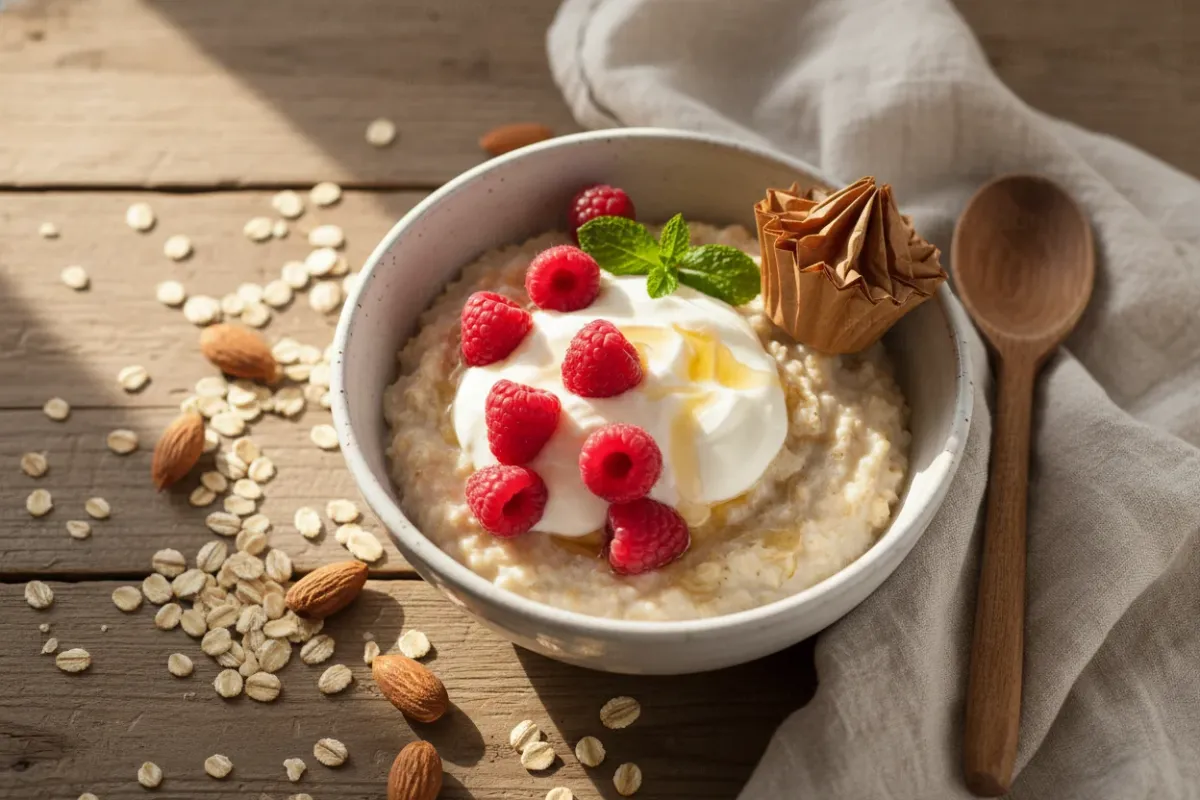
Oatmeal made with water or milk + a handful of berries + a teaspoon of honey Macros (serving ~300 g): approximately 280 kcal / 8 P / 5 F / 48 C
Snack
Plain yogurt (150 g) + walnuts (15 g) Macros: approximately 140 kcal / 8.5 P / 7.5 F / 9 C
Lunch
Grilled chicken breast (150 g) + brown rice (150 g) + fresh vegetable salad with olive oil Macros: approximately 450 kcal / 40 P / 12 F / 45 C
Afternoon Snack
An apple + a handful of almonds (20 g) Macros: approximately 160 kcal / 4.5 P / 10 F / 16 C
Dinner
Baked fish (150 g) + steamed vegetables (200 g) Macros: approximately 250 kcal / 30 P / 8 F / 12 C
Daily total: approximately 1280 kcal / 91 P / 42.5 F / 130 C
This is a basic template — calorie intake can be adjusted depending on sex, age, activity level, and goals. According to the NHS, the approximate guideline is around 2000 kcal for women and 2500 kcal for men, so portions can be increased or an additional snack can be added.
Frequently Asked Questions
Should you choose fresh, frozen, or canned vegetables and fruits?
All three options are suitable for healthy eating. The NHS states that fresh, frozen, canned, and even dried vegetables and fruits all count as full servings. Frozen vegetables are often just as nutritious as fresh ones, while being cheaper and lasting longer — a great option for those just starting to change their diet.
How can you add more vegetables without completely changing your usual meals?
The simplest way is to add vegetables to what you already enjoy. A handful of spinach in your scrambled eggs, frozen broccoli in your pasta, more vegetables in your soup or stew. As Horizon Healthcare recommends, even a bag of frozen vegetables heated in the microwave already makes a meal healthier. You don't need to radically change your menu — just enrich your usual dishes.
What can replace red meat if you want to reduce your consumption?
Good alternatives include poultry, fish (especially fatty varieties like salmon or herring), legumes, lentils, and tofu. The British Heart Foundation recommends starting by replacing meat with plant-based protein (legumes, lentils) at least once or twice a week — this reduces saturated fat intake and adds fiber to your diet.
Which "unhealthy" foods should you start cutting out first?
It's best to start with whatever is easiest to replace without feeling deprived. Usually, that means sugary drinks — they can be swapped for water or unsweetened tea. The next step is cutting back on ultra-processed snacks (chips, crackers) in favor of nuts or sliced vegetables. The golden rule is: don't ban — find a worthy replacement so the transition feels comfortable.
This article is for informational purposes only and is not medical advice. Consult a doctor or dietitian before making dietary changes.