Chayote — A Mexican Vegetable with 3 g of Carbs That Can Replace Potatoes in Any Recipe
Discover chayote, the Mexican vegetable with just 3g carbs per serving. Learn why it's the perfect low-carb potato substitute for any recipe.
What Is Chayote and Why You Should Know About It
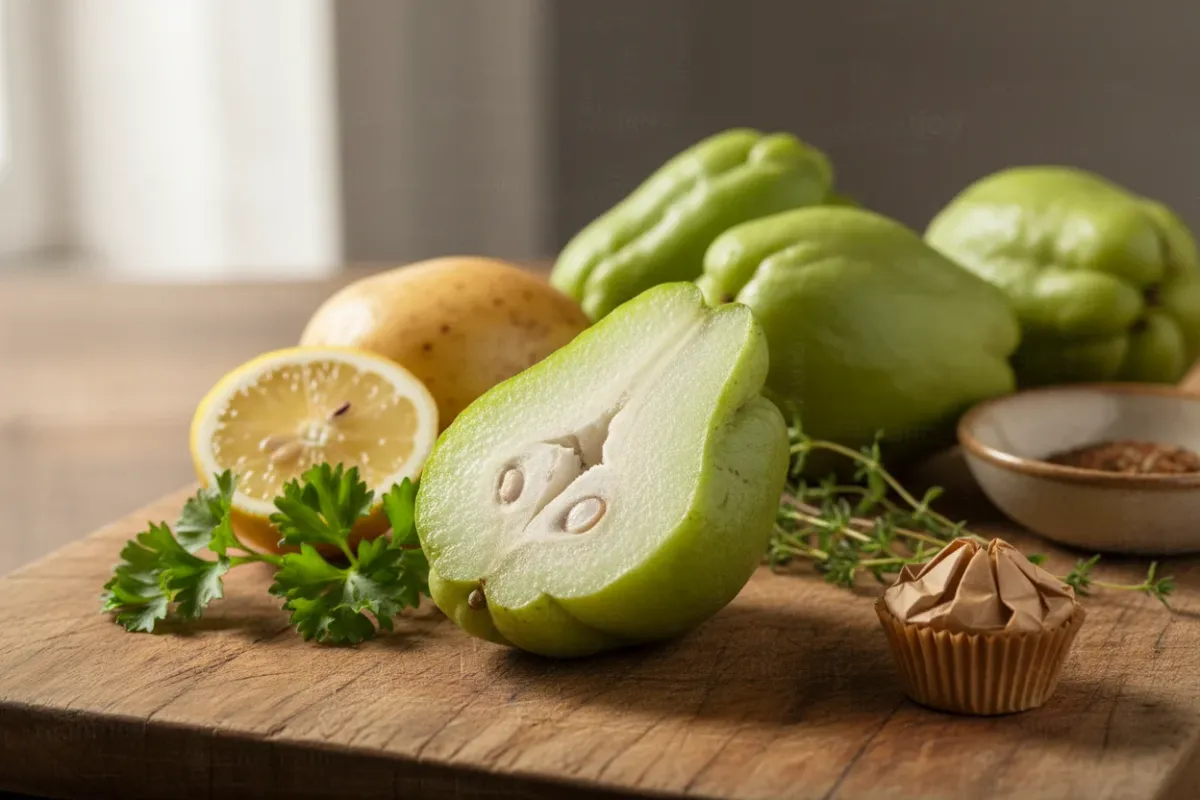
There is a vegetable that people in Mexico and Central America eat just as commonly as we eat potatoes. It looks like a green wrinkled pear, tastes like something between a zucchini and a cucumber, and when cooked properly, it's indistinguishable from potato. This is chayote (Sechium edule) — also known as Mexican cucumber, mirliton, or choko.
Botanically, chayote is a fruit from the cucurbit family, a close relative of zucchini and cucumbers. But in cooking, it's used as a vegetable — fried, baked, stuffed, added to soups and stews. And here's what makes it special: with a texture and flavor reminiscent of potato, it contains only about 3 g of net carbs per 100 g. For comparison, potatoes have about 15 g — five times more.
Chayote Macros: Numbers That Impress
Here is the full nutrient profile of raw chayote per 100 g, according to FoodStruct and NutriScan:
| Nutrient | Per 100 g |
|---|---|
| Calories | 19 kcal |
| Protein | 0.8 g |
| Fat | 0.1 g |
| Carbohydrates (total) | 4.5 g |
| Fiber | 1.7 g |
| Net carbs | ~2.8 g |
| Sugars | 1.7 g |
| Water | ~94% |
For a single serving (1 cup of chopped chayote, ~132 g), that's only 25 kcal and about 3.7 g of net carbs. One whole fruit (~203 g) contains approximately 9.2 g of total carbohydrates.
What's Valuable in Its Composition
Chayote is not just "water with fiber." Here are a few nutrients that set it apart from other vegetables:
- Folic acid (vitamin B9) — 93 mcg per 100 g, which is 23% of the daily value. That's more than in Brussels sprouts. Folate is critically important for cell division, which is especially relevant when planning a pregnancy.
- Vitamin C — 7.7 mg per 100 g, supporting immune function.
- Potassium — 125 mg per 100 g.
- Copper — 0.12 mg, which is 14% of the daily value.
- Manganese — 0.19 mg (8% of the daily value).
At the same time, there's almost no sodium — only 2 mg per 100 g (245 times less than in white bread). An ideal product for those watching their salt intake.
Why Chayote Is a Godsend for Keto and Clean Eating
Minimal Carbs — Maximum Volume
With net carbs of about 2.8 g per 100 g, chayote easily fits even into a strict keto protocol (typically up to 20–25 g of net carbs per day). You can eat a generous 300 g serving and get only about 8.4 g of net carbs — that's less than in one medium apple.
Virtually Zero Glycemic Index
Chayote has an extremely low glycemic index, and its fiber (both soluble and insoluble) slows down carbohydrate absorption. As Healthline specialists note, unique plant compounds in chayote may improve insulin sensitivity by reducing the activity of enzymes associated with impaired blood sugar control.
Antioxidant Protection
Chayote contains antioxidants, including myricetin — a flavonoid that in several animal studies has demonstrated the ability to lower cholesterol levels. A 2021 review referenced by Healthline indicates that chayote flavonoids may be beneficial for the cardiovascular system, although additional human studies are needed for definitive conclusions.
Chayote Instead of Potatoes: How It Works
Chayote's main superpower is its ability to mimic potato. After heat treatment, its texture becomes soft, slightly starchy, and its neutral flavor easily takes on any spices and sauces.
Where Chayote Replaces Potatoes
- Gratin — a classic bake with cream and cheese. The keto chayote gratin recipe from Divalicious Recipes includes chayote, cream, cheddar, and parmesan. One serving is only 205 kcal and 5.3 g of carbs (of which 1.2 g is fiber), with 8.8 g of protein and 16.9 g of fat.
- Roasted "potatoes" — cut into wedges, drizzle with olive oil, sprinkle with paprika, garlic powder, and salt, and roast at 200°C until golden brown.
- Mash — boil chayote until tender, mash with butter and cream. The texture comes out slightly less thick than potato mash, but very pleasant.
- Stews and soups — chayote holds its shape well during braising and absorbs the flavor of the broth.
- Scalloped potatoes — a casserole with thinly sliced pieces in a creamy garlic sauce, a popular holiday side dish in a low-carb version.
Comparison: Chayote vs Potato
| Nutrient (per 100 g) | Chayote | Potato (boiled) |
|---|---|---|
| Calories | 19 kcal | ~87 kcal |
| Net carbs | ~2.8 g | ~15 g |
| Fiber | 1.7 g | ~1.8 g |
| Protein | 0.8 g | ~1.9 g |
| Fat | 0.1 g | ~0.1 g |
The difference in carbs is more than 5 times. Meanwhile, chayote has nearly the same amount of fiber, and 4.5 times fewer calories.
Six Ways to Cook Chayote
The versatility of chayote lies in the fact that it works well with virtually any cooking method. Here are the main methods, described on YummyAddiction:
Pan-Frying (Sautéing)
The quickest method — only about 5 minutes on a hot skillet. Chayote develops a pleasant sweetness and stays slightly crispy. Pairs excellently with onion and garlic.
Oven Roasting
Cut into cubes or wedges, toss with spices, and roast. Caramelization brings out the natural sweetness. Serve with chimichurri sauce — the combination is stunning.
Stir-Fry
Chayote is popular in Asian cuisine — it's quickly stir-fried over high heat with shrimp, pork, mushrooms, or noodles. It retains its crunchy texture and absorbs the flavor of the sauce.
Grilling
Thick chayote slices on the grill caramelize and take on a light smokiness. Ten to fifteen minutes is enough to get a golden crust and tender center.
Stuffed
In Mexican cuisine, stuffed chayote is a classic. The fruit is cut in half, the seed is removed, it's filled with a stuffing (ground meat, cheese, vegetables) and baked.
Braising
Add it to a soup or stew — chayote absorbs the flavors of the broth and spices beautifully while remaining firm enough to hold together.
Recipe: Keto Chayote Gratin
This recipe, adapted from Divalicious Recipes, is perfect as a side dish for meat entrées.
Ingredients
- 4 chayotes
- 1 onion, sliced
- 3 cloves of garlic, finely chopped
- 120 ml heavy cream (33%)
- 100 g shredded cheddar
- 50 g grated parmesan
- 2 tbsp olive oil
- Salt and black pepper to taste
Directions
- Peel the chayote and cut into long strips or thin slices.
- In a skillet with olive oil, sauté the onion and garlic until soft.
- Add the chayote and cook for 5–7 minutes.
- Transfer to a baking dish, pour the cream over it, and sprinkle with cheddar and parmesan.
- Bake at 180°C for about 40 minutes until golden brown.
Macros per serving (1/6 of the dish): 205 kcal | P: 8.8 g | F: 16.9 g | C: 5.3 g | Fiber: 1.2 g
Serve with roasted beef, chicken, or as a standalone dish — it's delicious, satisfying, and fits into any low-carb meal plan.
How to Choose and Store Chayote
When selecting chayote, pay attention to a few things. The fruit should be firm to the touch, with a color ranging from light to dark green. Soft brown spots are a sign of overripeness. Different shades of green are acceptable — what matters most is firmness, as experts at Shape advise.
Store raw chayote in the refrigerator, in the vegetable crisper drawer. Under these conditions, it stays fresh for up to several weeks.
Frequently Asked Questions
How Do You Peel Chayote Without Irritating Your Hands?
Chayote juice can cause mild irritation or a tight feeling on the skin of your hands. A simple solution is to peel it under a stream of cold water or wear thin kitchen gloves. You can also rub your hands with vegetable oil before peeling — this creates a protective barrier.
Can You Eat Chayote Raw?
Yes, raw chayote is completely safe. According to Healthier Steps, it tastes similar to cucumber or jicama — light and slightly sweet. You can cut it into sticks and eat it as a snack, add it to salads, or use it with dips.
Can You Eat the Skin and Seed of Chayote?
The entire fruit is edible — the flesh, the skin, and the seed. Moreover, Shape notes that a significant portion of the nutrients is found in the skin, so it's better to leave it on when cooking. However, some varieties have tough skin — in that case, it's better to remove it with a vegetable peeler.
What Spices Work Best to Make Chayote Taste Like Potatoes?
For maximum resemblance to roasted potatoes, use: paprika, garlic powder, dried rosemary, thyme, salt, and black pepper. Before roasting, generously drizzle the wedges with olive oil — that's how you get that signature crispy golden crust.
Where Can You Buy Chayote in Russia?
Chayote can be found in large hypermarkets, at farmers' markets, or ordered through online stores specializing in exotic fruits and vegetables. In southern regions of Russia, local farmers sometimes grow it. It's also worth checking Latin American or Asian grocery stores.
This article is for informational purposes only and is not medical advice. Consult a doctor or dietitian before making dietary changes.