Cabbage Lasagna: A Low-Carb Alternative to the Classic That Will Win Over Even the Skeptics
Discover how cabbage lasagna delivers all the comfort of classic pasta without the carbs. A surprising low-carb makeover that even skeptics will love.
When Cabbage Replaces Pasta — and Nobody Complains
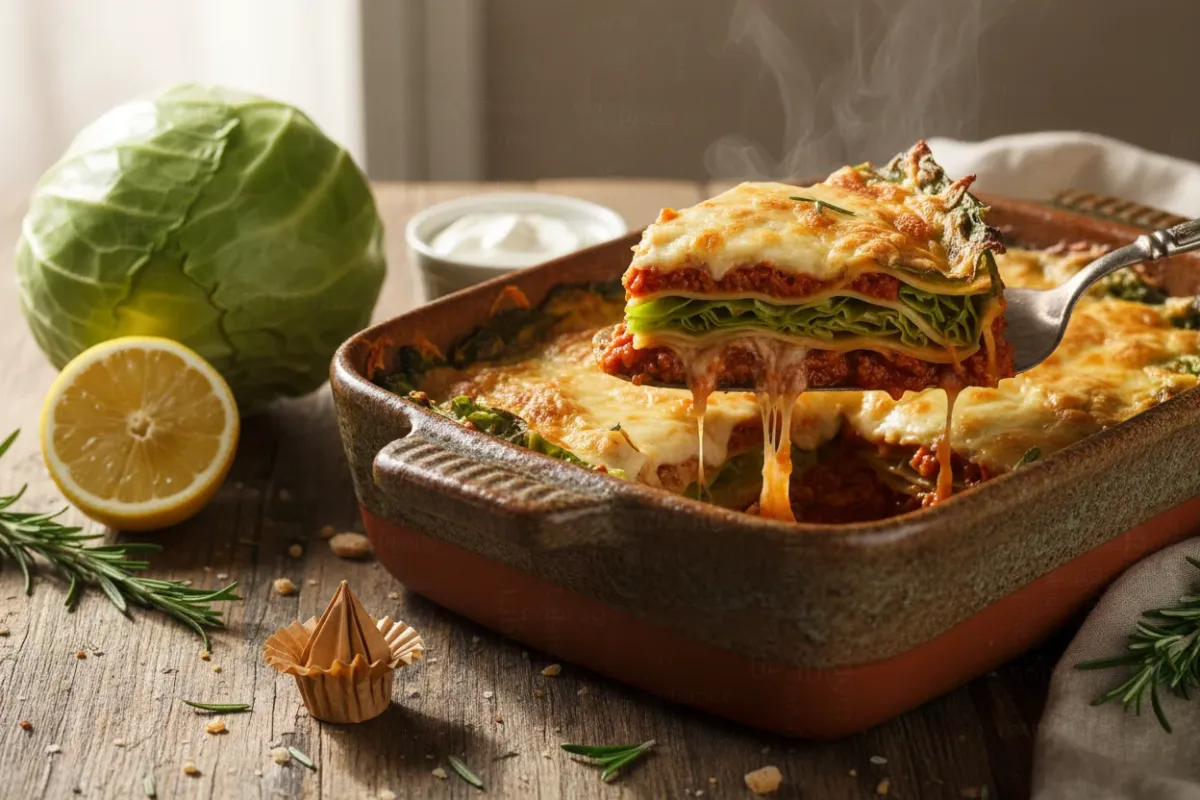
There are dishes you never expect to surprise you. Lasagna is one of them: pasta sheets, meat sauce, loads of cheese, oven. Simple enough. But swap the pasta for cabbage leaves — and the familiar lasagna transforms into an entirely different story. Lighter, with minimal carbs, yet still delivering that feeling of "real food" that makes us love casseroles in the first place.
Cabbage lasagna isn't about restrictions. It's about taking a familiar idea and making it even better for those who watch their nutrition, track their macros, or simply want to try something new and delicious.
Why Cabbage Is the Perfect Substitute for Pasta Sheets
Cabbage in 2026 isn't just a side dish — it's a genuine trend. According to the annual Pinterest Predicts report, search queries for cabbage recipes have grown by over 110%, and the publication predicts that cabbage will become the "kitchen MVP" of the year, dethroning cauliflower.
And it's not just about trends. Here's what makes ordinary cabbage a superstar:
Minimal Calories — Maximum Volume
One cup of chopped raw cabbage contains only about 22 calories. For those in a caloric deficit who want to fill up on a large portion without blowing their macro budget, this is a real find.
Vitamins and Minerals
As NY Post notes, citing dietitians, just one cup of raw green cabbage covers 54% of your daily vitamin C needs and 85% of your vitamin K requirement. Plus potassium, plant sterols, and antioxidants — flavonoids, anthocyanins, and glucosinolates.
Gut Health
Cabbage is an excellent source of fiber, which supports digestion and serves as fuel for beneficial gut bacteria. According to dietitian Rob Hobson, quoted by Business Insider, "cabbage punches significantly above its weight in terms of nutritional value."
Cabbage Lasagna Macros
The exact numbers depend on the recipe, the amount of cheese, and the type of meat. But roughly, based on data from LikeHotKeto:
| Per Serving | |
|---|---|
| Calories | ~340 kcal |
| Protein | ~34 g |
| Fat | ~19 g |
| Carbs | ~8 g |
| Fiber | ~3 g |
| Net Carbs | ~5 g |
Compare that to classic lasagna, where a single serving easily hits 400–550 kcal and 35–45 g of carbs — the difference is significant. Meanwhile, 34 g of protein per serving is a serious number that will please anyone who tracks their protein intake.
If you increase the amount of cheese (ricotta, mozzarella, parmesan), as done in the recipe from Low Carb Yum, the calorie count per serving can rise to ~450 kcal, but the satiety factor will be through the roof.
What You'll Need: Ingredients
Cabbage lasagna is assembled from the same basic layers as the classic — just with cabbage leaves standing in for pasta sheets.
The Base — Cabbage
- 1 medium head of green cabbage. The leaves need to be carefully removed, then boiled or steamed until tender. They should be pliable but not falling apart — more on that below.
Meat Sauce
- 500–700 g ground beef (you can use turkey or chicken for a lighter version)
- 400–500 ml tomato sauce or marinara with no added sugar
- 1 onion, 2–3 cloves of garlic
- Salt, pepper, oregano, basil to taste
- Optional — chili flakes for a mild kick
Cheese Layer
- 300–400 g ricotta
- 1 egg (binds the cheese mixture)
- 50–70 g grated parmesan
- Fresh basil — if you have it, it makes a difference
- A pinch of salt
Top Layer
- 200–300 g mozzarella — shredded or sliced
As the recipe authors at The Modern Nonna note, it's precisely the combination of ricotta with basil and parmesan that creates those "creamy pockets of comfort" between the layers, while the crown of mozzarella on top melts into a golden, bubbly cap.
Step-by-Step Instructions
Step 1: Preparing the Cabbage
This is the most important stage, and it determines whether your lasagna will hold its shape or turn into a soggy mess.
- Carefully remove the leaves from the head. Cut out the core and gently peel the leaves away, trying not to tear them.
- Drop the leaves into boiling salted water for 3–5 minutes — until tender but not mushy.
- Be sure to remove excess moisture. Lay the leaves out on clean towels and pat them dry. This is a critically important step — wet leaves will make the lasagna watery.
If a thick center rib prevents the leaf from lying flat — carefully trim it down or gently pound it with a kitchen mallet.
Step 2: Meat Sauce
- Sauté the diced onion and garlic in a skillet until translucent.
- Add the ground meat, break it into small pieces, and cook until browned.
- Pour in the tomato sauce and season with spices. An important tip from Taste of Home: the sauce needs to be simmered down until the mixture thickens — a runny sauce means a watery lasagna.
- Simmer on low heat for 10–15 minutes.
Step 3: Cheese Mixture
Combine the ricotta, egg, grated parmesan, chopped basil, and a pinch of salt. Mix until smooth.
Step 4: Assembly
Use a baking dish approximately 28×18 cm (11×7 inches) or slightly larger.
- A thin layer of meat sauce on the bottom of the dish (liquid only, no meat — so the cabbage doesn't stick).
- A layer of cabbage leaves — overlapping, with no gaps.
- Half the cheese mixture — spread evenly.
- A layer of meat sauce.
- A bit of mozzarella.
- Repeat: cabbage → cheese mixture → meat sauce → mozzarella.
- Top layer — a generous layer of mozzarella is a must, and optionally a bit more parmesan.
Step 5: Baking
Preheat the oven to 180°C (350°F). Bake uncovered for 20–25 minutes, until the cheese on top is golden and bubbly.
Total time: about 45–50 minutes, including prep. Perfectly doable for a weeknight dinner.
Variations and Adaptations
Cabbage lasagna is a flexible dish that's easy to adapt to different dietary approaches.
Keto Version
The base recipe is already keto-friendly: at ~5 g net carbs per serving, it fits perfectly within a daily limit. The only thing to watch — make sure there's no added sugar in the tomato sauce. The authors at Low Carb Yum recommend Rao's sauce — only 4 g carbs per half cup.
Vegetarian Version
Instead of ground meat, you can use lentils or a mushroom mixture. As noted on The Modern Nonna, the lasagna works beautifully without meat as well.
Skillet Version
No time for the oven? There's a skillet lasagna format where all the components are cooked in a single pan. The cabbage is chopped, simmered in the meat sauce under a lid for about 15 minutes, and then the cheese mixture is spread on top — followed by a couple more minutes under the lid to melt. Quick, delicious, minimal dishes — the recipe is described on That Low Carb Life.
Cabbage Substitutes
If cabbage doesn't work for you for any reason — a similar lasagna can be assembled using slices of zucchini or eggplant. The assembly principle is the same, just a different "base" instead of sheets.
Tips and Tricks
- Don't skip the cabbage drying step. This is rule number one. Wet leaves = a puddle at the bottom of the dish.
- Simmer down the sauce. The thicker the meat sauce, the better the lasagna will hold its shape when sliced.
- Let it rest after the oven. 10–15 minutes — and the layers will set. Cut right away — and you'll get a beautiful mess on the plate.
- Fresh mozzarella vs shredded. Fresh gives a more delicate texture; shredded gives a more even topping. Both work — it's a matter of preference.
Storage and Freezing
- In the refrigerator: up to 4–5 days in a sealed container. Reheats beautifully — both in the microwave and in the oven at 160°C.
- Freezing: you can freeze the lasagna either fully cooked or assembled but unbaked. Frozen, it keeps for up to 3 months. Best thawed overnight in the refrigerator, then baked as usual.
This, by the way, makes cabbage lasagna an ideal meal-prep dish: assemble on Sunday — eat all week.
Frequently Asked Questions
How do I avoid a watery cabbage lasagna?
Two key rules: thoroughly pat the boiled cabbage leaves dry with a towel, and simmer the meat sauce until thick. As the editors at Taste of Home emphasize, a runny sauce is the main culprit behind a "swimming" lasagna.
Can I freeze cabbage lasagna?
Yes, both assembled (before baking) and fully cooked. In the freezer, the dish keeps for up to 3 months. Best thawed overnight in the refrigerator.
How do I prepare cabbage leaves so they don't tear?
Cut out the core and carefully peel the leaves from the head. Boil them in salted boiling water for 3–5 minutes — that's enough to make them pliable. A thick center rib can be slightly trimmed or pounded so the leaf lies flat.
Do I need to let the lasagna rest before slicing?
Absolutely. 10–15 minutes after the oven allows the layers to set, the cheese layer to firm up slightly, and the meat sauce to thicken. As a result, the portions will hold their shape instead of spreading across the plate.
Give It a Try — and You Won't Miss the Pasta
Cabbage lasagna is one of those cases where the healthy alternative doesn't lose to the original — and in some ways even wins. Fewer carbs, more protein, vitamins and fiber instead of "empty" calories from pasta — and still all the comfort of a hot casserole with bubbly cheese on top.
Assemble the lasagna on the weekend, cut it into portions, pack them into containers — and a healthy, filling lunch for several days is ready. Perfect for those who value their time and know the worth of every gram of protein on their plate.
This article is for informational purposes only and is not medical advice. Consult a doctor or dietitian before making dietary changes.